
For pure staying power, setting spray wins. Its film-forming polymers create a flexible topcoat that resists sweat, fading, and transfer, so your makeup survives heat and long days better than powder alone. You’ll still want powder for oil control, since it absorbs shine spray can’t—press a finely milled translucent formula into your T-zone. For the longest wear, layer both: powder initially, spray last. Below, you’ll find the right layering method for your skin type.
At a Glance
- Neither is universally better: powder locks base makeup and absorbs oil, while spray fuses layers into a flexible, transfer-resistant film.
- Powder wins for oil control; finely milled silica-based formulas pressed into the T-zone deliver up to 24-hour shine control.
- Spray wins for durability; film-forming polymers resist sweat, movement, and creasing, whereas powder can break down once moisture builds.
- Match the product to your skin: oily skin benefits from powder-first application, while dry skin needs hydrating spray with only light spot-setting.
- For maximum longevity, layer both—press powder onto oily areas first, then mist spray over the whole face to meld everything together.
Introduction
Although setting spray and setting powder are often framed as rivals, they’re actually complementary tools that help your makeup last longer in different ways. In the setting spray vs setting powder debate, the better pick depends on your skin type, desired finish, and makeup style. When you’re learning how to set makeup, focus on where your base fades, how much shine you get, and whether you want a matte, natural, or dewy look. While both products prevent smudging and fading, the key differentiator is consistency: setting spray is a water-based mist that blends makeup into the skin, whereas setting powder is a loose or pressed powder dusted on top.
For photos and video calls, consider texture under light on camera, transfer onto masks or phone screens, and how long you need foundation, concealer, and blush to stay. If you’re comparing setting spray for oily skin, check labels for oil control and finish, then judge the mist by wear, not promises.
What setting powder does
Setting powder’s main job is to lock your foundation and concealer in place while absorbing excess oil, so your T-zone stays matte instead of shiny by midday.
Its fine, light-scattering particles also blur the look of pores and fine lines, which is why your base appears smoother in photos and on video calls.
One tradeoff to keep in mind: because powders soak up oil, they can feel drying or look cakey if your skin’s already dry, so you’ll want to apply sparingly or skip areas that don’t need it. To minimize that risk, scan the ingredient list and steer clear of talc, a common filler that absorbs moisture and can make dry patches and texture look even worse.
Oil control
By midday, oily skin usually shows its initial shine across the forehead, nose, and chin—the T-zone—and that’s exactly where setting powder does its main job.
Fine-milled, soft-matte formulas with silica, rice starch, or upsalite absorb surface oil in a thin layer, so your base looks less greasy without feeling heavy.
Pressed lightly into the T-zone with a puff, powder adds dry grip that helps foundation slide and separate less, which is why many long lasting makeup products still pair base color with powder. MAKE UP FOR EVER’s HD Skin powder is built around this exact method, packaged with a triangle powder puff meant to press the formula into the T-zone for up to 24-hour shine control.
Even when comparing setting powder for dry skin, choose oil control by texture, not promises: a fluffy brush gives a lighter finish, while pressing builds stronger matte wear.
Very oily skin may still need one blot; powder manages shine, not sebum.
Blurring
Blurring is the visual payoff most people actually notice: a soft-focus finish that makes pores, fine lines, and uneven texture look less defined, almost like a gentle filter in real life.
Unlike a basic setting powder that mainly locks makeup down, blurring formulas add light diffusion plus texture-filling. Look for silica, mica, micronized pigments, spherical polymers, or silicone-based blur agents; they scatter light and soften edges, so foundation looks polished in close-ups under bright light.
Choose a fine-milled translucent or pressed powder labeled blurring or ultra-blurring, not only mattifying. Some talc-free options, like Laura Mercier’s Ultra Blur Powder, are built to hold that soft-focus finish for up to 16HR ultra-blurring wear.
Use a puff for stronger smoothing, pressing and rolling over the nose and fine lines; use a small fluffy brush around nostrils. Tap off excess, because too much can emphasize texture instead of hiding it.
Possible dryness
Often, the same absorbency that makes powder so good at controlling oil can work against you if your skin runs dry. Powder absorbs surface moisture along with oil, so it can settle into dry patches and fine lines, making texture more visible. The right formula can still extend the life of your makeup without creating extra dryness, so dry skin doesn’t have to skip powder entirely.
You might notice patchiness, tightness, or a chalky finish, especially under your eyes and on the sides of your face, where skin is thinner.
Ingredients matter. Talc and high concentrations of silica absorb moisture, so they’re more likely to leave skin feeling parched. If dryness is a concern, you’ll want talc-free or hydrating formulas.
Apply sparingly with a fluffy brush instead of a puff, wait for foundation to set, and powder only your T-zone. A hydrating mist afterward helps soften powdery texture.
What setting spray does
Setting spray is a fine mist you spritz over your finished makeup as the last step in your routine, where it helps layers of foundation, concealer, blush, and powder meld together for a smoother, less cakey look. It also adds longevity by forming a lightweight film over your makeup, so you get better resistance to fading, creasing, and transfer throughout the day. Depending on the formula you pick, it can change your finish too, letting you choose between matte, natural, or glowy results to match your skin type and the look you want in photos. For the most even application, hold the bottle about six inches away from your face and mist until your skin feels slightly damp rather than drenched.
Helps layers blend
One of the most useful things a setting spray does is pull together all the layers of your makeup into a single, seamless finish. When you mist it over foundation, concealer, blush, and contour, the spray softens the visible boundaries where one product ends and another begins. It works as a weightless topcoat that locks your products in place without any heavy feel.
Powders and creams merge instead of sitting on top of your skin in separate layers.
This misting step also reduces a cakey look. If you’ve applied several powder layers, a few spritzes remove visible residue and give your skin a softer, less flat finish.
Some formulas are specifically made to melt powder down so texture looks smoother.
You can also spray between steps, not only at the very end, so cream and powder layers fuse more evenly.
Adds longevity
If your makeup tends to fade, separate, or rub off on your phone screen by midday, this is where a setting spray does its most useful work. Think of it as a lightweight top coat: many mists form a flexible film that helps layers stay together, resist transfer, and hold up better when heat or humidity would normally break makeup down for you. Most formulas get this grip from a simple base of water or alcohol combined with a polymer that creates a locking film on your skin.
- Choose “long-lasting,” “smudge-proof,” or “humidity-resistant” when fading and transfer are your main problems.
- Mist after makeup to seal foundation, concealer, blush, and bronzer without adding more powder.
- For long events, use powder initially for oil control, then spray last for extra lock-in.
- In sweaty weather, pick a film-forming spray; powder alone can break down once moisture builds.
Changes finish
Finish is the surface look your makeup ends with, and a setting spray gives you direct control over it. If you’re after a soft-matte result, choose a matte formula that reduces visible shine and helps control oil, which suits oily or combination skin. For a dewy effect, pick a hydrating spray with ingredients like hyaluronic acid that adds a luminous, glass-like glow.
A water-based spray also softens makeup so it’s more skin-like and less powdery on your face. Finishing formulas take this further by helping makeup sit in your skin rather than on top of it. Misting after powder helps powders and creams meld together, so your face goes from layered-looking to seamless. This blending effect keeps your makeup looking fresh and refined after hours of wear. Match the formula to your skin type and the finish you want for your selfies.
Setting spray versus powder by skin type
Your skin type is one of the biggest factors in choosing between these two products, so it’s worth matching your pick to how your skin actually behaves.
If you’re oily, you’ll generally get better results from a powder-first approach that absorbs shine, while dry skin usually responds better to a hydrating spray that won’t cling to flaky patches or settle into fine lines. If you have oily skin but still want a dewy finish, you can pair a mattifying primer with setting spray instead of applying powder all over.
And if you’re combination, you don’t have to choose at all—you can apply powder where you get shiny, like your T-zone, and use spray to lock everything together.
Oily skin
Usually, setting powder is the stronger choice for oily skin because it absorbs excess oil and helps reduce shine throughout the day. Look for translucent or pressed formulas with silica or iron oxides, since they’re made for oil control.
- After foundation and concealer, press powder into your T-zone, nose, and under-eyes.
- Use a small fluffy brush for thin layers; a puff adds more grip where you crease.
- Keep spray optional: choose a matte version after powder if makeup looks dusty.
- For extra-oily days, pair mattifying primer, powder, then spray; spray alone won’t absorb sebum.
That routine keeps cream products from sliding while staying transfer-resistant in selfies. If shine returns, blot initially, then tap on powder instead of layering more base.
Dry skin
Dry skin flips the advice you’d follow for an oily complexion, because setting spray is generally the better primary choice here. A hydrating spray adds moisture, helps layers meld together, and gives a dewy, natural finish that flatters dry texture. Choose alcohol-free formulas, since alcohol can tighten and dry your complexion further.
You can still use powder, just sparingly. Press a finely milled formula with hyaluronic acid or vitamin E onto creasing zones like under-eyes and around the nose while your concealer is slightly wet.
For the longest wear, mist initially, spot-set lightly, then mist again as your final step. This layering keeps makeup comfortable and skin-like without the cakey buildup heavy powder causes. A basic drugstore spray is usually enough for this routine.
Combination skin
Because combination skin is oily in some spots and normal or dry in others, it calls for a zone-by-zone strategy instead of one product across your whole face. Use powder where shine shows initially, then mist everything so dry areas don’t look flat. This keeps oil controlled without leaving quieter areas looking chalky in bright selfie lighting.
- Press translucent powder lightly on your T-zone, nose, and under-eyes to stop slipping.
- Choose a matte spray if you’re oilier; pick hydrating when cheeks feel tight.
- Keep layers thin, since heavy powder can emphasize texture on normal zones.
- Carry pressed powder for touch-ups after video calls or humid commutes.
If wear time matters most, powder first and spray last gives the strongest balance.
Which is better in warm weather?
When temperatures climb, setting spray is usually the better single product for keeping your makeup from melting or shifting. Sprays use film-forming polymers, which create a flexible layer that holds foundation, blush, and concealer together through sweat and movement.
For humid days, look for labels like waterproof, sweat-resistant, or long-wear; matte finishes can help, but they still don’t absorb oil. Powder is stronger when shine is your main problem, especially across your T-zone. Choose a finely milled translucent powder and press in a small amount with a puff. Too much can clump once sweat builds, so use less than you think. Keep blotting papers nearby.
If you’ll be outdoors for hours, prioritize spray; if you get shiny by lunch, prioritize powder for targeted touch-ups.
How to use both without heavy-looking makeup
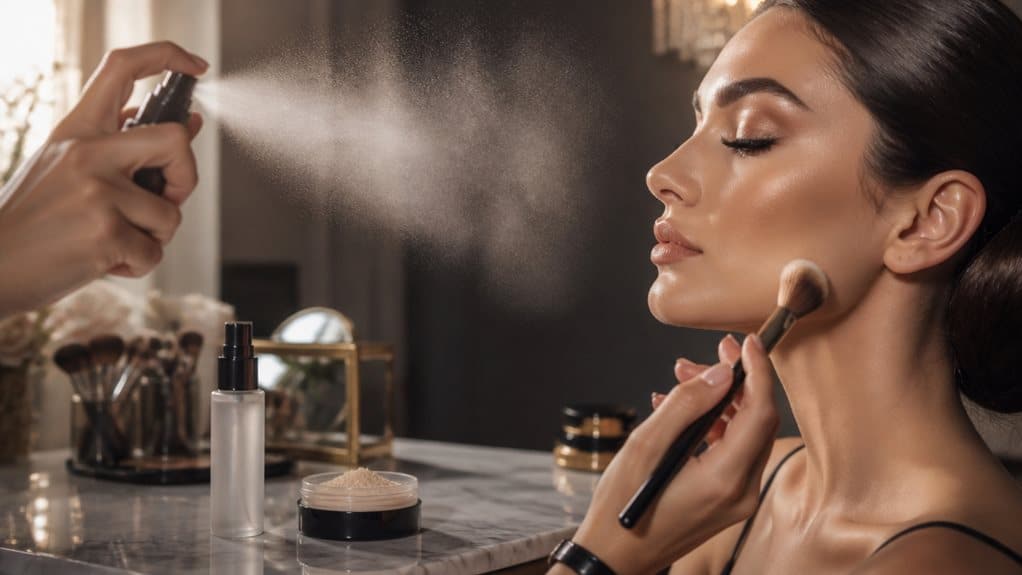
Choosing between spray and powder works for hot days, but you don’t always have to pick just one. Use powder where shine starts, then mist to melt layers together.
- Tap translucent powder only on your T zone with a fluffy brush, then sweep off extra.
- Let foundation and concealer set briefly, so powder binds without grabbing dry patches.
- Hold setting spray at arm’s length and use a fine mist, not a soaking spray.
- Choose matte powder for oil control, then a natural or dewy spray to remove the powdery look.
This gives longer wear, while spray keeps skin looking seamless in selfies and video calls naturally. Keep pressed powder for small touch ups, and stop before your face looks flat.
Amazon buying recommendations
Amazon’s beauty listings run deep, so you’ll want a clear plan before anything lands in your cart.
| Need | Spray pick | Powder move |
|---|---|---|
| Long wear | Urban Decay All Nighter | Loose translucent; check oil-control reviews |
| Natural finish | Charlotte Tilbury Airbrush Flawless | Finely milled texture; match undertone |
| Budget or matte | e.l.f.; One/Size | Pressed for touch-ups; compare unit price |
Sort by rating, review count, and recent reviews. Prefer Prime, clear returns, and travel sizes before full-size. For shine-prone selfies, One/Size fits; Rare Beauty’s bi-phase mist suits dual-action prep. Sponsored placement shouldn’t outrank organic feedback, crease reduction, or photo-friendly wear. Charlotte Tilbury reads natural; Urban Decay targets longer nights indoors and flash.
Frequently asked questions
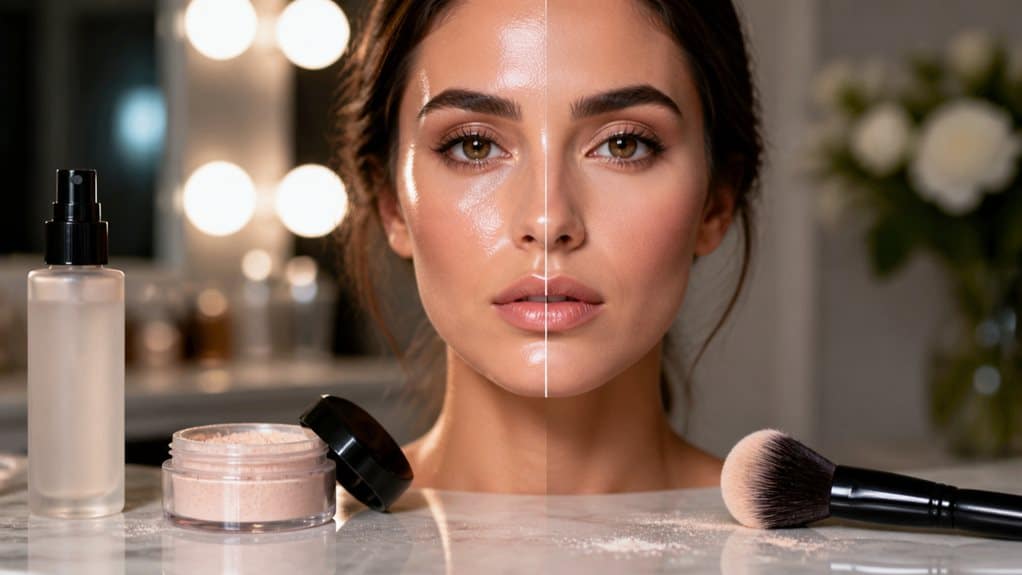
If you’ve made it this far and still can’t decide between a mist and a powder, you’re not alone. These are the questions readers ask most before buying.
- Which lasts longer? Both extend wear, but powder usually wins on shine control, while spray wins on blending and finish.
- Can you use both together? Yes. Layering powder initially, then a light mist, often gives the longest-lasting result.
- What suits oily skin? Powder absorbs oil, so apply it to your T-zone before spraying.
- What suits dry skin? Pick a hydrating spray and keep powder light to avoid a cakey look.
Match your choice to your skin type, the finish you like, and where your makeup usually fades, and you’ll choose with confidence.
Conclusion
While setting powder and setting spray both help your makeup last longer, they solve different problems, so the right choice comes down to your skin type and the finish you’re after. If you’re oily, reach for a translucent powder to mattify your T-zone and lock foundation in place. If you’re dry, skip heavy powder and mist on a hydrating spray instead.
For combination skin, you’ll likely want both: press powder where you shine, then spray your whole face to melt everything together. That layered approach gives you the strongest wear and the most natural finish, especially under bright selfie lighting.
You don’t need to spend much, either. An affordable powder and basic spray handle most days, so start simple and upgrade later if needed.
Frequently Asked Questions
Does Setting Powder Cause Flashback in Selfies and Flash Photography?
Yes, setting powder can cause flashback in your selfies, especially translucent or HD formulas with silica, titanium dioxide, or zinc oxide. Don’t overapply; press it lightly into your T-zone and choose tinted powder for flash.
Can I Use Hairspray Instead of Setting Spray?
You shouldn’t use hairspray instead of setting spray. It’s made for hair, not your face, and can irritate your skin and eyes. You’ll get safer, longer-lasting results with a water-based setting spray designed for makeup.
How Often Should I Clean My Powder Brushes and Makeup Puffs?
You should clean your powder brushes weekly and your makeup puffs more often—ideally after every few uses. If you’re noticing streaky application or clumping, don’t wait—wash them and dry them completely before reuse.
Do Setting Sprays and Setting Powders Expire?
Yes, your setting spray and setting powder can expire. Check the PAO symbol, store them cool and dry, keep caps tight, and replace them if they’re smelling off, separating, clumping, spraying unevenly, or losing hold.
Can I Bring Setting Spray in My Carry-On When Flying?
Yes, you can bring setting spray in your carry-on if it’s 3.4 ounces or 100 milliliters or less and fits in your quart-sized liquids bag; keep it sealed, labeled; pack larger bottles in checked luggage.
Summary and Conclusion
The right choice depends on your skin and your plans. If you’re oily or fighting shine in flash photos, reach for setting powder. If your skin runs dry or you want a softer finish on camera, choose setting spray.
For long days or warm weather, layer powder under a few mists of spray for extra staying power. You don’t need to spend much, either—affordable options from NYX or e.l.f. work well for most routines.
 English
  Español
  Français
  Deutsch
  Italiano
Leave A Comment