
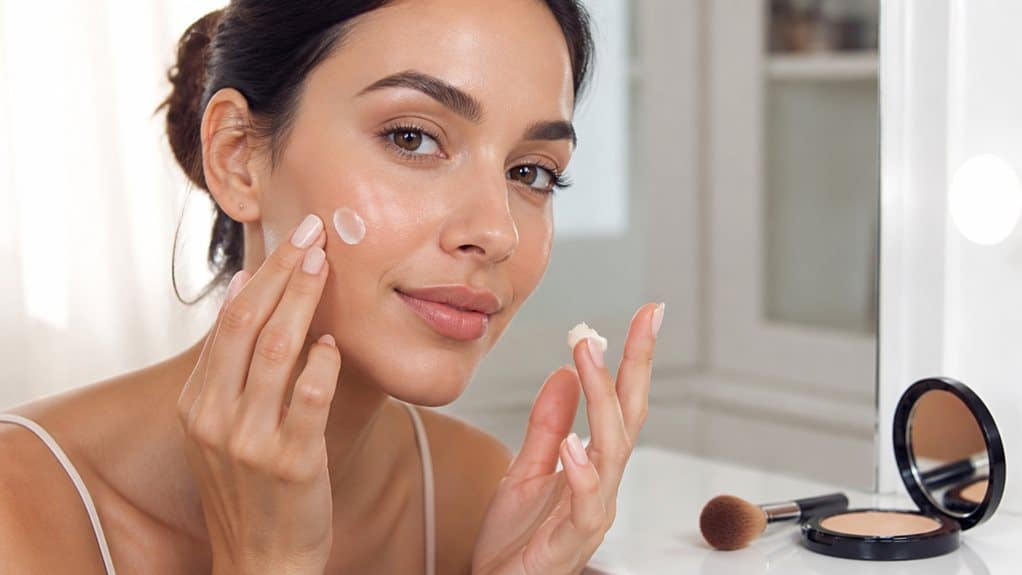
To prevent pilling, shine, and white cast, apply sunscreen last in your skincare routine, wait 15 minutes, then pat on makeup instead of rubbing. Use a nickel-sized amount for full protection, and match textures—water-based sunscreen with water-based foundation. Choose lightweight, quick-absorbing formulas, and go tinted if mineral filters leave a pale tone. Small adjustments to order, timing, and technique make a bigger difference than you might expect.
At a Glance
- Apply sunscreen after moisturizer absorbs, then wait 15 minutes before makeup to prevent pilling.
- Pat or stipple products with fingertips or a damp sponge instead of rubbing to preserve the sunscreen film.
- Match textures—water-based sunscreens with water-based products, silicone with silicone—to avoid pilling.
- Choose hybrid or chemical sunscreens over heavy mineral formulas to reduce white cast.
- Apply thin layers in small sections and limit silicone-heavy products to prevent clumping and shine.
Introduction

If you’ve ever watched your foundation slide around or clump into little balls a few hours after applying sunscreen, you already know how frustrating this layering problem can be.
Pilling isn’t random bad luck—it’s your skin telling you something about timing, texture, and compatibility went wrong.
Sunscreen pilling under makeup is one of the most common complaints in daily beauty routines, and it usually comes down to timing, texture, and product compatibility rather than one “bad” product.
This guide breaks down how to get smooth, natural-looking results when wearing sunscreen under makeup. You’ll learn why film formation matters, how prep and wait time affect your finish, and what to look for in a facial sunscreen no white cast formula. Many sunscreens contain silicones that can interact with similar ingredients in foundation or powder, leading to visible clumping.
The goal isn’t finding a single perfect product. It’s understanding how your skin, sunscreen, and makeup work together.
Why sunscreen can interfere with makeup
Understanding why pilling happens in the initial place makes it much easier to prevent.
Sunscreen needs to form a continuous film on your skin to work properly, and that film is delicate. When you apply makeup over sunscreen too soon, powders, oils, and pigments can sit on top of that layer instead of blending smoothly, causing clumping or pilling.
This is especially noticeable if you’re looking for sunscreen for oily skin under makeup, since extra oil production can break down the protective layer faster. Rubbing makeup in, rather than patting it, disturbs the film even more.
Heavy foundation applied too quickly can also disrupt sunscreen’s coverage, leaving you with uneven texture and reduced protection. Community skincare advice suggests waiting until sunscreen is fully absorbed before layering on any makeup.
The correct order of skin care, sunscreen and makeup
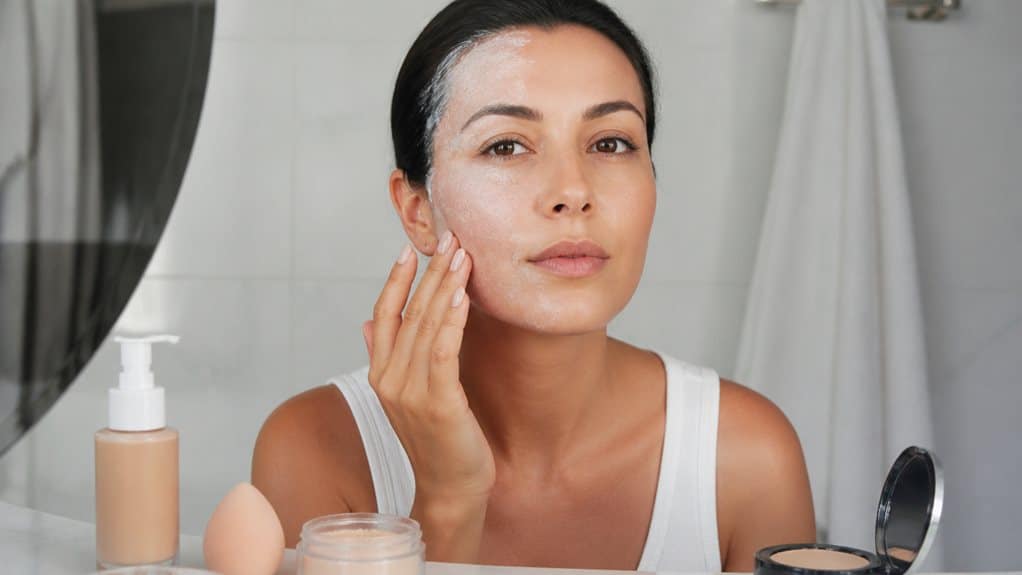
Getting your routine in the right order matters just as much as the products you choose. Your morning steps should move from thinnest to thickest, ending with sunscreen right before makeup, using enough product and giving it time to set.
Below, you’ll find guidance on how much sunscreen to apply and how long to wait before starting your makeup. Allow your sunscreen to set until it feels tacky or slightly set, which takes about three minutes, with fifteen minutes being ideal.
Morning skin-care steps
Nailing the order of your morning routine sets the stage for everything else, from how well your sunscreen protects you to how smoothly your makeup applies over it.
Start with a cleanser to clear away overnight oil and residue, giving your skin a clean surface.
Next, apply any treatment serums, since skincare works best layered from thinnest to thickest.
Follow with moisturizer, letting it fully absorb before you move on. This step hydrates your skin and helps prevent the dry patches that can make foundation cling unevenly.
Sunscreen comes last in your skincare lineup, always before primer or any makeup. Applying primer before sunscreen can prevent direct skin contact, weakening the protection sunscreen is meant to provide.
This sequence isn’t arbitrary. Each step builds a smoother, more even base, so your SPF and makeup sit properly instead of pilling or sliding.
How much sunscreen to apply
Once your skin care is done, the amount of sunscreen you use matters just as much as the order you apply it in. For your face alone, aim for about a quarter teaspoon, or a nickel-sized dollop. Some experts describe this as two finger lengths of product. If you’re covering your face and neck together, plan on closer to half a teaspoon, since more skin means more product.
This amount is based on the 2 mg per square centimeter standard dermatologists use to measure real protection, not just a light rub-in. Skipping this step, or using too little, can leave your skin under-protected even if the label says SPF 50.
Apply sunscreen evenly across your face, ears, and hairline before adding makeup on top. Don’t forget to reapply every two hours for continued protection throughout the day.
How long to wait before makeup
Timing often gets overlooked, but it plays a real role in how your makeup looks and how well your sunscreen actually works. Give your skin a moment before layering on foundation or powder.
Recommendations vary slightly, but the general idea stays the same: let sunscreen settle before touching your face again.
- 30 seconds to 2 minutes: enough for a quick check if you’re in a rush
- 3–5 minutes: works for fast-absorbing skin types
- 15 minutes: the safest, most commonly suggested rule of thumb
Waiting lets sunscreen form an even film on your skin instead of getting smeared around. This affects how well it protects you and how smoothly your base makeup goes on afterward, with less pilling and less patchiness. If you’d rather simplify things, choosing an SPF primer lets sunscreen and makeup prep happen in one step.
How to prevent pilling
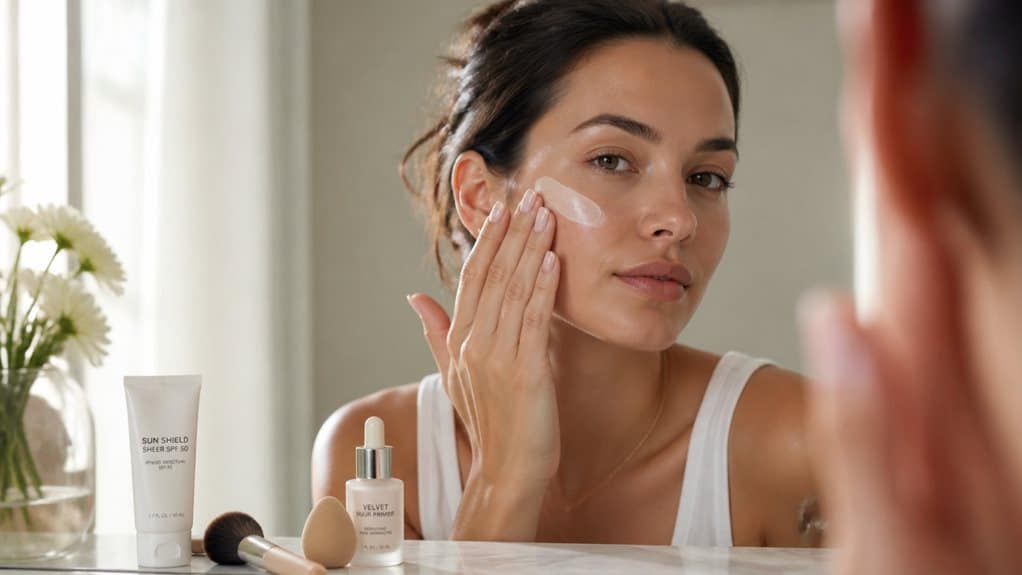
Pilling often happens when too many silicone-heavy products stack on top of each other, since silicones can ball up instead of blending smoothly.
You can reduce this risk by applying each layer gently, dabbing or pressing instead of rubbing, which keeps the product from breaking down on your skin.
It also helps to match textures, pairing water-based sunscreens with water-based primers or foundations rather than mixing water-based and silicone-based formulas. Choosing a facial SPF that pairs well with your existing skincare, like Unseen Sunscreen SPF 50, can also help layers blend smoothly instead of pilling.
Avoiding too many silicone-heavy layers
Stacking too many silicone-based products in one routine is one of the fastest ways to trigger pilling. Ingredients like dimethicone, cyclopentasiloxane, and cyclohexasiloxane are common culprits, and they build up fast when they show up in your moisturizer, primer, and sunscreen all at once. Each layer adds its own film, and those films don’t always mix well.
A simpler routine usually means fewer problems. Try cutting your steps down to the necessities:
- Skip a silicone-heavy primer if your sunscreen already smooths skin
- Choose one silicone-based product per routine, not three
- Pick a moisturizer with a texture similar to your sunscreen
Fewer film-forming layers give sunscreen a cleaner surface to grip, which helps makeup sit better too. Letting each product fully absorb before adding the next also reduces the chance of buildup between layers.
Applying products without excessive rubbing
Cutting back on silicone overload only solves part of the problem if your application technique is working against you. How you apply sunscreen, and everything after it, matters just as much as what’s in the formula.
Rubbing or swiping creates friction, which breaks down the sunscreen film and causes pilling. Instead, pat products into your skin using a sponge, your fingertips, or your palm. Work in small sections, like your forehead, then your nose, then each cheek, rather than dragging product across your whole face at once.
When it’s time for foundation, use a damp beauty sponge and stipple it on in thin layers. Pressing and dotting keep the sunscreen layer intact, while dragging motions lift it right off. Give your sunscreen about 15 minutes to absorb before moving on to the next step of your routine.
Matching water-based and silicone-based formulas
Even if you’ve mastered a light touch, your sunscreen can still ball up if its base doesn’t match the products around it. Pilling often happens when a water-based layer meets a silicone-heavy one, since the two don’t blend smoothly together.
Silicones give products that smooth, cushiony feel, while water-based formulas tend to feel light and fluid. The safest approach is matching bases throughout your routine.
- If your moisturizer feels silky and slightly thick, it’s likely silicone-based, so choose a silicone-based sunscreen to match.
- If your skincare feels light and absorbs fast, a water-based sunscreen will layer more evenly.
- Check texture before checking ingredients: thin and watery usually means water-based, while cushiony often signals silicone. Applying sunscreen over a heavy moisturizer can also increase the chances of pilling, regardless of base compatibility.
Matching textures matters more than matching SPF numbers.
How to reduce shine and white cast
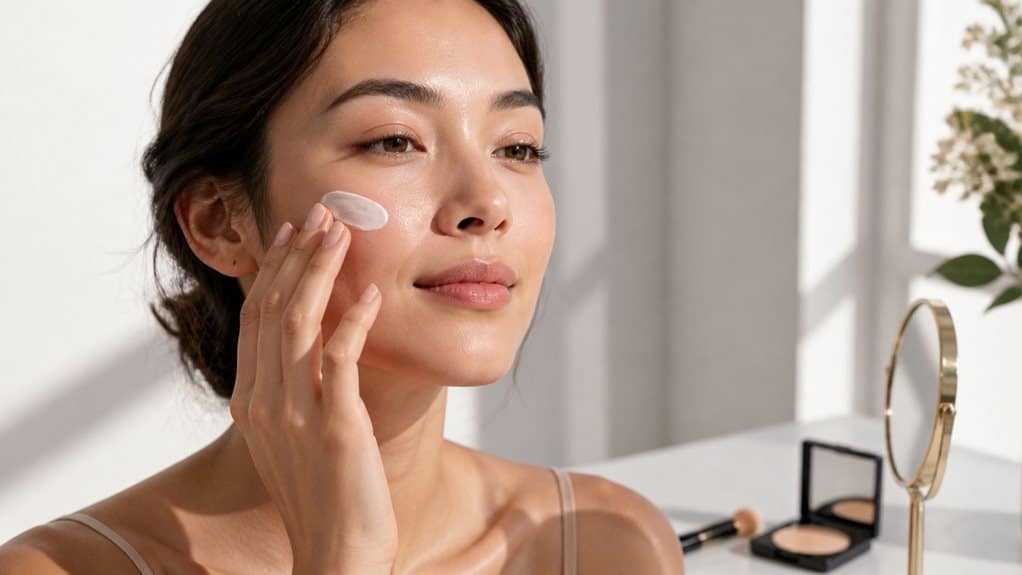
Shine and white cast are the two biggest complaints about wearing sunscreen under makeup, but the right formula and application can minimize both.
Lightweight fluids and gels tend to sit closer to the skin than thick creams, so they leave less residue for makeup to grip onto. Tinted sunscreen goes a step further by neutralizing the pale cast that mineral filters can leave behind, and a light dusting of powder afterward helps lock everything in place without adding extra shine.
Lightweight fluids and gels
Often, the biggest difference between a sunscreen that ruins your makeup and one that disappears under it comes down to texture.
Heavy creams sit on the surface, while lighter formulas sink in and let makeup glide on smoothly.
When you’re shopping, look for these texture clues on the label:
- Fluid – thinner than a cream, spreads in a thin layer, easy to blend
- Essence – a watery, lightweight consistency that absorbs fast
- Gel – water-based, cooling, and often leaves almost no residue
These textures work well for oily or acne-prone skin, since they feel less greasy.
If you have very dry skin, though, a fluid or gel alone mightn’t give you enough comfort, and you may need a hydrating layer beneath initially.
Tinted sunscreen
Tinted sunscreens usually solve two problems at once: they protect your skin and they blend in better than plain mineral formulas.
Zinc oxide and titanium dioxide handle UV protection, while added pigments, often including iron oxides, cancel out the pale, chalky look untinted mineral sunscreen can leave behind. This makes tinted sunscreen a smart pick if you have deeper skin, since white cast tends to show up more there.
If you have oily or acne-prone skin, look for formulas described as mattifying or oil-controlling. They can reduce shine and double as a light coverage base, so you may not need foundation at all.
Iron oxides also help block visible light, which is worth considering if you deal with melasma or uneven tone.
Strategic powder application
Most sunscreen under makeup starts to show shine or a faint white cast within a few hours, but you don’t have to powder your entire face to fix it. Targeted, or “pinpoint,” powdering treats only the areas that actually get oily, so you avoid a flat, cakey finish everywhere else.
- Focus on your T-zone, chin, nose, and smile lines with a small brush or puff.
- Blot excess oil initially with a tissue, then press—don’t sweep—a thin layer of shade-matched powder into place.
- Skip powder on drier areas to keep skin looking natural.
Choose a finely milled powder close to your foundation shade, since lighter shades look pasty and darker ones can look mask-like. Less product, placed precisely, controls shine without emphasizing white cast.
Best product types for different skin types
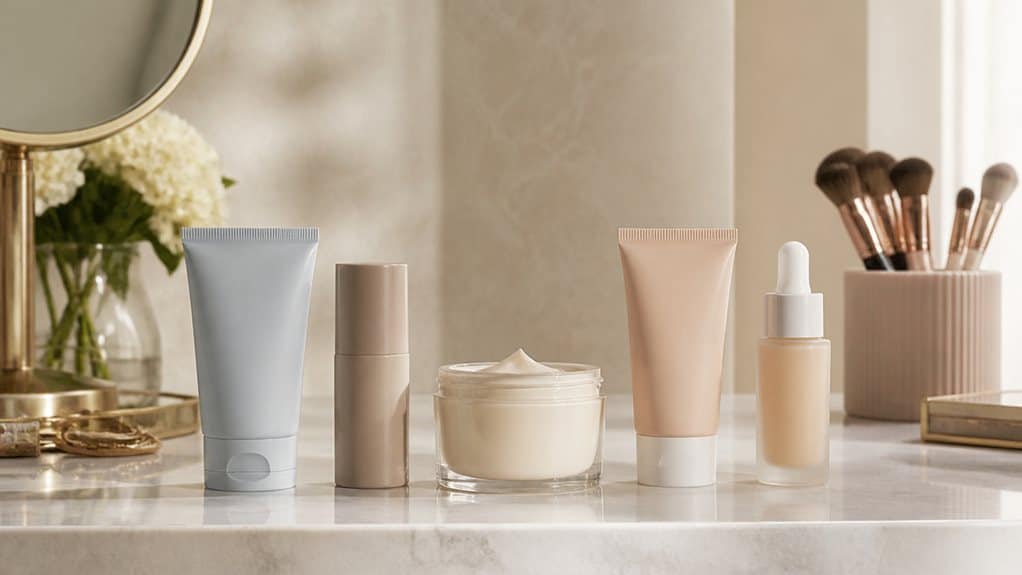
Not every skin type needs the same sunscreen formula, and picking the wrong one can undo your careful makeup application in minutes.
Dry skin usually looks better with a creamier, hydrating texture, while oily skin benefits from oil-free, non-comedogenic formulas with a matte finish.
Sensitive skin often does best with mineral filters and dermatologically tested products, since these tend to cause less irritation.
Dry skin
Battling tight, flaky skin under makeup gets easier when you choose the right sunscreen texture. Dry skin does best with formulas that add moisture rather than pull it away, so look for options built around hydration first and SPF protection second.
- Hydrating lotions or creams with broad-spectrum SPF 30 or higher give you daily protection while adding a moisture lift.
- Gel formulas with hyaluronic acid can work too, as long as the finish feels comfortable and doesn’t dry tight.
- Primer-like or tinted sunscreens sit well under foundation, since their thin, silky texture reduces the chance of pilling and cuts down on white cast.
Ingredients like ceramides and squalane also help skin stay comfortable through a full day of wear.
Oily skin
Taming shine starts with picking a sunscreen that feels almost weightless on your skin. Look for gel, fluid, or mist textures that absorb fast and leave a dry, matte finish instead of a greasy film. Oil-free and non-comedogenic labels matter here, since they’re designed to limit clogged pores and excess sebo.
Choose broad-spectrum protection with SPF 30 as a minimum, though SPF 50 is often better for daily facial use. A mattifying formula helps control midday shine, especially before foundation or concealer.
Tinted sunscreens can work well for oily skin, since they simplify your routine by replacing part of your base. If you’re on a budget, a basic oil-free facial gel sunscreen without added fragrance is usually enough for everyday wear.
Sensitive skin
Comfort matters most when your skin reacts easily to new products, so your sunscreen choice deserves extra care.
Mineral formulas with zinc oxide and titanium dioxide sit on top of your skin instead of absorbing in, which usually means less stinging, especially near your eyes. Look for broad-spectrum SPF 30 or higher, fragrance-free labeling, and minimal ingredient lists.
Before applying anything new to your face, patch test it on your inner forearm for a day or two.
- Choose zinc-based, fragrance-free mineral sunscreens
- Avoid oxybenzone and octinoxate, common irritants
- Pick tinted formulas to reduce white cast under makeup
If your skin feels tight or dry, a moisturizing cream version may suit you better than a thin fluid.
Amazon buying recommendations
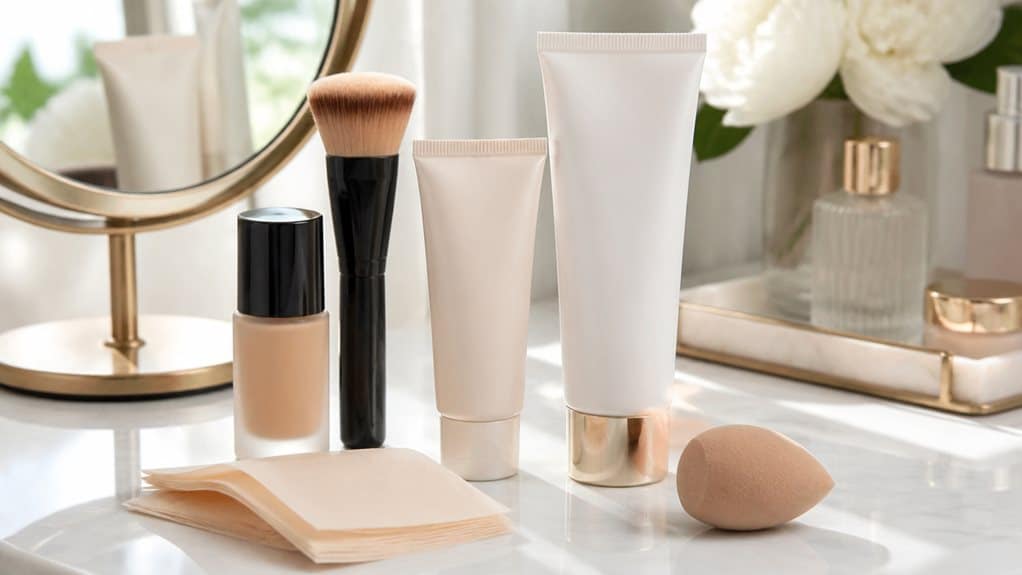
A handful of small details on a product page can tell you more than the label ever will.
When shopping for sunscreen to wear under makeup, look for gel, fluid, or serum textures rather than thick creams. These absorb faster and leave a thinner layer, which reduces the chance of pilling.
Check that the product lists broad-spectrum protection with SPF 30 or higher, since daily coverage still needs to guard against UVA and UVB rays. Words like “non-greasy,” “primer-like,” or “resists pilling” are worth noting, as they usually signal a formula built for layering.
If reviews repeatedly mention smooth finish or quick absorption under foundation, that’s a good sign you’re looking at a makeup-friendly option.
Frequently asked questions
Once you’ve narrowed down a formula that fits your skin and makeup routine, a few practical questions tend to come up again and again.
- How much should you use? Aim for about a quarter teaspoon on your face, since skimping leads to patchy coverage and weaker protection.
- When do you apply it? Sunscreen goes on clean skin, after skincare and before makeup, with roughly 15 minutes to set.
- How often do you reapply? Every two hours is standard, and more often if you’re sweating or swimming.
Conclusion

When you strip away the extra steps, getting sunscreen to work well under makeup really comes down to three habits: keep your base simple, apply thin layers, and give each product time to settle before moving to the next.
A lightweight facial sunscreen, applied by pressing rather than rubbing, sets the stage for smoother makeup application.
Press, don’t rub—a lightweight sunscreen applied this way lays the perfect foundation for flawless makeup.
If you notice a white cast, a hybrid or chemical formula may blend more easily than a heavy mineral one. Tinted sunscreens can double as light coverage, reducing the number of layers you need overall.
Finally, your tools matter as much as your products. A damp makeup sponge and gentle pressure protect the sunscreen film beneath your foundation, while setting powder helps lock everything in place without adding shine.
Frequently Asked Questions
Can I Mix Sunscreen With My Foundation Instead of Applying Separately?
No, you shouldn’t—mixing dilutes SPF and disrupts sunscreen’s protective film, leading to uneven coverage. Instead, apply sunscreen initially, let it absorb fully, then layer foundation on top for reliable protection and better makeup wear.
How Long Should I Wait Before Applying Makeup After Sunscreen?
Wait about 15 minutes after sunscreen before you start your makeup. This gives it time to absorb and set into an even film, so foundation glides on smoothly without pilling or streaking.
Does Powder Sunscreen Actually Replace Liquid Sunscreen Underneath Makeup?
No, it doesn’t. Powder sunscreen can’t replace your liquid layer—it’s a touch-up tool for reapplication over makeup. Apply a proper broad-spectrum liquid or cream initially, then use powder midday for extra protection.
Will Reapplying Sunscreen Over Makeup During the Day Ruin My Look?
No, it won’t ruin your look if you’re gentle. Press, don’t rub, use thin layers, and let each step set. Choose a powder, cushion, or tinted formula for smoother, less disruptive touch-ups.
Can Humidity or Air Conditioning Make Pilling Worse Indoors?
Yes, both can worsen pilling. Humidity keeps product sitting on your skin longer, while AC dries you out, so you’ll want lighter layers, proper wait times, and a humidifier if needed.
Summary and Conclusion
Pilling, shine, and white cast usually come down to formula and technique, not your skin. Once you find a lightweight or tinted sunscreen that suits your skin type, let it fully absorb, and apply makeup in thin layers with a damp sponge, most of these issues disappear. Keep a setting powder on hand for touch-ups under harsh lighting. With the right routine, you can protect your skin daily without sacrificing a clean, camera-ready finish.
 English
  Español
  Français
  Deutsch
  Italiano
Leave A Comment