
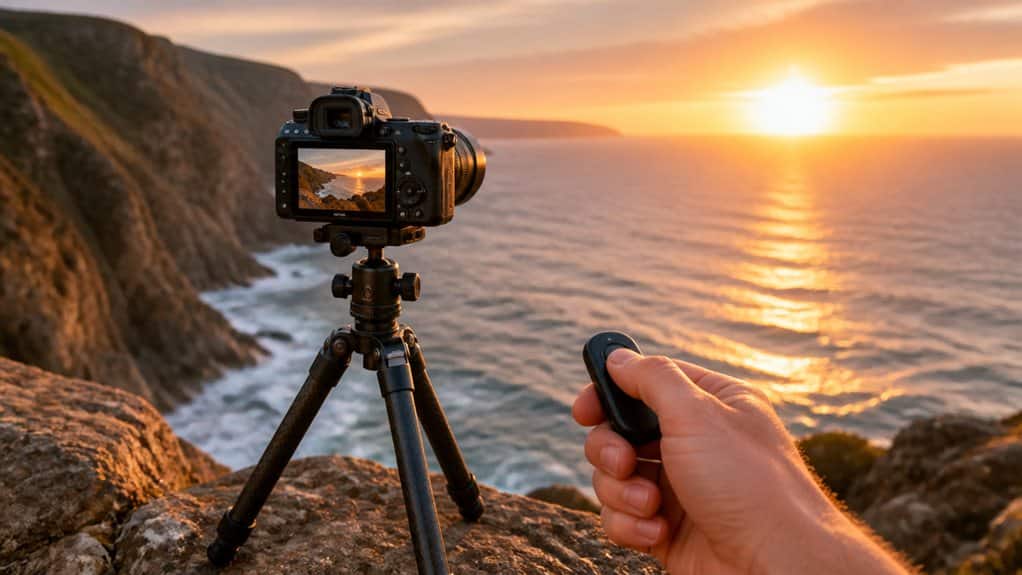
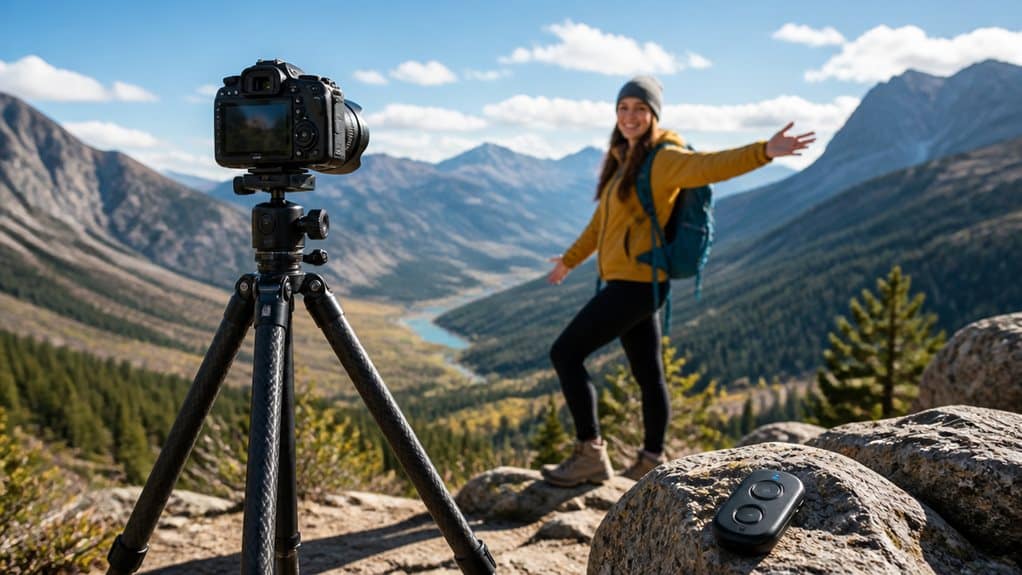
A compact travel tripod with a Bluetooth remote lets you take sharp, flattering full-body vacation photos from about 30 feet away — no strangers or weaker selfie camera needed. Pick one that folds under 18 inches, reaches eye level, and grips your phone with its case on; the remote should pair without an app. Shoot during golden hour or open shade for soft, skin-smoothing light. Below, you’ll find which tripod type best fits your travel style.
At a Glance
- A travel tripod with a Bluetooth remote enables hands-free group shots, full-body portraits, and sharper low-light photos without asking strangers for help.
- Choose a model folding under 18 inches—reverse-folding legs pack to 12–14 inches—so it fits carry-ons and daypacks easily.
- Match tripod type to your needs: mini or flexible tripods for tables and railings, full-height compacts for eye-level portraits and video.
- Check maximum height with the center column down and pick load capacity exceeding your gear, since raised columns and overloading cause wobble.
- Add a Bluetooth remote with one-button controls and good range for hands-free starts, then snap test shots to confirm framing before the timer.
Introduction
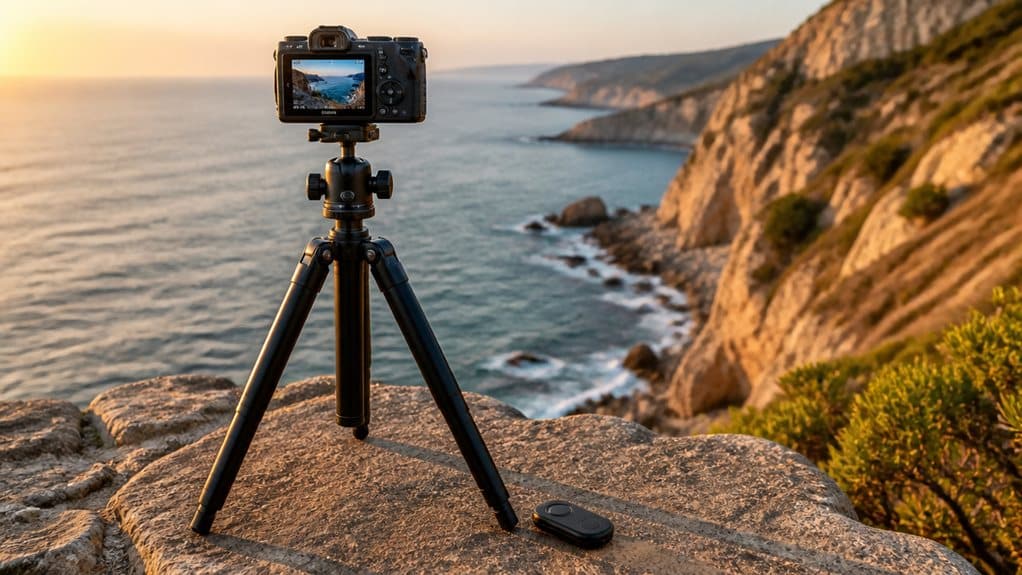
If you’ve ever handed your phone to a stranger for a group photo or balanced it against a coffee cup with a timer running, a travel tripod paired with a Bluetooth remote solves both problems at once. You get hands-free photos and video without asking or racing a timer.
Most remotes pair in seconds, work from about 30 feet, and need no app, so setup stays simple at beaches, viewpoints, and hotel rooms. The remote connects to your phone like wireless earbuds, with one button press triggering photos or videos. A travel tripod for phone should fold small for a day bag. For bluetooth remote vacation photos, check leg locks, an adjustable mount, tilt, rotation, and battery type. A tripod for solo travel photos should feel light enough to carry, yet steady enough that the remote click won’t start a wobble.
Why a travel tripod improves vacation photos
A tripod holds your phone completely still, and that single change sharpens almost every shot you take on a trip.
When you’re holding your phone in dim museums, at sunset, or during blue hour, tiny movements blur detail. A compact smartphone tripod lets your camera use a slower shutter and lower ISO, so skin texture, makeup, and night scenery look cleaner. That same stillness opens the door to silky waterfall effects, streaking traffic, and starry skies that handheld shots simply can’t capture.
It also slows you down, helping you frame evenly, align panoramas, and keep HDR exposures matched. For self-portraits or a phone tripod for couples, you can set height and angle initially, then trigger the shutter remotely without stretching your arm or asking a stranger.
| Benefit | Vacation result |
|---|---|
| Less shake | Cleaner, sharper low-light detail |
| Hands-free framing | More natural portraits |
| Steady support | Creative long exposures |
Types of compact travel tripods
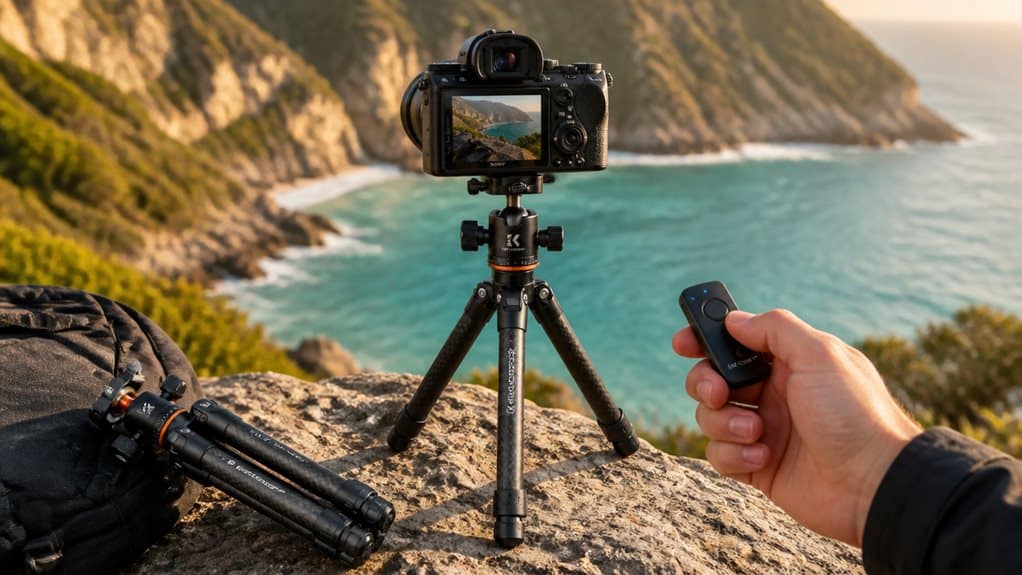
You’ll come across four main styles when shopping for a compact travel tripod: mini tabletop tripods, selfie-stick tripods, full-height compact tripods, and flexible tripods.
Each one balances height, stability, and pack size differently, so the right pick depends on whether you’re filming a makeup routine at a hotel desk, framing a full-body outfit shot outdoors, or gripping a railing for a sunset selfie. As a rule of thumb, most full-height travel models fold down to 35 and 45 cm, which slips easily into carry-on luggage or a trekking backpack.
Below, you’ll see what each type does well, where it falls short, and which features actually matter for sharp, flattering photos.
Mini tabletop tripod
Small enough to slip into a jacket pocket, the mini tabletop tripod is the most portable support you can add to a phone or camera kit. Most models weigh only a few hundred grams, cost less than full-size tripods, and disappear into a backpack, so you’ll actually carry one.
Designs vary. Fixed-leg versions sit steady on café tables, while flexible legs wrap around railings or branches for uneven locations. A ball head makes angle adjustments fast, which helps when you’re framing low-angle shots or dialing in flattering window light. Many models share a 1/4-inch connection, so swapping between a phone clamp, action cam, or compact camera takes seconds.
Check load capacity initially. The Manfrotto Pixi Mini holds 2.2 lb, plenty for phones, while the GorillaPod 5K manages 11 lb for mirrorless bodies. Pair yours with a Bluetooth remote for smooth, hands-free shutter control.
Selfie-stick tripod
Reach beyond arm’s length with a selfie-stick tripod, a hybrid design that works as both a handheld grip and a stand-alone support. You’ll fit more friends, scenery, or background into vacation shots than your arm alone allows, and many models fold to about 30 cm for easy packing. Some camera-oriented models, such as the Vanguard VEO 3GO 235CB, even convert to a selfie stick and bundle a smartphone adapter with a Bluetooth controller.
Look for a telescoping pole that extends smoothly, a secure phone clamp, and legs that open into a stable base. Aluminum versions cost less; carbon fiber trims weight. Choose a model with a detachable Bluetooth remote so you can trigger the shutter without tapping your screen, which reduces blur and keeps your makeup touch-ups undisturbed.
This style suits solo travelers and group shots; skip it if you’re mainly filming seated videos at your own desk height.
Full-height compact tripod
A full-height compact tripod folds small enough for a carry-on yet extends close to eye level, so you won’t need to balance your phone on a windowsill for standing selfies, full-length outfit shots, or talking-head videos. Look for chest height with the head attached, not just the advertised maximum.
Extending the center column adds reach, but it also wobbles more, so stable height matters for sharp makeup detail and clean video.
For packing, check folded length; many travel models land around 17 to 25 inches. The Peak Design Travel Tripod collapses to just 15.5 inches, slim enough to slide into a large water-bottle pocket on many backpacks. Three to five leg sections trade setup speed for compact storage; twist locks pack slimmer, while clamp locks feel quicker.
Carbon fiber saves weight, but a little extra mass steadies low-light portraits during sunrise walks and self-timer clips too.
Flexible tripod
Where a full-height compact tripod handles standing shots, a flexible tripod solves the opposite problem: mounting your phone where no flat surface exists. Its bendable legs wrap around railings, branches, chair backs, or poles, so you can shoot from spots a standard tripod can’t stand.
You’ll trade height for adaptability. The Joby GorillaPod 3K Pro, a common example, folds to 11.8 inches, weighs about one pound, and supports up to 6.6 pounds, enough for phones, compact cameras, and small mirrorless bodies, not heavy DSLRs. Stability depends on how tightly you wrap the legs. This flexible-leg design is what makes the GorillaPod a go-to option for content creators shooting on their own.
Choose this style if you want low-angle framing, tabletop shooting in cramped hotel rooms, and quick self-timer group shots on the move. It doubles as a hand grip for walking footage.
Important buying criteria
When you’re comparing travel tripods, a few key specs will tell you most of what you need to know before you buy.
You’ll want to check the packed size and weight for easy carrying, the maximum height for your framing needs, and how well the legs hold up outdoors on uneven ground. Remember that heavier tripods generally offer more firmness, so balance portability against the steadiness you need.
It’s also smart to confirm that the phone clamp grips your device securely without blocking buttons or lenses, and that the Bluetooth remote pairs easily so you can trigger the shutter without touching the screen.
Packed size and weight
Portability is the whole point of a travel tripod, so packed size (the length when it’s folded) and weight should sit near the top of your checklist. Aim for under 18 inches (about 45 cm), since that fits most carry-on bags and backpack side pockets. If you fly often or hike, under 40 cm is a safer bet.
Shape matters too. Many models use reverse-folding legs that swing up around the head, shrinking folded length to 12–14 inches and forming a water-bottle-like cylinder that’s easier to pack. Gitzo’s Traveler series takes this approach with an exclusive 180° leg folding mechanism that encloses the head between the folded legs, keeping closed length near 14 inches.
For weight, flexible picks like the Joby GorillaPod 3K Pro weigh about 1 lb, while the carbon Vanguard VEO 3 GO sits near 1.6 lbs. Remember: the lightest tripods support lighter kits and can feel less stable.
Maximum height
A tripod that packs down small still has to open up tall enough to be useful, so once you’ve checked folded size and weight, look at maximum height next. This tripod, for example, extends from just 23.5 inches up to a full 80 inches tall, giving even taller shooters room to spare.
Aim for eye level, not your full height. Estimate usable height as your eye level minus the phone or camera height, then include the head. If you’re around 5’10”, a practical target is about 58–62 inches with the legs extended and the center column down.
Check the spec for “maximum height with center column down,” because a headline number may depend on raising the column. Many travel tripods land near 52–55 inches; taller options around 60–65 inches suit comfort. If you’re about 6’–6’2″, look to 62–66 inches, or accept bending and use a flip screen.
Stability outdoors
Shooting outdoors adds challenges you won’t face indoors, since wind, uneven ground, and soft surfaces like grass or sand can all make a tripod wobble. Keep it low, retract the center column, and spread the legs wider; on slopes, match leg lengths to the terrain instead of forcing them equal.
| Stability move | Why it helps |
|---|---|
| Low stance | Less torque in wind |
| Weight hook | Bag pulls straight down |
| Firm feet | Press into sand |
| One leg windward | Resists tipping |
Check each foot before mounting your phone, secure straps, and hang ballast so it barely touches ground. In gusts, choose lower height over sharper makeup detail. Wait for calmer air outdoors.
Phone clamp security
The clamp is the one part of a tripod that actually touches your phone, so it deserves a close look before you buy. A weak clamp can drop your phone mid-shot.
Look for strong spring tension that keeps your phone locked firmly in place during movement. A locking lever or double-lock system adds a second retention step, so your device stays securely held if one part slips. Silicone pads increase grip and protect your phone’s finish from scratches.
Check that the adjustable claws fit your phone with its case installed, since removing it slows setup. Universal clamps hold most Apple, Android, and Samsung phones, but confirm the width range. If you’ll shoot in busy public spots, consider an anti-theft clamp with a security-key release.
Bluetooth remote
Choosing the right Bluetooth remote matters more than most shoppers expect, because this tiny device decides whether you actually capture the shot once you’re posed, lit, and ready. Start with compatibility: the listing should name your phone and operating system, and media remotes should state HID Keyboard/Media Keys support, not just “Bluetooth 5.0.” If it needs an app, check app-store notes first.
Then prioritize stability. Range matters for shots around obstacles, so read recent reviews for drops or crashes. Pick a comfortable grip with logical, well-spaced buttons and clear tactile feedback for blind presses. Rechargeable power suits frequent use; CR2016 or CR2032 cells fit simpler setups if servicing is easy. Add voice or macros only when needed, and keep physical fallback control for reliability.
Best tripod type by traveler
The best tripod type depends on who’s traveling and how you plan to shoot, since a solo traveler has different needs than a family of five.
If you’re traveling alone, a mini phone tripod or selfie-stick tripod with a Bluetooth remote covers most selfie and video situations, while couples usually benefit from a compact full-height tripod that frames two people at eye level without awkward angles.
For families, groups, and content creators, you’ll want a sturdier full-height or flexible tripod with a higher load capacity, so it stays stable on uneven ground, handles heavier phones with cases or add-on lenses, and supports repeated repositioning throughout the day.
Solo traveler
If you’re traveling on your own, a compact, lightweight travel tripod is the most practical tool you can pack.
You’ll frame self-timed portraits without asking strangers for help, and a Bluetooth remote lets you trigger the shutter hands-free, which reduces blur.
Travel roundups consistently name the Peak Design Travel Tripod a top premium pick, though budget models handle basic snapshots well.
Prioritize three things:
- Weight: you’ll carry it all day, so lighter beats sturdier.
- Folded size: short collapsed length slips into a day bag.
- Stability: firm legs keep low-light shots and video sharp.
Quick setup matters too, since spontaneous photo stops reward gear that deploys in seconds. If you shoot video often, choose a model with a fluid-style video head for smoother panning motion.
Couple
When you’re traveling as a couple, a lightweight travel tripod paired with a Bluetooth remote is usually the most practical setup you can carry. Pick one that fits in one bag, sets up fast, and reaches eye level for both faces, so your makeup, skin texture, and selfie lighting look natural, not tilted. Strong leg locks and decent payload capacity matter more than extra height, especially for sunsets or night shots where slower shutter speeds can blur two people.
A remote lets you step back, pose together, and trigger the shutter without touching the phone, which keeps framing cleaner. Skip tiny tabletop models for full-body portraits, and avoid heavy studio legs for sightseeing. Carbon fiber saves weight; aluminum is often enough if you’re budget-focused.
Family or group
Group trips raise the stakes, because a setup that works for two people often can’t fit grandparents, kids, and friends into one clean frame.
Pick a compact full-height travel tripod with a ball head, wide-stance legs, and locks you can work fast while kids wait.
- Check load capacity: it should exceed your phone or camera, lens, and mounted remote.
- Favor quick-deploy legs and simple remote pairing for mixed generations, uneven ground, and sunset light.
- Keep the Bluetooth remote clipped to the tripod strap so repeat poses stay easy.
A monopod helps you move, but it’s weaker for self-timed portraits; a flexible mini-pod fits tables or low angles, not taller family framing.
Choose carbon fiber if you carry it most days.
Content creator
You scout the location, step into the frame, and review the playback yourself when you’re creating content solo, so your tripod has to stand in for a camera operator.
| Creator setup | Choose it when | Check |
|---|---|---|
| Carbon-fiber travel tripod, like Peak Design Travel Tripod | You want the smallest folded carry for changing light, street scenes, and quick deployment | Premium carbon pricing, and less maximum height than full-size legs |
| Flexible GorillaPod 500 or mini tripod | You grip rails, branches, desks, and uneven surfaces for vlogs, makeup, low angles | Limited load capacity for heavier mirrorless kits, weaker stability in wind |
| AmazonBasics 67-Inch Monopod or Mpow selfie-stick remote | You move through crowds and need fast repositioning, hands-free starts, repeatable framing | Less stability for long exposures, self-timers, remote-trigger retakes |
Tips for safe and flattering vacation photos
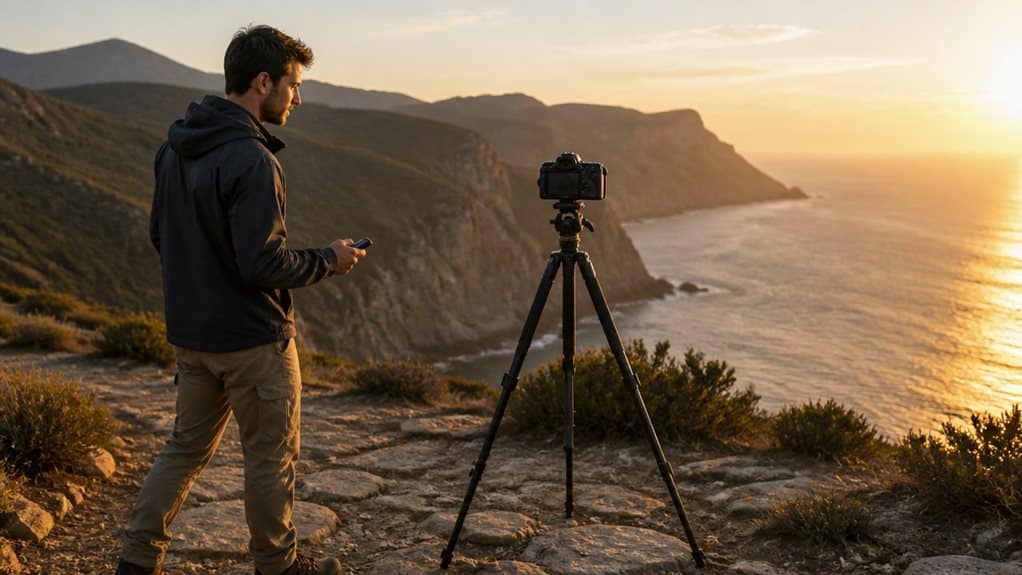
Taking vacation photos that actually flatter you comes down to a handful of controllable choices: light, angle, framing, and where you’re standing. Shoot during golden hour—the hour after sunrise or before sunset—when soft light smooths skin. On bright days, move into open shade so you’re not squinting. Keep the horizon level, leave breathing room around your subject, and place faces on grid intersections using the rule of thirds.
For angles, try:
- Positioning the tripod slightly below eye level with a subtle upward tilt for a flattering portrait.
- Raising it a touch to soften the look of a double chin.
- Snapping test shots before your timer run to confirm framing and expression.
Stay aware of edges, crowds, and traffic, and take fewer, more intentional frames.
Amazon buying recommendations
Shopping for a travel tripod on Amazon gets easier once you know which categories actually matter for phone photography. Choose a mini tripod for tables, a selfie-stick tripod for casual solo travel, a compact full-height model for eye-level portraits, or a flexible tripod for rails and branches. Add a small Bluetooth remote that’s compatible with your phone, offers useful range, and uses one-button controls.
If you pack light, compare carbon-fiber with cheaper aluminum, and upgrade only when weight matters more than cost. Peak Design fits frequent travelers, Element MII suits value-focused buyers, and Ulanzi Falcam TreeRoot Lite is a balanced pick. Before buying, check folded length, height, load capacity, phone-mount fit, recent reviews, returns, and bundle pricing for your next departure without last-minute stress.
Frequently asked questions
Once you’ve narrowed down your tripod and remote options, a few practical questions tend to come up right before buying or right after unboxing. Here’s what to check so your phone, lighting, and remote work together.
Before you buy or right after unboxing, a few quick checks ensure your phone, lighting, and remote all work together.
- How do you pair it? Hold the remote button until the LED flashes, enable Bluetooth, then choose the listed device name.
- Will it reach your group shot? Expect about 25 to 30 feet outdoors; walls and furniture shorten reliable range indoors.
- Why won’t it reconnect? Toggle Bluetooth, clear pairings, recharge for 30 to 60 minutes, and use sleep mode.
For video, confirm the remote starts recording in your camera app; many models only trigger photos. If buttons differ, follow the product manual for reset steps.
Conclusion
If you’d like sharper vacation photos, steadier video, and group shots that actually include you, pairing a compact travel tripod with a Bluetooth remote is one of the simplest upgrades you can make.
Choose the smallest tripod that still supports your phone or camera without wobbling, especially for sunrise, night scenes, and indoor shots. Carbon fiber is worth considering if you walk all day; aluminum is often enough for occasional use and lower cost.
Add a remote so you can trigger the shutter without touching the screen, then step into the frame for couples, families, and solo portraits. For phones, a mini or selfie-stick tripod is usually sufficient. Pick flexible legs for railings, and a compact full-height model when eye-level framing matters for video.
Frequently Asked Questions
Can I Bring a Travel Tripod in My Carry-On Luggage?
Yes, you can bring a travel tripod in your carry-on. TSA allows it, but you’ll want it packed fully inside your bag, without spiked feet, meeting airline size limits. Security officers make the final call.
Will a Bluetooth Remote Work With Both iPhone and Android Phones?
Yes—many Bluetooth remotes work with both iPhone and Android if they use standard HID shutter controls, but you’ll want to check the listing, since some remotes only support one platform or require companion apps.
How Do I Hide the Bluetooth Remote While Posing for Photos?
You can hide the remote with a two-second timer—press, then pocket it before the shutter fires. Or tuck it in your fist; you’ll look natural with crossed arms or a hand on your hip.
Are Tripods Allowed Inside Museums and Popular Tourist Attractions?
Usually not—you’ll find most museums ban tripods, selfie sticks, and monopods indoors, though hand-held non-flash photos are fine. Some attractions allow folded tripods in bags but prohibit use. Check each venue’s policy before visiting.
How Long Does a Bluetooth Remote Battery Typically Last?
You’ll typically get 3 to 6 months from your Bluetooth remote with moderate use, though some last two years. Heavy use and cheap batteries drain it faster, so you’ll want fresh alkaline AAA replacements handy.
Summary and Conclusion
A compact travel tripod and Bluetooth remote give you control over framing, lighting, and timing, so your vacation photos at last include you at your best. Match the style to your plans: flexible legs for railings and uneven surfaces, a full-height stand for flattering eye-level angles.
Casual photographers can skip premium models; a budget option under $25 often works fine. Check your phone’s width against the mount, pack both together, and you’re set for sharper, better-lit shots.
 English
 Español
 Français
 Deutsch
 Italiano
Leave A Comment