
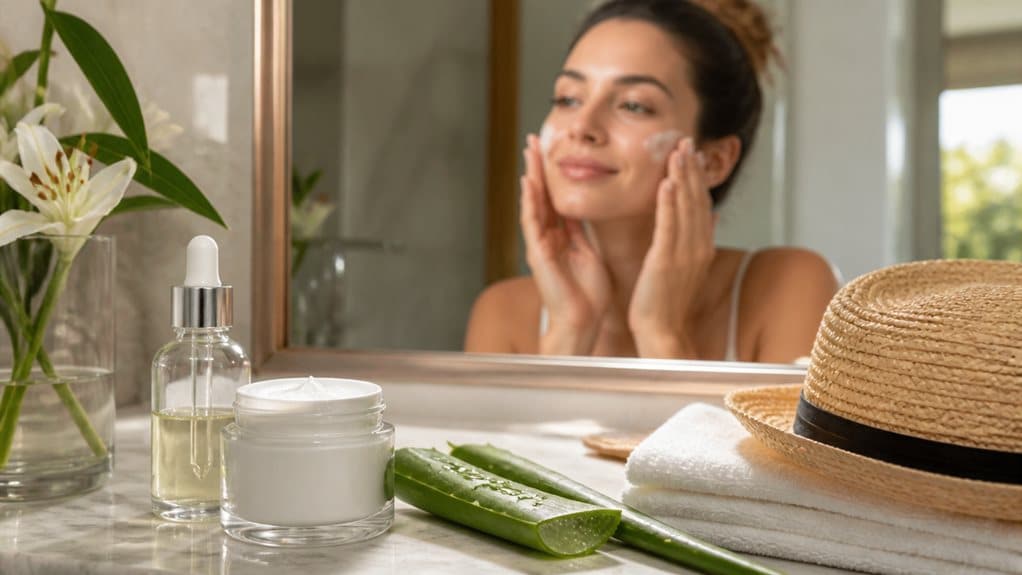
After summer sun, chlorine, and salt water, your skin’s barrier needs gentle repair, not aggressive treatment. Focus on hydrating serums with hyaluronic acid, barrier-supporting moisturizers with ceramides, and daily SPF 30+ to prevent further damage. Skip harsh scrubs and strong acids for a few days, since your skin’s more reactive now. Fragrance-free formulas help it recover faster. Stick with these basics, and you’ll notice calmer, smoother skin, plus there’s more to know about what works best.
At a Glance
- Recognize post-summer skin stress through tightness, flaking, dullness, and increased sensitivity to previously tolerated products.
- Focus recovery on barrier repair and hydration rather than aggressive treatments for steady, lasting improvement.
- Use gentle, fragrance-free cleansers and layer humectant serums like hyaluronic acid to restore lost moisture.
- Seal hydration with ceramide-rich moisturizers to rebuild the skin barrier and reduce water loss.
- Apply broad-spectrum SPF 30+ daily to prevent further discoloration and support skin healing.
Introduction

After a summer of sun, sweat, and salt water, your skin is probably asking for a break. Between beach trips, sweaty workouts, and long days outdoors, your skin barrier, the protective layer that keeps moisture in and irritants out, can end up weakened and dehydrated.
That’s why post summer skin care matters: it’s less about aggressive treatments and more about giving your skin what it lost.
This guide focuses on practical, low-risk steps for sun stressed skin care, from gentle cleansing to richer moisturizers. You’ll also find a simple skin barrier repair routine you can follow at home, along with the product features worth checking before you buy. For deeper concerns like uneven pigmentation, professionals may recommend treatments such as microneedling.
The goal is steady recovery, not overnight transformation, so your skin looks calmer in photos and video calls too.
Common signs of post-summer skin stress
After a summer of sun and heat, your skin might feel tight, rough, or persistently dry, even when you’re moisturizing regularly. This often points to a weakened skin barrier, the outer layer that normally locks in moisture and keeps irritants out.
On top of that texture change, you may notice your skin tone looks less even than before, with patches that appear duller or more uneven in certain areas. Stress from sun exposure can also trigger systemic inflammation that increases skin reactivity and sensitivity.
Dryness and tightness
Once summer winds down, one of the clearest signals that your skin needs attention is a rough, flaky, or scaly texture that wasn’t there before.
Dry skin after summer often looks dull instead of radiant, and you might notice a tight, stretched feeling right after cleansing or bathing. This happens because sun exposure, chlorine, and air conditioning can strip natural oils, weakening your skin’s barrier and letting moisture escape too easily.
Itchiness often comes along with this dryness, and scratching can make irritation worse. If itching persists or worsens, it’s worth seeking professional care rather than relying solely on home remedies.
You may also find that products you once tolerated now cause stinging, a sign your skin is more sensitive than usual.
As part of your autumn skin care routine, watch for these signs on your face, hands, arms, and legs, since they indicate your barrier needs real repair.
Rough texture
Alongside dryness and tightness, you might also notice your skin just doesn’t feel as smooth as it used to.
Rough texture is a common sign of sun-stressed skin, often caused by a thickened surface layer and slower cell turnover.
Heat, wind, and sea water can all disrupt normal renewal, leaving flaky patches and a dull, uneven feel.
This buildup of dead skin cells can also block your serums and moisturizers from absorbing properly.
Gentle exfoliation, using mild acids like lactic or glycolic acid, can help smooth the surface without over-stripping it.
If your skin feels sensitive, an enzyme exfoliant may be a gentler starting point.
Pair this step with a hydrating serum to support smoother, more resilient skin over time. For more advanced texture concerns, a professional treatment like microneedling can help stimulate collagen and further refine skin tone.
Uneven-looking tone
Because melanin production speeds up when skin is stressed, your face can end up looking blotchy or patchy rather than evenly toned. Sun exposure is the main trigger, since UV rays push your skin to make extra pigment as a defense response. Post-acne marks and hormonal shifts can add to the unevenness too.
Dehydrated skin makes tone irregularities more noticeable, so a weakened barrier isn’t just uncomfortable, it’s visually distracting. This is why gentle cleansing matters more than harsh scrubbing after summer.
Look for products with niacinamide, stable vitamin C forms like ascorbyl glucoside, or gentle acids such as lactic or glycolic acid. These ingredients support even-looking skin without irritating already-sensitized skin. Many dermatologists find that in-office chemical peels can also help exfoliate damaged outer layers to reveal a smoother, more even tone. A daily broad-spectrum SPF 30+ sunscreen remains crucial to prevent new discoloration from forming.
A simple post-summer routine
After a season of sun exposure, your skin benefits from a routine that repairs rather than overwhelms.
A simple approach works best: a gentle cleanser to clear away sweat and residue, a hydrating serum to replenish lost moisture, a barrier-supporting moisturizer to lock it in, and daily sunscreen to prevent further damage.
Each step plays a specific role, and together they help your skin recover its balance without adding unnecessary products or complexity. When choosing sun protection, look for a formula with at least SPF 30 to ensure adequate coverage during recovery.
Gentle cleansing
Your skin often feels tighter and drier once summer winds down, and cleansing is usually the initial place to adjust. Swap harsh soaps or foaming washes for a mild, fragrance-free cleanser that removes sunscreen, sweat, and salt without stripping natural oils. Use lukewarm water instead of hot, since heat pulls moisture from already stressed skin.
Apply the cleanser gently with your fingertips, using light circular motions rather than scrubbing. Look for cream, lotion, or milk textures with ingredients like ceramides, glycerin, or hyaluronic acid, which support the skin’s moisture barrier while cleaning. If your skin feels squeaky clean afterward, that formula is probably too harsh. For a more thorough cleanse, consider starting with an oil-based cleansing balm to dissolve sunscreen and debris before following with your gentle cleanser.
Keep cleansing brief, once daily at night is often enough, and skip strong acids or exfoliants until your skin calms down.
Hydrating serum
Once cleansing feels gentle again, a hydrating serum is usually the next step worth adding back into your routine.
This lightweight layer sits between water-based steps, going on after toner and before your moisturizer, so it can pull water into the skin before anything heavier locks it in place.
Look for humectants like hyaluronic acid, glycerin, or urea, which draw moisture to the surface.
Multiweight hyaluronic acid is worth noting, since smaller molecules reach deeper layers while larger ones hold water near the top.
A good serum can help with:
- That tight, papery feeling after too much sun
- Dull, rough texture that makes skin look tired
- Fine lines that seem more visible when skin is dehydrated
- The flat, lackluster look that follows dryness
Oily skin usually does better with lighter, water-based formulas. For dry or sensitive skin, formulas containing beta-glucan can be even more hydrating than hyaluronic acid alone, while also offering soothing, anti-inflammatory benefits.
Barrier-supporting moisturizer
A moisture-lock step is what your skin needs once the serum has done its job of pulling water in. A barrier-supporting moisturizer seals that hydration and helps restore your skin’s natural protective function, which keeps irritants out and water from escaping.
Look for ceramides, the lipids that rebuild your skin’s structure, along with glycerin, hyaluronic acid, and squalane for added hydration support. These ingredients also supply natural moisturizing factors and fatty acids your barrier needs after summer exposure.
Apply this moisturizer after your serum, morning and night, and follow with sunscreen during the day. You can use it across your whole face or focus on especially dry patches. If you notice roughness, flaking, or heightened sensitivity, that’s a sign your barrier needs extra support. Daily use supports recovery, while twice-daily application may help skin that feels particularly stressed or damaged.
Daily sunscreen
Sunscreen still matters every day, even after summer officially ends. Sun-stressed skin from summer needs continued protection while it heals, not a break from SPF. Choose a broad-spectrum formula with SPF 30 or higher, since this blocks about 97% of UVB rays and helps prevent further damage while your skin recovers.
Apply it as your final morning step, after cleanser and vitamin C, if you use it. A pea-sized amount usually covers the face. For reference, dermatologists often recommend a quarter-teaspoon-size dollop for the face, neck, and ears to ensure adequate coverage.
Skipping sunscreen now can undo weeks of repair work:
- Fading dark spots can deepen again
- Healing skin becomes more vulnerable to new damage
- Barrier repair slows down under unprotected UV exposure
- Fine lines from sun stress may become more noticeable
Mineral formulas with zinc oxide suit sensitive, post-summer skin best.
Ingredients worth looking for
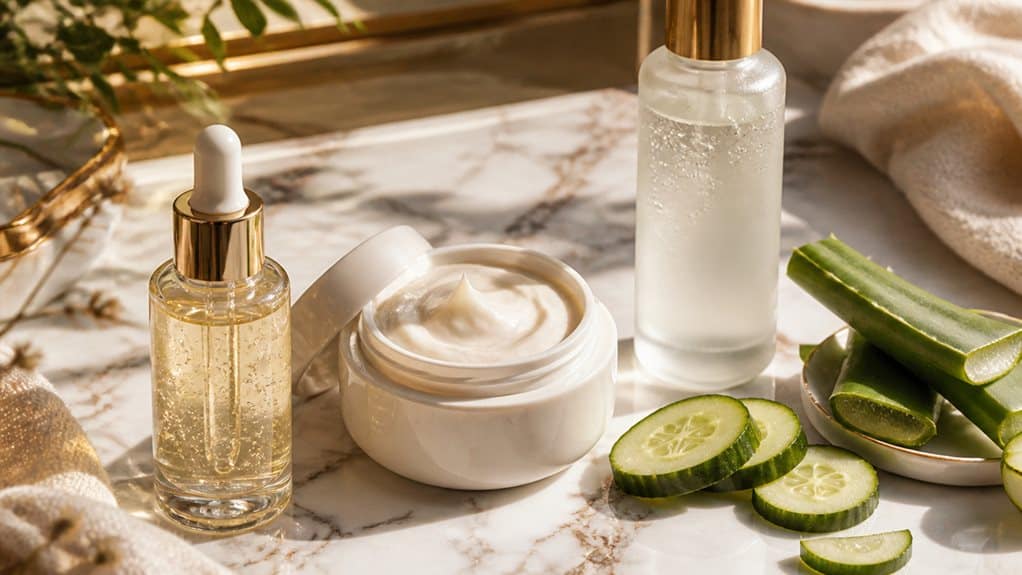
When you’re shopping for post-summer skin care, certain ingredients do more heavy lifting than others.
Hyaluronic acid and glycerin pull water into your skin’s surface, easing that tight, dehydrated feeling that follows too much sun.
Ceramides work differently, filling in gaps in your skin’s barrier like mortar between bricks, while panthenol and other soothing ingredients calm irritation without adding extra fragrance or harsh additives.
Hyaluronic acid and glycerin
Two ingredients show up again and again on post-summer skincare labels, and for good reason: hyaluronic acid and glycerin.
Hyaluronic acid works as a humectant, meaning it pulls water into the skin and holds it there, sometimes binding up to 1,000 times its weight in water. Glycerin does something similar, drawing moisture into the outer layer of skin and helping it feel softer instead of tight.
Together, these two ingredients can make a real difference in how sun-stressed skin feels day to day:
- Skin that at long last feels soft again, not stretched or tight
- Fine lines looking softer once hydration improves
- A calmer feel for skin that’s been irritated by sun and salt water
- A simple routine that doesn’t require guessing or layering ten products
Look for hyaluronic acid in the 50–1,000 kDa range, often listed alongside glycerin in serums and moisturizers.
Ceramides
Once you’ve got hydration flowing back into your skin, you’ll want something to help keep it there, and that’s where ceramides come in. These are vital lipids that make up about half of your skin’s outer barrier, acting like mortar between bricks to hold everything together. A strong barrier keeps moisture in and irritants out, which matters after weeks of sun exposure and heat.
Ceramides reduce transepidermal water loss, meaning your skin holds onto hydration longer instead of losing it throughout the day. Look for ceramide NP, ceramide 3, or phytosphingosine on ingredient labels, ideally paired with cholesterol and fatty acids. They’re gentle enough for daily use, especially if your skin feels dry, sensitive, or reactive.
Panthenol and soothing ingredients
Calm, irritated skin needs more than hydration alone, and that’s where panthenol earns its place in a post-summer routine. This vitamin B5 derivative acts as a humectant, pulling water into the skin while calming redness and tightness left behind by sun exposure. It also supports the skin barrier, the outer layer that keeps moisture in and irritants out.
Look for panthenol paired with other calming ingredients, since formulas rarely rely on just one soothing agent:
- Aloe vera for a cooling, rejuvenating feel on stressed skin
- Glycerin to lock in moisture and ease flakiness
- Niacinamide to support the barrier and reduce visible redness
- Allantoin for extra comfort on rough, irritated patches
Together, these ingredients help skin feel calmer, smoother, and less reactive after a summer of sun exposure.
What to avoid during recovery
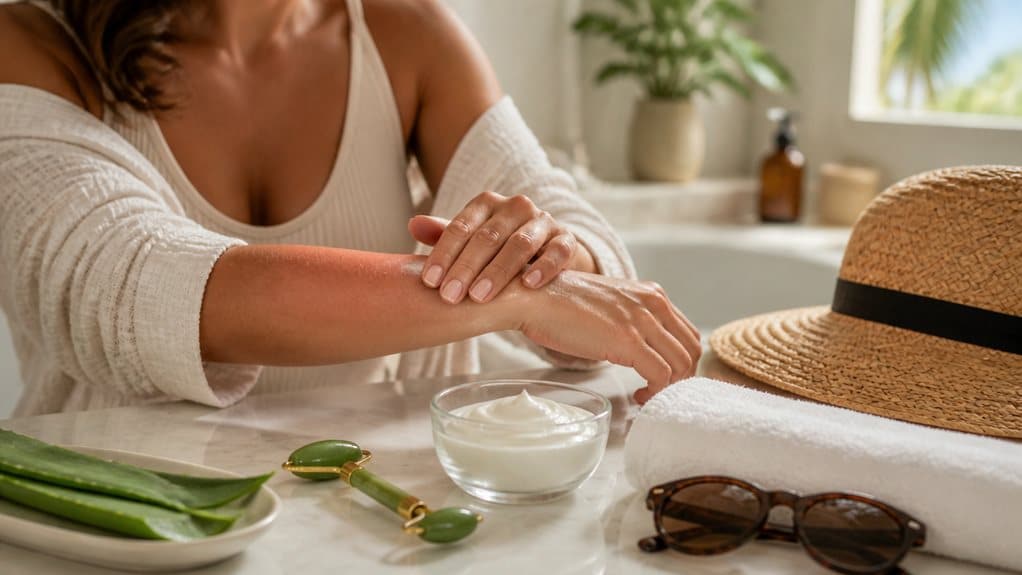
When your skin is recovering from sun exposure, what you leave out of your routine matters just as much as what you put in.
Harsh scrubs and overused exfoliating acids can strip away skin that’s already trying to heal, slowing down recovery instead of speeding it up.
Fragranced products, meanwhile, can irritate skin that’s already sensitized, so it’s best to set them aside until your skin calms down.
Harsh scrubs
Because sun-exposed skin is already dealing with a weakened barrier, reaching for a gritty scrub is one of the worst moves you can make right after time outdoors. Sun-stressed skin has less tolerance for friction, and even a “gentle” scrub can create tiny microtears, small breaks in the surface that let moisture escape and irritation creep in.
Skip physical exfoliants for at least 2 to 3 days after sun exposure. Your skin needs calm, not friction, right now. Think about what scrubbing actually does during this window:
- Strips away the thin layer of moisture your skin is fighting to keep
- Increases redness that already feels uncomfortable
- Delays the barrier repair your skin is trying to complete
- Turns a simple shower into another source of stress
Choose gentle cleansing instead, and save exfoliation for later.
Overusing exfoliating acids
If your skin still feels tight or tender after sun exposure, reaching for glycolic, lactic, or salicylic acid is a step in the wrong direction. These acids work by removing dead skin cells, but on stressed skin, they can worsen redness, dryness, and irritation instead of improving texture.
The safer move is to stop exfoliating entirely until your skin returns to its normal comfort and texture. This means pausing AHAs and BHAs, along with any acid-based toners or treatments, even if they’re part of your usual routine.
Recovery isn’t the time to introduce new actives or push through discomfort. Give your skin a break, and let barrier repair take priority over smoothing or brightening goals for now.
Fragranced products on irritated skin
Once your skin feels tight, tender, or freshly sunburned, that pleasant-smelling lotion in your routine is one of the initial things to set aside. Fragrance is one of the most common triggers of irritation, and leave-on products like moisturizers and sunscreens keep those compounds on your skin far longer than a rinse-off cleanser does. Even labels that say “unscented” can still hide masking fragrance ingredients.
Check ingredient lists for these red flags:
- “Fragrance,” “parfum,” or “perfume” on the label
- Named allergens like linalool, limonene, or geraniol
- Vital oils marketed as “natural” scent
- Long ingredient lists with unfamiliar names
Choosing fragrance-free formulas gives your skin barrier a break while it recovers from sun exposure.
Amazon product categories to consider
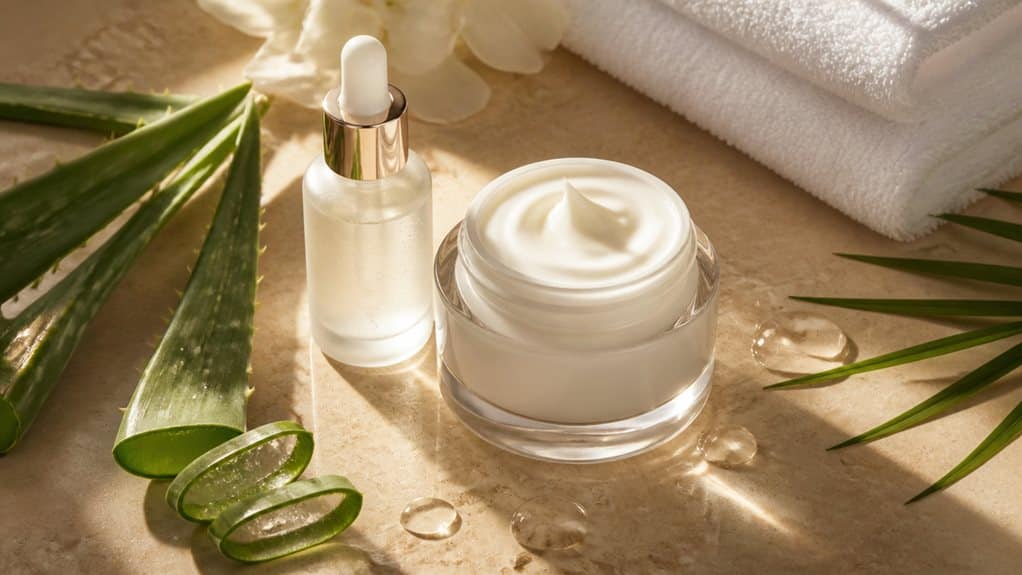
Since your skin’s needs shift once summer sun exposure tapers off, it helps to know which Amazon categories actually address post-summer recovery instead of just general skincare upkeep.
Start with gentle, fragrance-free cleansers in cream or low-foam formats, since these clean without stripping already-sensitized skin. Hydrating serums with hyaluronic acid or panthenol add moisture back in, while ceramide moisturizers work to support your skin’s barrier, the outer layer that keeps water in and irritants out.
Gentle cleansers, hydrating serums, and ceramide moisturizers work together to soothe sensitized skin and rebuild your barrier after summer.
Don’t skip facial sunscreen, even in fall; broad-spectrum SPF 30+ or mineral formulas with zinc oxide suit reactive skin well.
For extra comfort, hydrating sheet masks and cooling facial rollers offer quick relief. Barrier-repair creams with niacinamide are worth considering if dryness lingers longer than expected.
Frequently asked questions
With those product categories in mind, you probably still have some specific questions about how to put them into practice. Here are quick answers to the concerns that come up most often.
- Does your skin feel tight and thirsty, even after moisturizing?
- Are dull patches making your selfies look flat under bright light?
- Do you worry sunscreen might clog pores or feel heavy?
- Are you unsure if exfoliating will help or hurt sensitive skin?
Cleanse gently with sulfate-free formulas, keep showers short, and moisturize morning and night with ceramide-rich creams.
Exfoliate once or twice weekly using mild AHAs like lactic acid.
Wear SPF 30+ daily, even indoors, and reapply every two hours outdoors.
Rinse promptly after swimming, then layer aloe gel and a thick moisturizer for recovery.
Conclusion
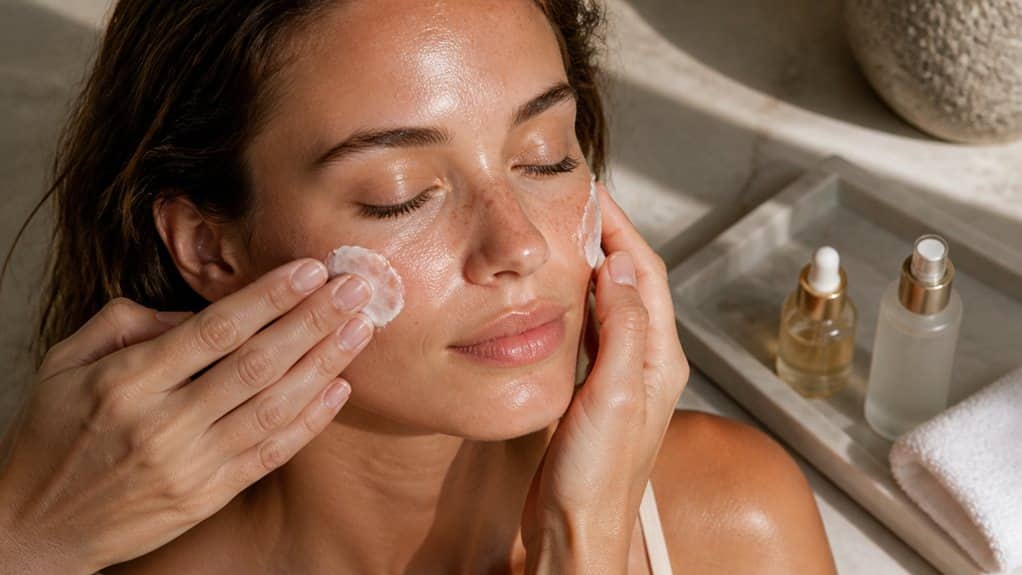
After a season of sun exposure, your skin needs consistent care rather than a single fix.
Start with hydration: a gentle cleanser, a hyaluronic acid serum, and a ceramide-rich moisturizer help rebuild the barrier and reduce water loss.
Add gentle exfoliation weekly to smooth texture, and bring in vitamin C or niacinamide if you’re dealing with visible sun spots.
If discoloration or roughness feels stubborn, a dermatologist can offer stronger options like peels or laser treatments.
Whatever routine you choose, daily broad-spectrum sunscreen is non-negotiable, since UVA rays affect skin year-round, not just in summer.
Recovery takes patience, but small, steady steps, cleansing, hydrating, protecting, will help your skin look healthier for the camera and in everyday life.
Frequently Asked Questions
How Long Does Post-Summer Skin Recovery Usually Take?
You’ll typically notice visible improvement within 3–4 weeks, while complete recovery usually takes 6–8 weeks. Deeper issues like pigmentation and barrier repair can take longer, sometimes stretching to 12 weeks with consistent care.
Can I Still Use Vitamin C After Sun Exposure?
Yes, you can still use vitamin C after sun exposure—it’s an antioxidant that helps your skin recover, not a photosensitizer. Just don’t skip sunscreen, since vitamin C supports repair but won’t protect you from UV rays.
Should I Switch My Entire Routine or Just Add Products?
Just add products—don’t overhaul everything. If your gentle cleanser, moisturizer, and sunscreen aren’t irritating you, keep them. Layer in hydrating serums or antioxidants for extra support instead of replacing your whole routine at once.
Is It Normal for Skin to Peel After Sun Damage?
Yes, it’s normal—peeling means you’re shedding damaged cells. It usually starts a few days post-burn and stops around a week in. Don’t pick at it; keep skin gently hydrated instead.
Do I Need a Dermatologist if Dryness Doesn’T Improve?
Yes—if your dryness doesn’t improve after two weeks of gentle cleansers and moisturizer, see a dermatologist. This is especially true if you notice itching, redness, scaling, or symptoms that keep returning.
Summary and Conclusion
Your skin doesn’t need a dramatic overhaul after summer, just a shift toward gentler, more supportive products. A mild cleanser, a hydrating serum, ceramides to reinforce your barrier, and consistent sunscreen use address most of the dullness and tightness you’re likely noticing. Give any new routine a few weeks before judging results, since skin barrier repair takes time. Small, consistent changes usually show up initially in how your skin looks on camera.
 English
  Español
  Français
  Deutsch
  Italiano
Leave A Comment