
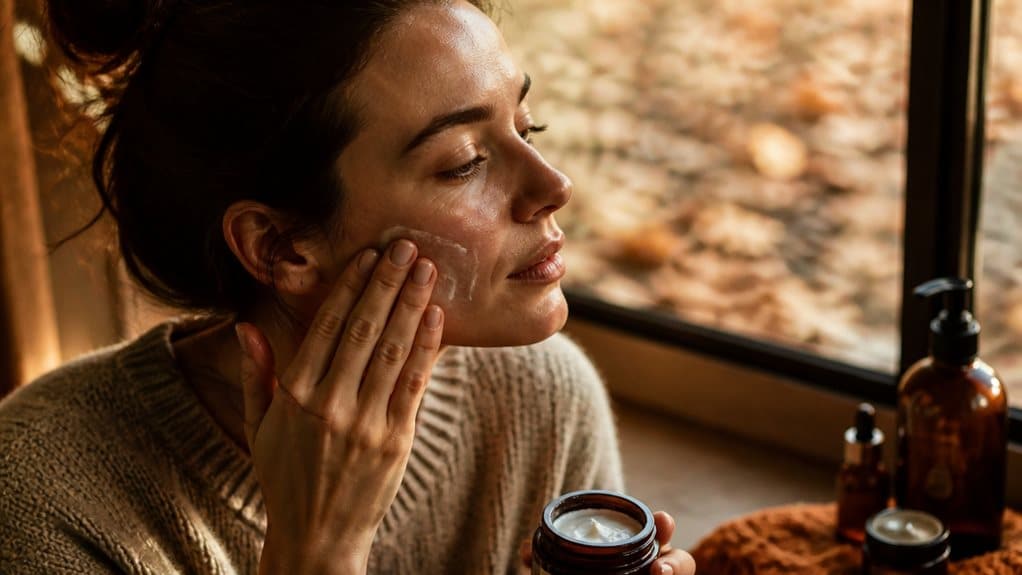
Cold outdoor air and indoor heating both strip moisture from your skin, causing tightness, flaking, and rougher texture. To fight this, wash with a cream cleanser, apply hydrating serums like hyaluronic acid on damp skin, then seal with a ceramide cream and facial oil. Run a humidifier to keep indoor humidity near 40–50%. Keep showers lukewarm and skip harsh foaming cleansers. The details below show you exactly how to build this routine step by step.
Auf einen Blick
- Cold outdoor air and indoor heating both lower humidity, increasing transepidermal water loss and skin dryness.
- Use a humidifier (indoor humidity 30–50%, bedroom ~60%) to replenish moisture stripped by heating systems.
- Cleanse with lukewarm water and a cream cleanser, then apply moisturizer immediately to damp skin.
- Layer hydrating serums (hyaluronic acid, glycerin) with ceramide creams to repair barrier and lock in moisture.
- Limit exfoliation to once weekly, use SPF daily, and add facial oils for extra protection against dryness.
Einleitung
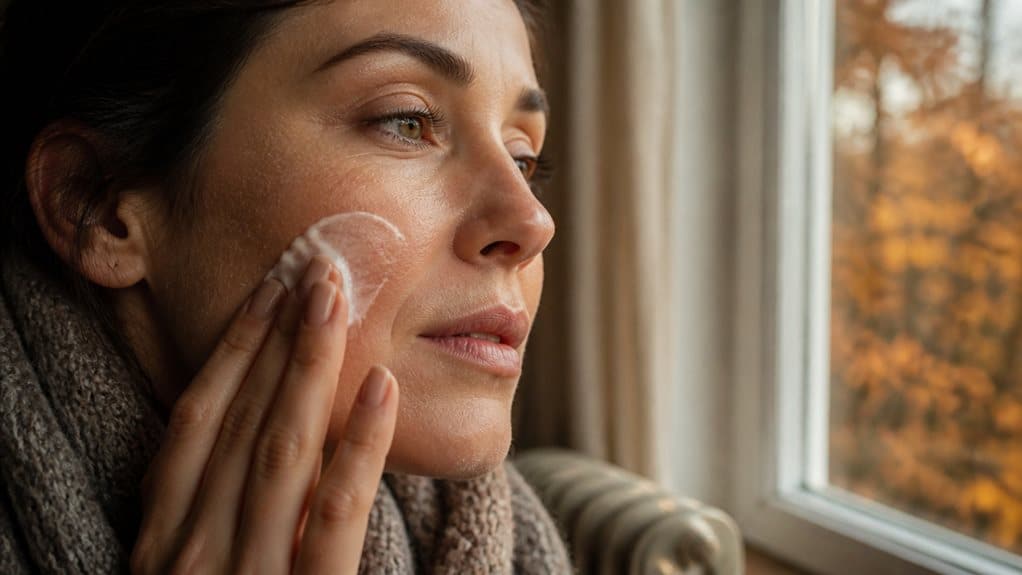
Every autumn, your skin quietly asks for a different routine than the one you used all summer. Cold outdoor air, indoor heating, and lower humidity work together to pull moisture out of your face, leaving it tight, flaky, or easily irritated. This is a normal seasonal shift, not a sign that something has gone wrong.
Dry facial skin autumn concerns usually respond well to small, consistent adjustments rather than new treatments. A solid autumn skin care routine focuses on three pillars: gentle cleansing, frequent moisturizing, and humidity support at home. Humidity often drops from summer levels of 60–80% down to about 30–50% in autumn, which is a major reason skin feels drier this time of year.
Your winter skin barrier, the outer layer that keeps moisture in and irritants out, needs extra protection once temperatures drop. The rest of this guide walks through practical steps to keep it comfortable through the colder months.
Why skin often feels drier in autumn
As temperatures drop, the air simply holds less moisture, so outdoor humidity falls and your skin loses water faster through its surface.
Indoors, your heating system might keep you warm, but it strips even more moisture from the air, which can leave your face feeling tight by morning. Running a humidifier set to around 60% indoors during the colder months can help replenish the moisture your skin loses to dry, heated air.
Add hot showers and harsh cleansers into the mix, and you’re washing away the natural oils your skin needs to hold onto that moisture initially.
Lower humidity
With the arrival of cooler weather, the air around you simply holds less water vapor than it does in summer, and that shift matters more for your skin than you might think.
Combine that with dry skin indoor heating, and your skin’s outer layer loses water faster than it can replace it. This ongoing loss can leave your face feeling tight, flaky, or rough, especially after cleansing. Left unaddressed, this dehydration can even make wrinkles more obvious over time.
Keeping your home between 30% and 50% humidity can ease some of this strain, since moister air slows evaporation from your skin’s surface.
A good moisturizer for cold weather works alongside this by sealing in existing hydration rather than replacing it. Neither step alone solves dryness completely, but together they support a more comfortable, resilient skin barrier through the season.
Indoor heating
Once you turn the heat on, the humidity problem you’re already fighting outdoors gets worse indoors, too. Heated air holds less moisture than cooler air, so it pulls water straight from your skin, a process called transepidermal water loss. That’s why your face can feel tight or flaky even before winter really arrives.
Radiators and heating vents make this worse if you sit or sleep too close to them. Facing a radiator overnight can leave you waking up with rougher, tighter skin, since your skin already loses moisture naturally while you sleep. Running a humidifier in the bedroom can help replace the moisture that heated air pulls away while you sleep.
A small thermostat adjustment helps, and layering clothing means you don’t have to crank the heat as high. Aim for indoor humidity around 40–50%, since dermatology guidance suggests skin stays more comfortable in that range.
Hot showers and cleansing habits
While a hot shower feels comforting when the weather turns cool, it can quietly work against your skin. Heat strips away natural oils that keep your face hydrated, leaving it tight and itchy once you step out.
Long showers make this worse, since extended heat exposure pulls more moisture from the skin’s surface.
Switching to lukewarm water and shorter showers helps limit this damage. Your cleanser matters too: harsh, foaming formulas can strip protective oils, while a cream cleanser cleans gently without disrupting your skin’s barrier.
Timing counts as much as temperature. Pat your face damp instead of rubbing it dry, then apply moisturizer right away. Those initial few minutes after washing are your best window to lock in hydration before it evaporates. This is also a good moment to apply a hydrating serum, since damp skin helps lock in moisture more effectively.
A practical autumn morning routine
Autumn mornings often call for a gentler approach than the routine you relied on all summer.
Start with lukewarm water and a hydrating cream cleanser, keeping the wash brief so you don’t strip natural oils. Pat, rather than rub, your skin dry with a soft towel.
Keep it lukewarm, keep it brief—your skin’s natural oils are worth protecting, even in the shower.
From there, follow a simple three-step layering order:
- Hydrating toner or essence to add water-based moisture.
- Hydrating serum, like a hyaluronic acid formula, applied while skin is slightly damp.
- Ceramide cream to seal everything in and support the skin’s barrier, which also helps reduce transepidermal water loss in dry conditions.
Finish with a lightweight, moisturizing sunscreen rated SPF 30 or higher, since UV rays don’t take a break just because the air turns cooler.
A practical autumn evening routine

Your morning routine sets the tone for the day, but your skin does most of its repair work while you sleep, so nighttime care deserves just as much attention.
Start with a cream cleanser instead of a foaming one; it removes makeup and sunscreen without stripping natural oils. Use lukewarm water and keep the routine short to avoid extra moisture loss.
Follow with a hydrating serum on damp skin, letting it absorb before moving on. Then apply a ceramide cream to reinforce your barrier overnight, adding a facial oil on top if your skin feels especially tight. These lipid-rich products help seal in moisture and shield skin from harsh, cold conditions.
Limit exfoliation to a few times weekly, choosing lactic acid or PHA over scrubs. A humidifier and consistent nightly layering help lock in hydration through cold, dry air.
Ingredients that support dry skin
When you’re picking products for dry skin, a few ingredients matter more than others, and knowing what they do can help you shop smarter.
Glycerin and hyaluronic acid pull water into the skin, with hyaluronic acid able to hold up to a thousand times its weight in water, while ceramides act like mortar between skin cells, keeping moisture in and irritants out.
Squalane and other occlusive ingredients then seal everything in, preventing water loss so your skin stays comfortable for longer, especially in dry or heated indoor air. Natural oils like jojoba and argan supply essential fatty acids that help restore elasticity and protect against further moisture loss.
Ceramide
Few ingredients matter as much for dry facial skin as ceramides. These are lipids that make up about half of your skin’s natural lipid content, forming a big part of your skin barrier. Think of ceramides as the mortar holding your skin cells together, keeping moisture in and irritants out.
When you’re dealing with cold air and indoor heating, your barrier can weaken, letting water escape faster. Ceramides help slow that process, known as transepidermal water loss. Natural ceramide levels also decrease with age, which is why skin often becomes drier as you get older.
Look for these when choosing a product:
- Ceramide NP, EOP, or NS – types with solid research behind them
- Paired occlusives like dimethicone or shea butter for better sealing
- Consistent daily use rather than high concentration alone
Results build gradually, often within two to four weeks.
Glycerin and hyaluronic acid
Since ceramides work best when there’s actual water in the skin to lock in, glycerin and hyaluronic acid play a supporting but essential role in any dry-skin routine. Glycerin is a humectant, meaning it pulls water from the air and from deeper skin layers up toward the surface, hydrating the stratum corneum, your skin’s outer layer. Hyaluronic acid works correspondingly, holding onto water to soften rough, dry patches. In fact, research has identified glycerin as the most effective humectant when compared to other common hydrating ingredients.
| Zutat | Main Job | Best Paired With |
|---|---|---|
| Glycerin | Pulls moisture to skin surface | Oils, emollients |
| Hyaluronsäure | Binds water in skin | Moisturizers, serums |
| Both together | Support barrier, reduce dryness | Ceramide creams |
Apply these on damp skin, then seal with a moisturizer to prevent evaporation in heated rooms.
Squalane and occlusive ingredients
Think of squalane as skin’s own oil in a bottle. This lightweight ingredient mimics the sebum your skin already produces, so it absorbs quickly without leaving a greasy film. That makes it a solid choice when cold air and indoor heating strip your skin’s natural moisture.
Squalane works as an occlusive, meaning it sits on top of your skin to lock hydration in. Look for it in:
- Facial oils for extra-dry patches at night
- Serums for lightweight daytime hydration
- Creams for cold, windy days needing stronger protection
It’s noncomedogenic, so it shouldn’t clog pores, and its calming nature suits sensitive or reactive skin dealing with autumn dryness and mild irritation.
How to adjust makeup for dry skin
Makeup can either help or hurt dry skin, depending on the products and techniques you choose. A hydrating primer creates a smoother base for foundation to grip, while cream products blend more easily into flaky areas than powders do.
Cutting back on powder, especially outside the T-zone, keeps your finish from looking cakey or emphasizing texture.
Hydrating primer
Once your skincare has sunk in, hydrating primer is what bridges the gap between that routine and your foundation. It sits after moisturizer or sunscreen and before makeup, locking in moisture so skin stays nourished as the day goes on. On dry, cold-weather skin, it also smooths the surface so foundation applies more evenly, reducing cracking, caking, and creasing.
When choosing one, look for:
- Humectants like hyaluronic acid and glycerin, which pull water into the skin
- Emollients such as squalane or plant oils, which soften texture
- Vitamin E, which supports overall comfort
Gel, cream, or oil-infused textures work better than mattifying formulas, which can leave dry skin looking flakier instead of smoother.
Cream products
Swap your matte formulas for cream-based ones when dry skin becomes an issue, since cream products tend to blend more smoothly and settle less into rough patches.
Cream foundation gives a softer finish than powder versions, which can make flakes and texture more noticeable. Cream blush and bronzer sheer out easily over skin that lacks surface moisture, adding color without clinging to dry areas.
Cream highlighter works well too, giving visible radiance without the chalky look powder sometimes leaves on dry skin. These formulas generally perform best when applied over fully moisturized skin, since dry patches are less likely to catch product.
If budget matters, a single multi-use cream stick for cheeks and lips can simplify your routine while still giving that dewy finish.
Avoiding excess powder
Just as cream products help you avoid heavy, texture-catching formulas, powder deserves the same careful reconsideration in a dry skin routine.
Powder isn’t off-limits, but it works best as a spot treatment rather than an all-over base.
When you dust it everywhere, it tends to settle into dry patches and highlight rough texture instead of hiding it.
Keep these three points in mind:
- Target only oily zones, like your nose or center forehead, instead of your full face.
- Skip powder on flaky or dehydrated areas, since it can catch on texture and look uneven.
- Use the lightest dusting possible with a fluffy brush, tapping off excess before you apply.
This selective approach keeps your finish looking natural, not flat.
Zu berücksichtigende Amazon-Produktkategorien
Browsing Amazon for dry-skin solutions gets a lot easier once you know which categories to search initially. Start with cream cleansers, since these clean your skin without stripping its natural oils, unlike foaming formulas.
Move to hydrating serums with hyaluronic acid or glycerin, which pull water into the skin’s surface layer.
Ceramide creams come next, and they’re worth prioritizing because ceramides help rebuild the skin’s outer barrier, which weakens in cold, dry air. Facial oils can seal in that moisture afterward, especially if you notice tightness by midday.
Finally, hydrating primers bridge skincare and makeup, smoothing texture before foundation. If you’re on a budget, a simple cream cleanser paired with one solid ceramide moisturizer often covers the basics.
Häufig gestellte Fragen
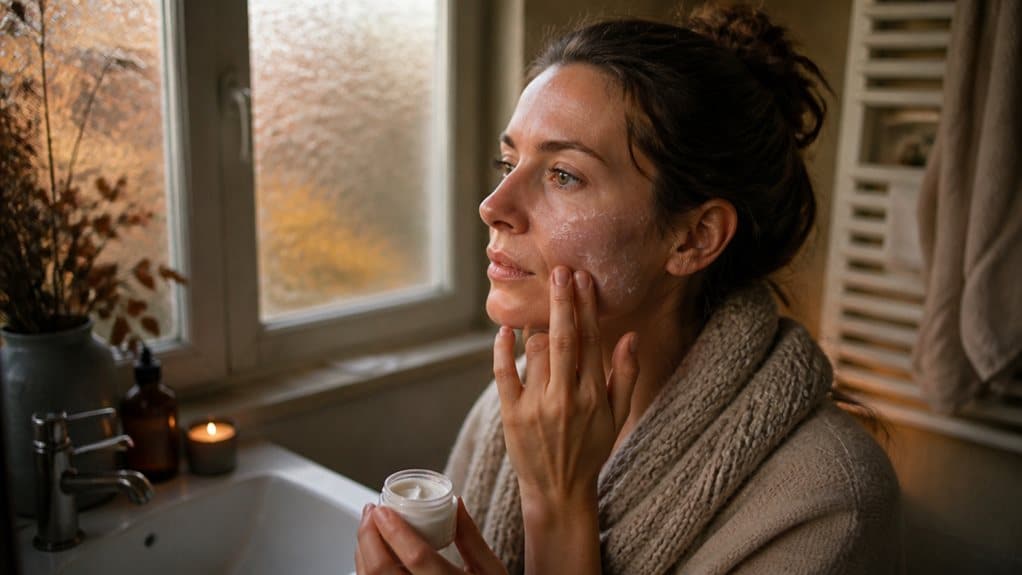
Once you’ve settled on a few products worth trying, some smaller questions usually come up about timing, habits, and why dry skin acts up initially.
Autumn dryness comes from lower humidity, indoor heating, and hot water that strips natural oils. Harsh cleansers and frequent washing make it worse.
For daily habits, keep three things in mind:
- Wash your face no more than twice a day, using lukewarm water only.
- Apply moisturizer right after washing, while skin is still damp.
- Limit exfoliation to once a week to avoid irritation.
A humidifier set near 60% at night can help maintain indoor humidity between 30% and 50%, which supports comfortable skin during colder months.
Fazit
Because cold air and indoor heating pull moisture out of your skin all day, the fix isn’t complicated: support your barrier, moisturize right after washing, cleanse gently, and keep indoor humidity in check. Choose a cream cleanser over a foaming gel, apply a ceramide-rich moisturizer while your skin is still damp, and layer a hydrating serum underneath for extra water retention. A facial oil or hydrating primer can help lock in moisture before makeup, especially for video calls where dry, flaky patches show up more under harsh lighting.
Keep your routine simple and consistent rather than adding too many products. Watch for tightness, stinging, or flaking, and don’t skip daily SPF. If dryness persists despite these steps, check with a board-certified dermatologist.
Häufig gestellte Fragen
Can I Use the Same Moisturizer Year-Round Instead of Switching for Autumn?
You can, if your skin stays balanced and comfortable. But if you notice tightness, flaking, or dullness once temperatures drop, it’s a sign you’ll need a richer, more hydrating cream instead.
How Long Does It Take for a New Hydrating Routine to Show Visible Changes?
You’ll notice softer, less tight skin within days to a week. Clearer texture improvements usually show up after 4-8 weeks, while deeper concerns like fine lines need 2-3 months of consistent use.
Should I Stop Exfoliating Completely Once Autumn Dryness Begins?
No, you shouldn’t stop completely—just scale back. Switch to a gentle exfoliant like lactic acid or a mild PHA once weekly, then always follow with moisturizer to protect your barrier.
Is It Necessary to Change Sunscreen Formulas When the Weather Turns Cooler?
Not necessarily—you don’t need a whole new formula, just a comfier texture. Stick with SPF 30+ broad-spectrum, but switch to a richer cream if your skin feels drier, and keep reapplying every two hours.
Can Drinking More Water Alone Fix Dry, Flaky Skin in Autumn?
No, drinking more water alone won’t fix flaky autumn skin. Your dryness usually comes from barrier water loss, not low intake—so you’ll need moisturizers, ceramides, and a humidifier for real results.
Zusammenfassung und Schlussfolgerung
Autumn’s mix of cold air and indoor heating doesn’t have to leave your skin tight, flaky, or dull on camera. A few adjustments, a gentle cleanser, a hydrating serum, a richer moisturizer, and a humidifier for indoor air, can restore comfort and improve how your skin looks in photos and video calls. You don’t need to overhaul your entire routine. Start with one or two changes, see how your skin responds, and build from there as the season progresses.
 Deutsch
  English
  Español
  Français
  Italiano
Hinterlassen Sie einen Kommentar