
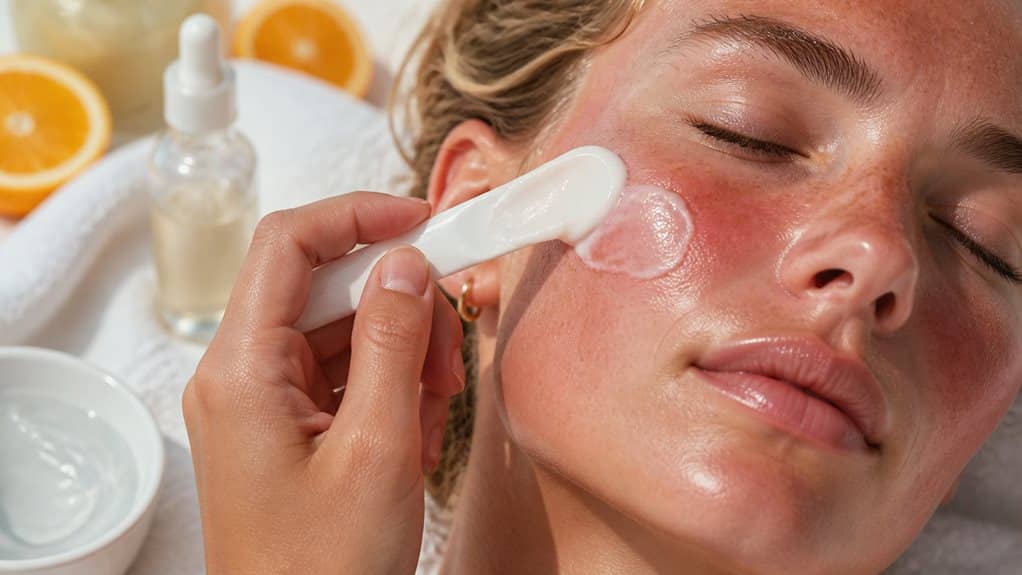
After too much sun, your face needs three things: cooling, hydration, and gentle barrier repair. Move to shade, then press a cool, damp compress on your skin for 10 minutes. While still damp, apply a fragrance-free aloe or panthenol gel, seal with a lightweight ceramide moisturizer, and reapply as tightness returns. Skip retinoids and exfoliating acids until you’re healed, and wear SPF 30+ daily. Below, you’ll find the timing, ingredients, and warning signs worth knowing.
Auf einen Blick
- Move out of the sun immediately and cool skin with a cold compress or chilled, fragrance-free aloe gel applied to damp skin.
- Cleanse gently once or twice daily with a pH-balanced, soap-free cleanser and cool water; avoid scrubs, brushes, and hot water.
- Apply a water-based hydrating serum with hyaluronic acid, glycerin, or panthenol onto damp skin, pressing gently without rubbing.
- Seal in hydration with a lightweight, fragrance-free ceramide moisturizer, reapplying every three to four hours until tightness and redness ease.
- Skip exfoliants and active ingredients until fully healed, and protect skin daily with broad-spectrum SPF 30+, ideally a mineral formula.
Einleitung
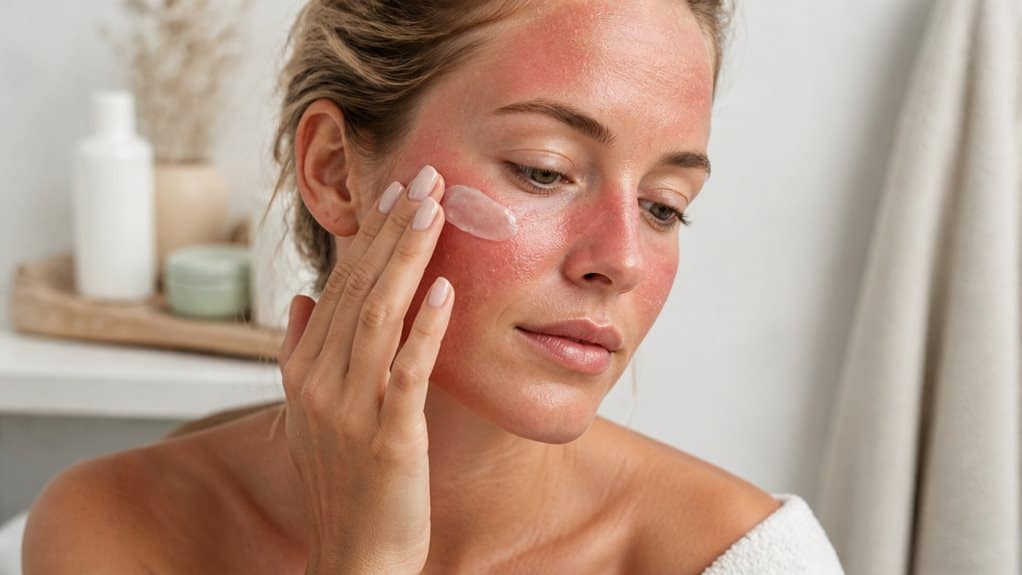
Even when you remember your sunscreen, a long stretch outdoors can leave your face feeling tight, warm, and drier than usual — and that parched, flushed look shows up fast in selfies and video calls.
That’s where an after sun skin care face routine fits: it’s recovery, not UV defense. Reach for cool water, a gentle cleanser, then a hydrating layer to soothe sun exposed skin without scrubbing, acids, or drying acne spot treatments.
An after sun moisturizer should feel comfortable, replenish water, and support your barrier with aloe vera, glycerin, hyaluronic acid, panthenol, or ceramides. Formulas built around antioxidants like vitamin E can also support repair and protect against the free radical damage UV exposure leaves behind. Choose fragrance-light gels for heat, creamy lotions for tightness, and simpler formulas when budget matters most; save actives for later. Comfort now helps makeup sit better on camera.
What happens to skin after too much sun
Spend a long afternoon outdoors and your skin will let you know about it, sometimes before you even check a mirror. UV rays injure cells in deeper layers, so blood flow rises and your face turns red, hot, tender, and swollen. Mild cases look like simple flushing; stronger exposure can bring rash-like irritation or blisters.
Sunlight also strips lubricating oils and water, leaving sun stressed skin face tight, flaky, rough, and dull. That lost moisture matters because heavy exposure can cause dehydration, which makes tightness and dullness worse. A weakened barrier feels fragile and reflects light unevenly, so fine lines look sharper in selfies. Repeated exposure damages collagen and elastin, thickens texture, and can leave lasting redness, dark spots, and higher skin-cancer risk. Remember this when you judge any facial after sun gel for calm comfort, gentle slip, not promises.
Immediate steps
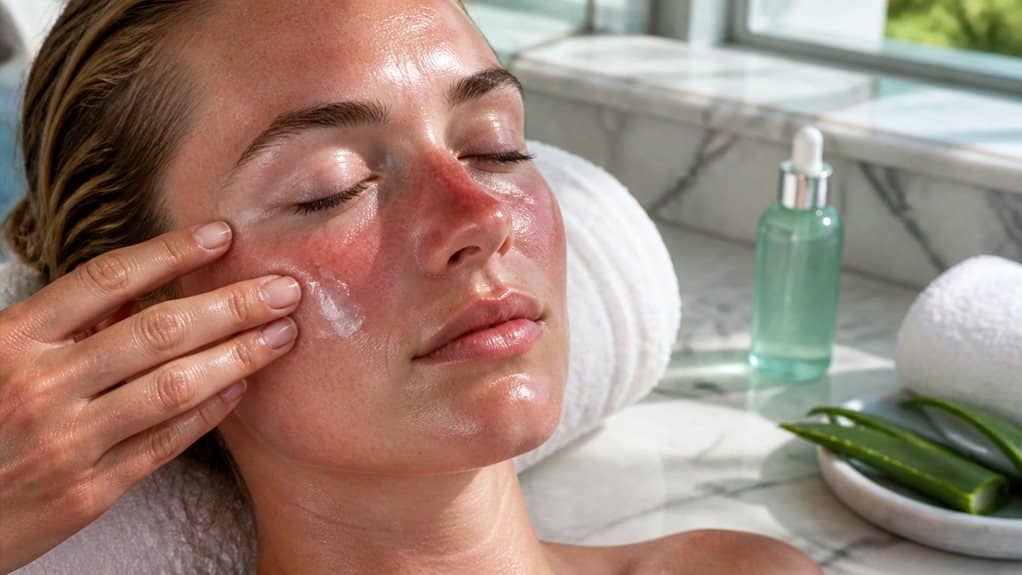
To start, step out of the sun and into shade or indoors, since every extra minute of UV exposure adds to the irritation you’re about to treat. Next, cool your face gently by holding a clean towel dampened with cool tap water against your skin for about 10 minutes, repeating this several times a day and skipping any rubbing or scrubbing. When you finish, pat or blot your face dry rather than rubbing it, because this leaves some moisture on the skin that the soothing products you apply next can help seal in. Ultimately, drink extra water over the next day, because sun exposure dehydrates your skin and rehydrating from the inside supports whatever soothing products you’ll apply next.
Move out of the sun
The moment your face starts to feel hot, tight, or sore in the sun, your initial move is simple: get out of the UV.
Head indoors or into full shade, because more exposure keeps the injury going. Every extra minute adds to your lifetime cumulative UV exposure, which drives premature skin aging and increases skin cancer risk.
- Cover your face with a wide-brimmed hat and UV sunglasses if you can’t leave right away.
- If another short trip outside is unavoidable, apply broad-spectrum SPF 30 or higher before you go.
- Skip peak UV hours, usually 10:00 a.m. to 4:00 p.m., and don’t stay in direct sun “just a little longer.”
Cool the skin gently
Once you’re out of the sun, your next job is to bring your skin’s temperature down, because heat that’s trapped near the surface keeps redness and discomfort going. Take a cool shower or hold a cold compress against your face for a few minutes.
Skip hot water, since it dries skin further and worsens irritation. A gentle facial mist offers quick surface relief between compresses.
While your skin is still damp, smooth on something lightweight and chilled. A refrigerated sheet mask or pure aloe gel delivers cooling plus hydration without heaviness. Gels are an especially smart choice at this stage, since their lightweight texture provides immediate cooling relief to sunburned skin. Pick fragrance-free, alcohol-free formulas, since heavy ointments can trap heat early on. Pat products in gently, and don’t rub or scrub sun-stressed skin. Reapply the gel whenever skin feels hot, tight, or flushed.
Drink fluids
Cooling the surface handles the heat you can feel, but sun exposure also dehydrates your skin from the inside out, so what you drink is part of recovery, not just what you apply.
Internal hydration supports your skin’s elasticity and barrier function while it repairs, so sip fluids soon after exposure and keep drinking through the rest of the day. A weakened barrier struggles to hold onto moisture on its own, which makes steady fluid intake especially important while compromised skin works to rebalance and heal.
- Water is your primary-line choice; aim for 8–10 glasses spread throughout the day, especially if you’ve been sweating.
- Electrolyte drinks or coconut water can help replace what you lost during prolonged heat exposure.
- Water-rich foods like watermelon, cucumber, and celery add extra hydration alongside your drinks.
Skip alcohol, caffeine, and sugary drinks since they worsen dehydration; fluids support, but don’t replace, your topical moisturizer.
A gentle after-sun face routine
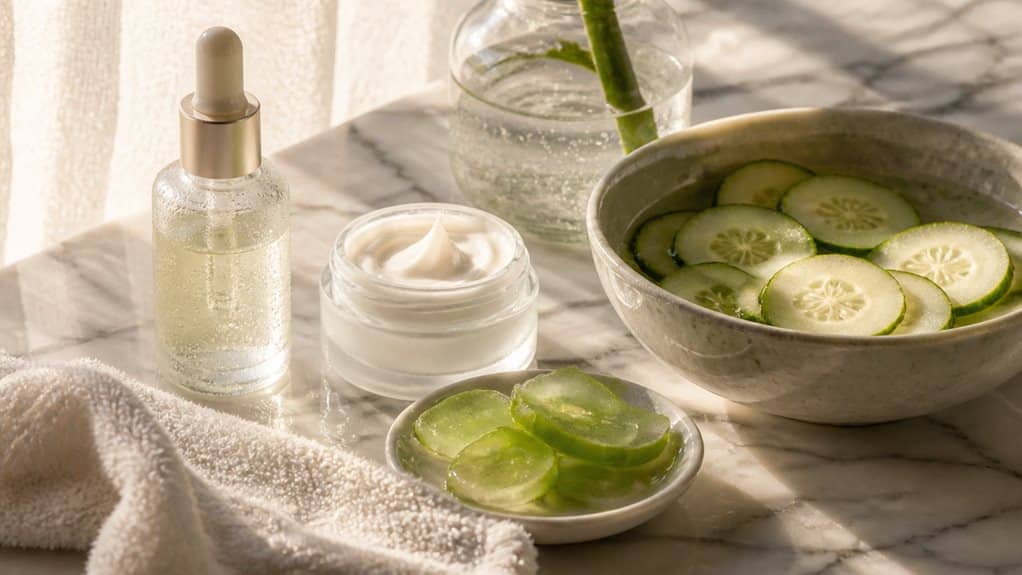
Once your skin feels cool and calm, you can move into a simple routine built around four steps: mild cleansing, a hydrating serum, a soothing moisturizer, and continued sun protection. While your skin heals, avoid exfoliating treatments so sunburned areas can recover naturally without added irritation.
You’ll start with a gentle, pH-balanced cleanser to lift away leftover sunscreen and sweat without stripping your skin, then layer on a water-based serum with ingredients like hyaluronic acid or panthenol to replace lost moisture.
From there, you’ll seal everything in with a lightweight ceramide moisturizer and keep applying broad-spectrum SPF 30 or higher each morning, since recovering skin is especially vulnerable to more UV damage.
Mild cleansing
Usually, the initial step in any after-sun face routine is a gentle cleanse, because your skin has spent the day collecting sunscreen, sweat, oil, and pollution that shouldn’t sit on the surface overnight.
Choose a fragrance-free, soap-free cleanser, then massage with fingertips only using cool or lukewarm water.
If you wore water-resistant SPF, start with an oil-based balm on dry skin, then follow with a mild water-based wash; don’t scrub, use brushes, or rinse hot. A single cleanse is often insufficient, since leftover residue can cause congestion and keep the rest of your routine from absorbing properly.
Rinse thoroughly and pat dry with a soft towel.
- Best for most faces: a hydrating gel or cream cleanser labeled gentle.
- Best for heavy sunscreen: a fragrance-free cleansing balm as step one.
- Skip: strong fragrance, alcohol, scrubs, and hot water.
Cleanse once or twice daily while your skin settles.
Feuchtigkeitsspendendes Serum
With cleansing done and your skin still slightly damp, it’s the right moment to put water back into your face. Sun exposure can deplete moisture and essential fats in the skin barrier, leaving the face dry, flaky, or itchy. Choose a lightweight, water-based hydrating serum; humectants such as hyaluronic acid and glycerin draw moisture toward the skin, while panthenol, niacinamide, or aloe can add calm, comfortable support. Skip strong acids, retinoids, fragrance-heavy formulas, and gritty exfoliants until your face feels normal again.
| Zutat | Main benefit | Best for |
|---|---|---|
| Hyaluronsäure | Hydration and plumping | Most skin types |
| Glycerin | Attracts water | Dry, tight skin |
| Panthenol | Soft, comfortable feel | Stressed skin |
| Niacinamid | Barrier support | Redness-prone skin |
Press a few drops over damp skin with clean hands, rather than rubbing. If your face is sunburned, keep this step simple and cooling, and stop if stinging persists or worsens.
Soothing moisturizer
Sealing in that hydrating serum is the next step, and a soothing moisturizer does the job well.
After sun exposure, your skin’s moisture barrier needs extra support, so look for ceramides, glycerin, or hyaluronic acid. Apply it to damp skin, and reapply every three to four hours until the tightness eases. Cica, also known as centella asiatica or tiger grass, is another barrier-repairing active worth seeking out because of its wound-healing properties.
Key things to check before buying:
- Fragrance-free, hypoallergenic formulas, since irritation risk rises after UV exposure
- Lightweight, non-comedogenic textures that won’t feel greasy or clog pores
- Soothing ingredients like aloe vera, chamomile, or calendula, plus vitamin E for antioxidant support
Skip any products with alcohol high on the ingredient list, since they’ll dry out already compromised skin.
A basic ceramide cream is often enough here; pricier options mainly add extra botanicals and antioxidants.
Continued sun protection
Once your moisturizer has settled in, your after-sun routine isn’t quite finished.
Before you head back outside, apply a broad-spectrum facial sunscreen with SPF 30 or higher; “broad-spectrum” means it helps shield against UVA and UVB rays.
Choose a lightweight, fragrance-free lotion or gel that layers well over moisturizer and under makeup, and won’t sting sensitized skin.
Reapply every two hours, and sooner after swimming, sweating, or towel drying.
For errands, a simple SPF 30 cream may be enough; for long outdoor time, pick water-resistant formulas and add a hat, sunglasses, shade, and protective clothing.
Try to limit direct sun from 10 a.m. to 4 p.m.
Daily sunscreen still matters on cloudy or cool days, even when your selfie lighting makes skin look calm.
Ingredients commonly used in after-sun care
When you’re scanning an after-sun label, four ingredients show up again and again: aloe vera, panthenol, glycerin, and ceramides.
Aloe vera cools and hydrates sun-stressed skin, while panthenol (a form of vitamin B5) and glycerin act as humectants, meaning they draw water into your skin and help hold it there.
Ceramides work differently—they’re lipids that support your skin’s protective barrier, so they’re worth seeking out if your face feels tight, flaky, or extra sensitive after a day outdoors.
Aloe vera
Aloe vera shows up in nearly every after-sun product for a simple reason: its high water content and light gel texture create an immediate cooling effect on heated, irritated skin. You can pat it on after cleansing, once it’s cooled, to ease burning and tightness without a heavy finish.
- Look for gels listing aloe high on the ingredient label, with minimal fragrance if your skin feels reactive.
- Apply a thin layer to clean skin, then reapply as needed; hydration may limit dryness and visible peeling.
- Treat it as comfort care, not a cure: evidence for faster sunburn healing is mixed, and antioxidant vitamins C and E only support recovery.
If your face still feels hot, cool it first; calmer skin looks smoother on camera.
Panthenol
Cooling gels handle the initial few hours after sun, but panthenol is what you’ll want once dryness and tightness set in a day or two later. A derivative of vitamin B5, panthenol works as a humectant, meaning it helps your skin hold onto water, and it reduces transepidermal water loss, the invisible moisture escaping through your outer layer.
Beyond hydration, it supports barrier repair and calms visible redness, burning, and itching after UV exposure. You’ll also see it in products for minor wounds, since it aids skin regeneration—useful when your face feels rough or peeling-prone. It layers well under makeup once skin settles down.
When shopping, look for creams or lotions listing 2–5% panthenol, ideally fragrance-free. A basic drugstore version is usually sufficient.
Glycerin
A quiet workhorse of skin care formulas, glycerin rarely gets headline billing, yet it’s one of the most dependable ingredients to reach for after a day in the sun.
As a humectant, glycerin pulls water into your skin’s outer layer, easing dryness, flaking, and tightness after UV exposure.
It also supports your moisture barrier, helping skin resist irritants like wind and dry air.
When you’re shopping, keep a few points in mind:
- Choose formulated serums or lotions with glycerin high on the ingredient list.
- Pair it with aloe or panthenol for extra soothing comfort.
- Skip undiluted pure glycerin, which can dehydrate facial skin.
Because it’s gentle and fragrance-free, glycerin suits nearly every skin type, and an affordable serum is usually enough.
Well-hydrated skin also reflects light evenly, helping you look smoother in selfies.
Ceramide
Think of ceramides as the mortar between your skin cells: they’re natural fats, or lipids, and they make up roughly half of your skin’s outer barrier.
After sun exposure, that barrier weakens and loses water, which is why your face can feel tight and look red. Ceramide creams help limit transepidermal water loss, the technical term for moisture escaping through skin.
When shopping, check labels for ceramide NP, AP, or EOP, ideally blended with cholesterol and fatty acids, since that mix mimics your skin’s natural structure. A basic ceramide moisturizer is enough for most people; richer balms suit very dry, windburned skin.
Apply it to damp skin after gentle cleansing, then layer sunscreen each morning, because ceramides restore best alongside daily broad-spectrum UV protection.
What to avoid
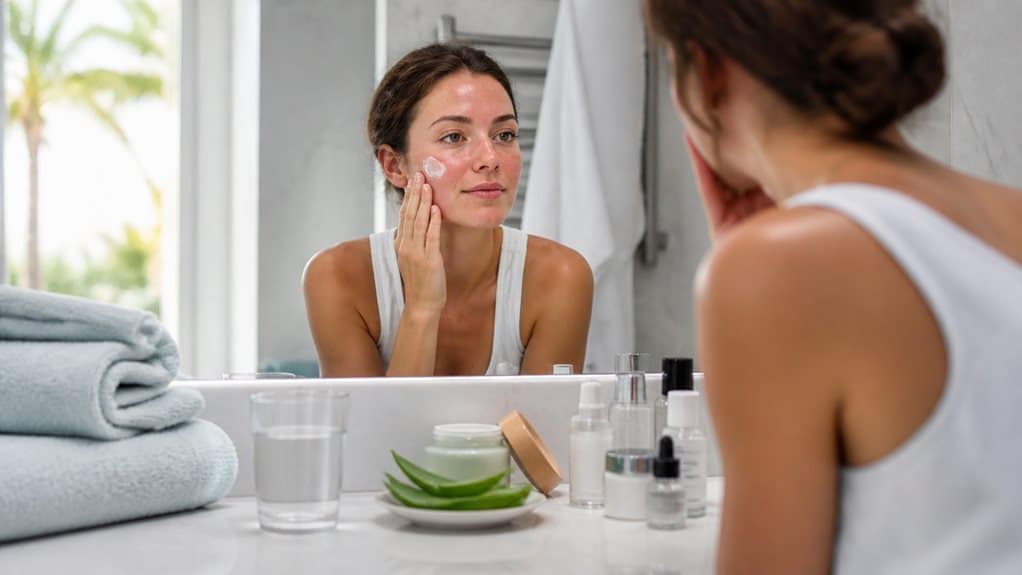
Once your skin’s had too much sun, its protective barrier is weakened and more reactive, so you’ll want to press pause on parts of your regular routine for at least two days.
Skip exfoliating acids like AHAs and BHAs, the active ingredients in many peel pads and pore-clearing toners, and hold off on retinoids such as retinol, because all of these can sting, dry out, or further irritate skin that’s already red or peeling.
You’ll also want to avoid fragranced or harsh products, including strongly scented creams, alcohol-heavy formulas, and stripping cleansers, since they can add irritation and slow your recovery.
Exfoliating acids
Put your exfoliating acids on hold after a day in the sun. AHAs like glycolic and lactic acid increase UV sensitivity, redness, and sunburn risk, so your sun-stressed skin needs a break. Even salicylic acid, which is gentler on sensitivity, doesn’t replace sunscreen and shouldn’t be layered right now.
Skip these until your skin recovers:
- Strong treatments like chemical peels, resurfacing masks, and scrubs
- Tools such as cleansing brushes or any “tingly” products
- Layered acids, like a lactic serum over a glycolic toner
Avoid morning application during high-UV periods, and reserve acids for PM use later, always with daily sunscreen. Wait until redness, heat, tightness, stinging, or peeling has resolved. Rushing back delays healing and can worsen irritation, leaving skin dull in your photos.
Retinoids
Exfoliating acids aren’t the only actives you need to shelve after a day in the sun—retinoids belong on that list too. Sunburned skin is more reactive, and retinol can add irritation instead of helping recovery. If your face is peeling, stinging, or inflamed, wait until it’s completely healed before restarting.
Your barrier needs soothing care initially, not an active that weakens it. Timing also matters. Sunlight degrades retinol on your skin, so apply it only at night and cleanse each morning.
While using retinoids, wear broad-spectrum SPF 30 or higher, reapply every two hours, and add a hat. Check labels for retinyl esters like retinyl palmitate, which is less stable in sunlight. Heading to the beach? Pause your retinoid until normal sun routines resume.
Fragranced or harsh products
Often, the biggest irritants after a day in the sun aren’t the obvious actives—they’re the fragrances hiding in everyday moisturizers, face mists, and cleansers. Choose fragrance-free, not just unscented, and scan lists for parfum, vital oils, bergamot, lemon, or lime; these can sting, trigger allergies, or react with UV.
- Skip alcohol-heavy perfume or cologne on your face; spray clothing instead, since alcohol worsens tightness and barrier water loss.
- Treat “natural” vital oils cautiously: lavender, tea tree, peppermint, rosemary, and citrus oils can irritate sunburned skin.
- For recovery, pick a bland ceramide moisturizer or panthenol cream labeled fragrance-free; save scented mists for calm, unexposed skin.
If redness feels sharp, simplify tonight: gentle cleanser, lukewarm water, moisturizer, then pause makeup until calm returns.
When to seek medical advice
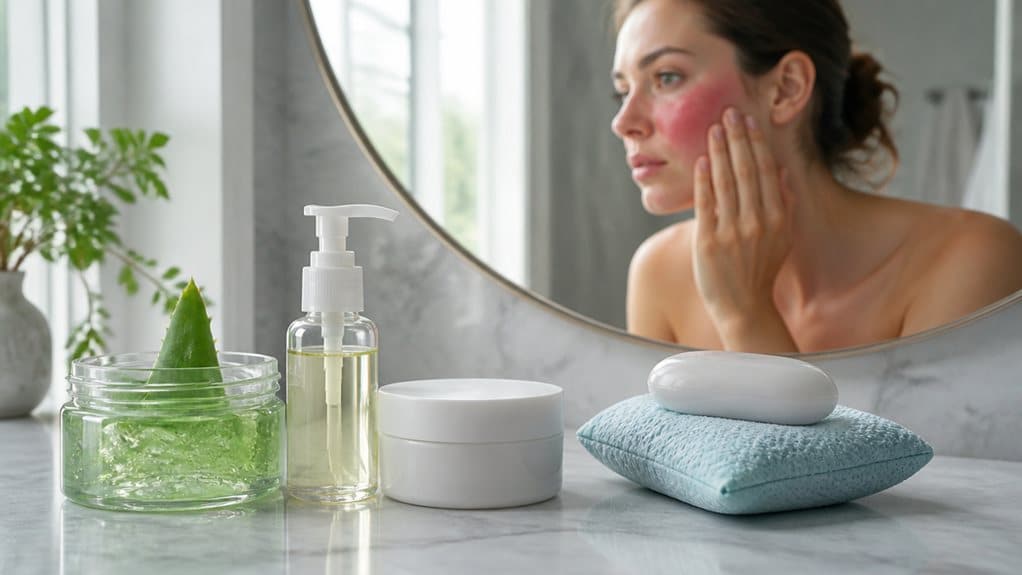
While most facial sunburn responds well to at-home care with aloe gel, panthenol cream, and a gentle cleanser, some symptoms go beyond what skin care can handle. Knowing the difference protects both your health and your complexion.
Contact a doctor if you develop large blisters on your face, severe swelling, or blisters showing pus or yellow crusts, which suggest infection. Red streaks spreading from the burn, a spot that bleeds on its own, or a sore that won’t heal also need evaluation.
Seek urgent care for fever above 102°F (39°C), chills, headache, confusion, or nausea — all possible heat illness signs. Dizziness, faintness, dry mouth, or reduced urination point to dehydration. Don’t ignore eye pain or vision changes. Have new or changing moles checked promptly.
Zu berücksichtigende Amazon-Produktkategorien
Start your search in Amazon’s dedicated After Sun Skin Care category, which sits under Beauty & Personal Care along the browse path Beauty → Skin Care → Sun Care & Tanning → After Sun. Names vary slightly by marketplace, but this path stays consistent.
Don’t stop there, though. Facial recovery often needs gentler formats, so check these related groupings:
- Facial Skin Care Products: your best source for panthenol creams, hydrating serums, and ceramide moisturizers formulated for delicate facial skin.
- Facial Cleansing Products and Makeup Removers: where you’ll find mild, fragrance-free cleansers that won’t strip irritated skin.
- Adjacent departments: after-sun searches also surface Body Moisturizers and Sunscreens, so filter for face-specific options.
This cross-category approach helps you compare textures, ingredients, and prices side by side.
Häufig gestellte Fragen
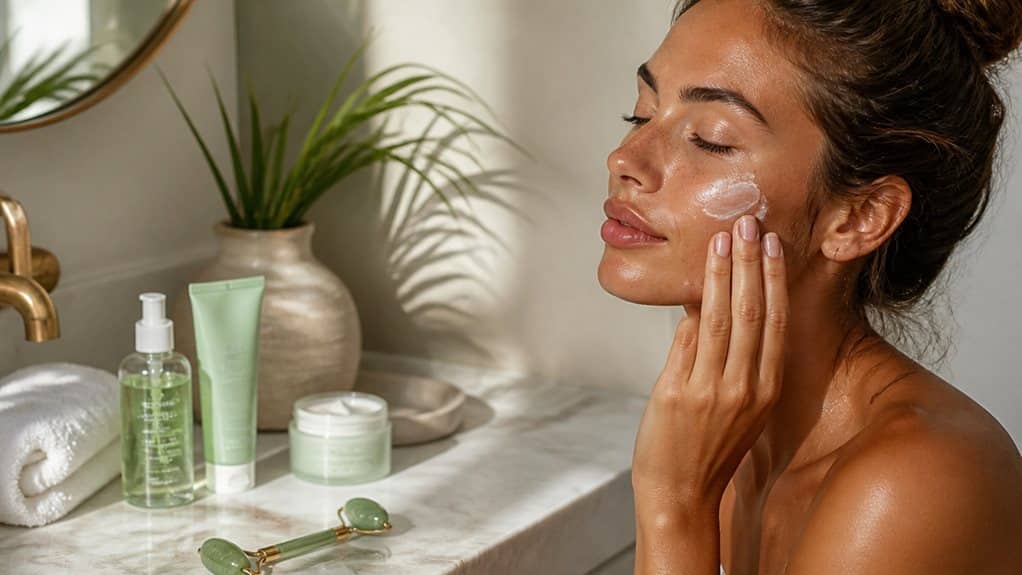
Even with a solid after-sun routine in place, a few practical questions tend to come up once you’re actually standing in front of the mirror with tight, warm skin.
Can you use body after-sun on your face? In a pinch, yes, if it’s gentle and fragrance-free, but facial formulas are usually safer for reactive, breakout-prone skin.
Wondering about order? Apply after-sun gel initially, then seal with a lightweight ceramide moisturizer if you still feel dry.
Use it morning and evening, and more often while tightness lasts.
If you’re going back outside, sunscreen is still required.
Choose mineral SPF with zinc oxide or titanium dioxide, since sensitive skin often tolerates it better, and reapply every two hours outdoors, even on cloudy days, for daily protection.
Fazit
When your face feels hot, tight, or noticeably red after time in the sun, that’s your cue to shift from protection into recovery mode. Cool the skin initially with a compress or lukewarm shower, then apply a hydrating layer to clean, slightly damp skin.
Hot, tight, or red skin after time in the sun is your cue to shift into recovery mode: cool first, then hydrate.
Keep the routine simple:
- Choose aloe or panthenol for calm, lightweight comfort.
- Use a hydrating serum, then seal with ceramide moisturizer.
- Skip scrubs, strong acids, and drying acne products until redness settles.
Reapply as needed, drink water, and bear in mind that after-sun care can’t undo UV damage. Keep using broad-spectrum sunscreen daily, and adjust texture by season: gel for oilier skin, cream for tight, peeling-prone skin.
If burning is severe, blistering, or persistent, seek medical advice rather than layering more products.
Häufig gestellte Fragen
Can I Wear Makeup Over After-Sun Products for a Video Call?
Yes, you can. Wait until your after-sun product fully absorbs, then apply makeup in light layers. If you’re peeling or tender, keep coverage minimal. Don’t skip sunscreen initially—it’s still your final step before makeup.
Should I Store Aloe Gel in the Fridge for Extra Cooling?
Yes, you’ll love refrigerated aloe gel. It feels instantly cooler on sun-stressed skin. Keep it airtight, use clean hands, and toss it if you notice discoloration or odor. Preserved store-bought gels don’t need chilling, though.
How Can I Hide Facial Redness in Selfies Without Irritating Skin?
You’ll want to tap green-tinted color corrector only on red zones, then blend thin foundation layers with a damp sponge—don’t rub. Finish with a redness-removal editing tool to gently soften any leftover tones digitally.
Can Children and Teens Use the Same After-Sun Face Products as Adults?
Not always. You can share gentle, fragrance-free aloe, panthenol, hydrating serum, or ceramide moisturizer, but don’t use adult actives like retinoids, strong acids, alcohol-heavy formulas, or benzocaine; keep routines simple for young skin; patch-test initially.
Does After-Sun Care Differ for Oily or Acne-Prone Skin?
Yes—your after-sun routine should differ. You’ll want lightweight, water-based, non-comedogenic gels or lotions that won’t clog pores. Skip thick creams and pause retinol or exfoliating acids for 24–48 hours while your stressed skin recovers.
Zusammenfassung und Schlussfolgerung
After-sun care doesn’t need to be complicated. Cleanse gently, apply a lightweight hydrator with aloe or panthenol, and seal it with a ceramide moisturizer — that’s enough for most mild sun stress.
Drugstore options often work just like premium ones, so check ingredient lists rather than price tags. If you’re dealing with blistering, swelling, or lasting pain, skip the products and see a doctor. Treat your skin well tonight, and tomorrow’s camera will notice the difference.
 Deutsch
  English
  Español
  Français
  Italiano
Hinterlassen Sie einen Kommentar