
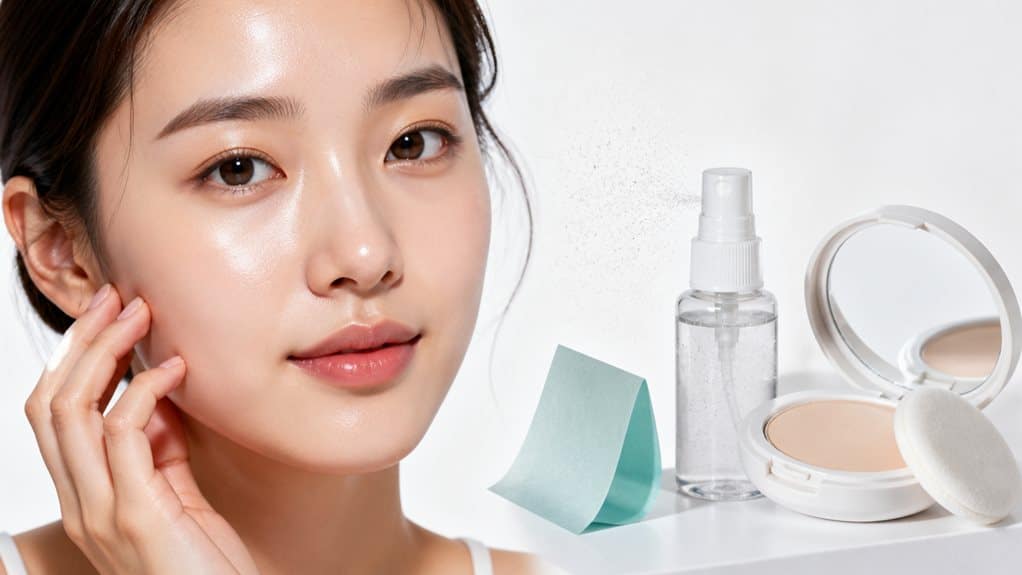
Blotting paper works best against shine because it lifts surface oil off your T-zone without disturbing foundation, while powder and mist do different jobs. Press a sheet onto oily spots for a few seconds—don’t rub. If shine lingers, tap finely milled pressed powder on top; layering powder over oil turns cakey. Face mist hydrates tight, dehydrated skin but won’t remove oil, so skip it for shine control. Below you’ll find smart techniques and budget picks.
At a Glance
- Blotting paper works best for instant shine control: pressed onto the T-zone, it lifts surface oil without smudging makeup or adding product.
- Face mist hydrates rather than mattifies; it can indirectly reduce oil over time but won’t remove existing shine quickly.
- Setting powder locks makeup, mattifies, and blurs texture, but reapplying over oil and sweat causes cakiness by evening.
- For the best result, blot first, then press a small amount of finely milled powder only onto remaining shiny spots.
- Match the tool to your skin: blotting paper for oily or combination skin, hydrating alcohol-free mist for tight or dehydrated skin, powder for added coverage and longer wear.
Introduction
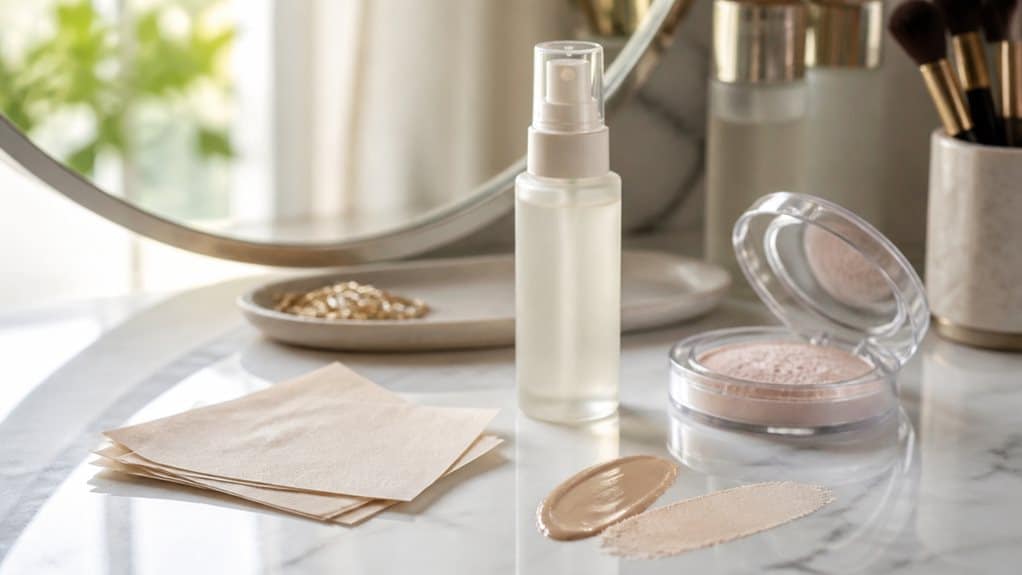
When facial shine shows up in a selfie or on a video call, it’s usually just excess oil — sebum — sitting on the skin’s surface, and camera lighting tends to make it look stronger than it does in your bathroom mirror.
To reduce facial shine, think removal before coverage.
Press blotting paper onto oily areas; don’t rub, since lifting sebum protects foundation. In the blotting paper vs powder decision, paper wins when you only want less shine, while pressed or loose powder adds mattifying coverage and can blur texture.
Use a compact brush for light application, and save a face mist for makeup as a finishing step after oil is managed. Resist re-powdering all day, since repeated layers over oil and sweat can turn cakey by evening and settle into pores.
Cheaper papers and sheer powders are often enough for midday touch-ups without heavy buildup.
Why the face becomes shiny during the day
Although it can look like a makeup problem, midday shine usually starts with sebum, the natural oil your sebaceous glands produce to keep skin soft and protected. That oil even contains ceramides that help form your skin’s protective barrier and regulate moisture, so some shine is normal and the goal is balance rather than total elimination.
When glands are overactive, oil builds fastest across your T-zone—forehead, nose, and chin—because that area has more oil glands.
- Hormones: puberty, periods, pregnancy, stress, and androgens can push glands to make more oil by lunch.
- Heat, humidity, sweat, and face-touching make the film look brighter, especially in summer.
- Stripping cleansers, over-exfoliating, heavy creams, or silicone-heavy SPF can dehydrate or coat skin, triggering rebound shine.
Once you spot your pattern, oil control makeup,touch up products for oily skin make more sense: hydrate lightly, choose non-stripping care, then set only the center for a softer finish.
Blotting paper
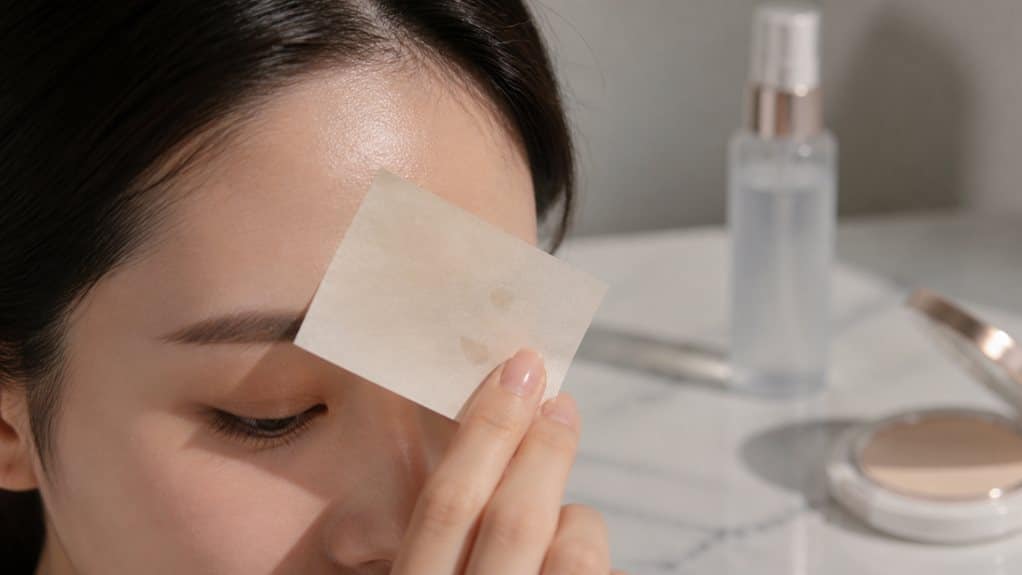
When shine creeps across your T-zone by midday, blotting paper offers a quick fix that won’t disturb your makeup. These thin, absorbent sheets lift surface oil with a gentle press instead of adding more product, which makes them ideal for on-the-go touch-ups before selfies or video calls. Just keep in mind that the sheets only remove what’s already sitting on your skin—they won’t stop oil production, so shine can return as the day goes on.
Ahead, you’ll see how they work, when they make the most sense, and how to blot without smudging your foundation.
How it works
Because blotting paper is made from thin, highly porous fibers—usually cellulose or other plant-based materials—it pulls surface oil into the sheet through a process called capillary action, which is the same physical effect that lets a paper towel soak up a spill. Many blotting papers are made of cotton, which gives the sheets a soft, flexible feel.
It doesn’t change how much oil your skin makes; it only removes what’s already sitting on the surface. Here’s what happens when you use it:
- You press the sheet gently onto oily areas like your forehead, nose, and chin.
- Capillary action lifts oil into the fibers, leaving a temporary matte finish.
- Once the sheet looks saturated and translucent, it loses absorbency, so you discard it.
Rubbing works against you because it smears oil and disturbs makeup instead of lifting it.
Best use cases
If your shine tends to show up in specific spots rather than across your whole face, blotting paper is likely the most efficient fix you can carry. Reach for it on your forehead, nose, and chin when creamy makeup looks slick but still even. Patting a sheet over freshly applied creamy foundation or cream blush also works as a makeup setter, absorbing excess oil from the product while leaving pigments intact so everything stays in place longer.
| Moment | Why paper wins | Skin or makeup clue |
|---|---|---|
| Desk touch-up | Lifts oil, not pigment | T-zone glare |
| Humid commute | No extra buildup | Foundation intact |
| Photo check | Fast, low mess | Cream blush stable |
Choose it for combination or oily skin, sensitive days, travel kits, gym bags, and pre-meeting shine. It’s best when you want absorption without coverage, fragrance, or powdered finish during long, humid wear.
How to blot without removing makeup
Once you know which situations call for blotting paper, the next step is using it in a way that keeps your makeup intact.
- Press, don’t rub: lay a flat sheet on the T-zone, hold for two to five seconds, then lift straight up.
- Target only visible shine on your forehead, nose, chin, or cheeks; switch to a clean section or fresh sheet when one looks saturated.
- Use gentle pressure over concealer, foundation, powder, under-eyes, and blemishes, since harder pressing smears coverage and won’t remove more oil.
If shine returns, re-blot as needed with a new sheet; removing only surface oil helps your base stay matte without extra buildup or overworking skin during long days, photos, video calls, and warm lighting indoors. If you run out of sheets while out, common household items can double as DIY blotting paper in a pinch.
Face mist
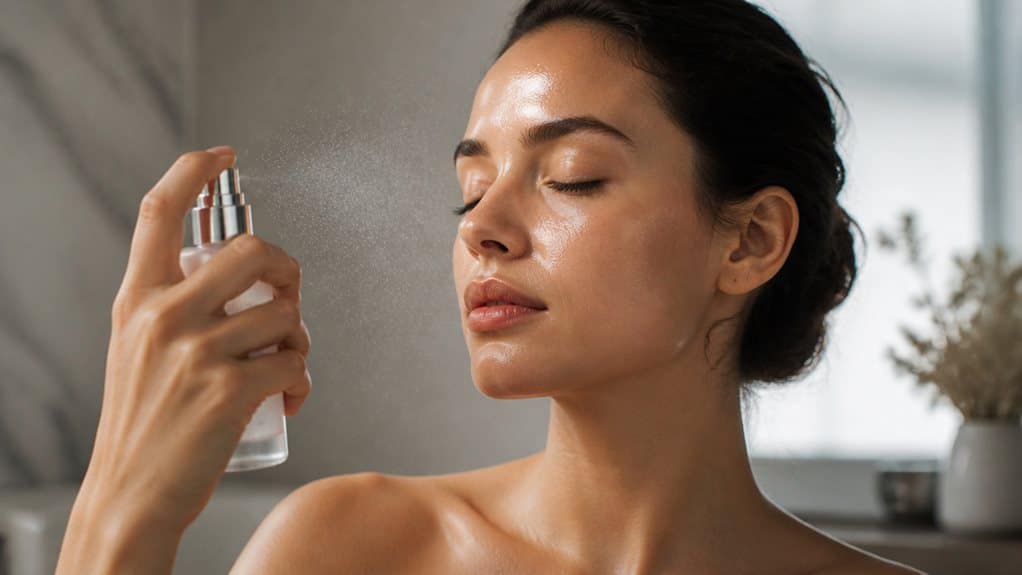
A face mist won’t control oil the way blotting paper or powder does, so don’t expect it to mattify shiny skin.
What it can do is add lightweight hydration, which helps when your skin feels tight or your makeup starts to look dry and cakey by midday. If tightness is the problem, choose a mist with glycerin or hyaluronic acid rather than a plain water spray.
Used at the right moment, a quick spritz can refresh your base, soften powder buildup, and bring back a healthy finish before photos or video calls.
Hydration versus oil control
Although face mists are often marketed as a quick fix for midday shine, their core job is hydration, not oil control. By quenching dehydration, the right formula can even help reduce oil production over time.
Most are water-based sprays built on humectants like hyaluronic acid or glycerin, which pull water into your skin. Choosing the right one depends on your main concern:
- Oily but dehydrated? Hydrate initially, since dehydration can trigger extra oil production.
- Battling shine? You’ll want lightweight, non-comedogenic formulas with niacinamide, zinc, or witch hazel.
- Tight or dry? Pick an alcohol-free mist that’s rich in humectants to avoid over-drying, which backfires.
The ingredient list predicts results better than the label.
Don’t expect any mist to replace blotting or powder; think of it as a supportive step that reduces shine indirectly by keeping skin balanced and comfortable.
When it can improve makeup appearance
When midday shine starts breaking through your foundation, a face mist can reset your makeup without smearing it or forcing a full redo. Choose one when your T-zone looks greasy, but your coverage still looks good. A few fine sprays from six to twelve inches can rebalance skin, mattify shine, and keep pigment in place without powdery buildup. For shine-prone skin, witch hazel supports oil control.
| Use case | Visible benefit |
|---|---|
| After makeup | A smoother matte finish |
| Midday shine | Less grease, no caking |
| Bare skin | A fresher, balanced look |
Look for silica silylate to absorb oil, PVP for longer wear, and niacinamide or witch hazel for shine-prone skin. Lightweight, non-greasy mists refresh without residue. Avoid soaking your face; too much moisture may disturb foundation or concealer. You’ll like this option for flexible touch-ups.
Setting powder
Setting powder locks your foundation and concealer in place while absorbing the excess oil that causes midday shine.
You’ll want to choose between loose powder, which typically delivers stronger oil control and longer wear on the T-zone, and pressed powder, which is easier to carry for quick touch-ups during the day. Some mineral setting powders now include SPF 35, making it easy to reapply sun protection over your makeup during those same midday touch-ups.
To avoid a cakey finish, tap the extra product off your brush and press a small amount into your forehead, nose, and chin instead of sweeping on a heavy layer.
Loose versus pressed powder
At initial glance, loose and pressed powders seem interchangeable, since both are setting powders designed to control shine and extend the wear of your makeup. The real difference comes down to texture, coverage, and convenience.
- Loose powder is finely milled and sheer, so it’s better for oil control, longer wear, and setting your T-zone or under-eye area. It’s also the go-to for baking.
- Pressed powder is denser, adds a bit more coverage, and gives a smooth, velvety finish. Its compact format makes it portable and less messy.
- Your routine may benefit from both: apply loose powder at home for full-face setting, then carry pressed powder for quick midday touch-ups.
Choose based on whether you prioritize maximum oil control or on-the-go touch-ups during the day.
Avoiding a cakey finish
Because setting powder is additive—every layer leaves product behind on your skin—the fastest route to a cakey finish is reapplying it over oil throughout the day.
Blot initially with paper, pressing on your forehead, nose, and chin; don’t rub.
If shine remains, add only a light dusting where you still see oil, usually the T-zone.
Use powder when you want coverage or smoothing, not as your first answer to surface oil.
A small fluffy brush or compact puff works best; load it, tap off extra, then press and roll over shiny spots.
Skip full-face reapplication, especially over foundation, dry patches, or texture.
That targeted sequence keeps makeup flexible, matte, and smoother in selfies and video calls.
Choose finely milled formulas for lighter, even wear.
Which option is best by skin type and situation?
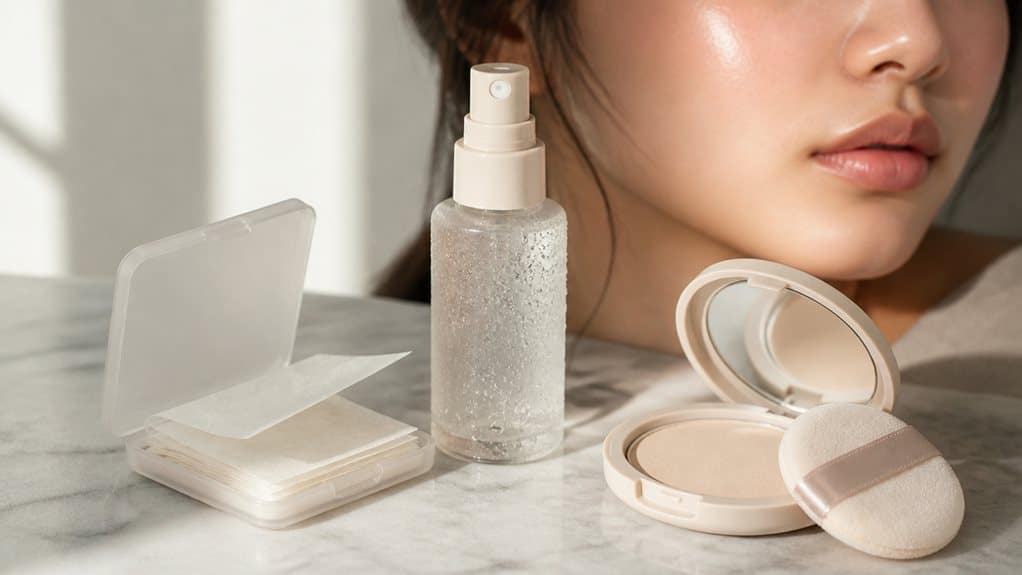
Concerning shine control, the best choice depends less on the product itself and more on your skin type and the situation you’re in. If you’re oily, use a mattifying powder for longer wear, then keep blotting paper for quick shine removal without disturbing foundation.
Shine control depends on your skin type and situation—oily skin needs mattifying powder, with blotting paper for quick touch-ups.
- Oily skin: pick a matte pressed powder for wear, and blot midday instead of layering liquid.
- Combination skin: blot the T-zone, then dust light powder only where shine returns.
- Dry or dehydrated skin: use an oil-free mist for comfort, but spot-powder; mist won’t erase oil.
For photos, choose blotting paper when makeup must stay untouched, powder when you need longer control, and mist mainly for dry climates or tight-feeling skin on camera without heavy layering.
How to build a compact touch-up kit
A shine-control touch-up kit works best when it’s built around a few hard-working staples rather than your entire makeup bag. You’ll want three core tools: blotting papers for fast oil pickup, a pressed powder compact for a longer-lasting matte finish, and a mini face mist for moments when makeup looks dry or powdery.
Choose a flat, hard powder compact so it won’t crush in your bag, and look for oil-absorbing formulas with hydrating extras like hyaluronic acid to prevent dry-patch cling. Store papers in a slim sleeve to avoid bending. Add a mirror or powder puff, plus hand sanitizer for cleaner application on the go.
Keep everything travel-size and organized in a small pouch with separate slots. Replace supplies regularly so it stays fresh.
Amazon buying recommendations
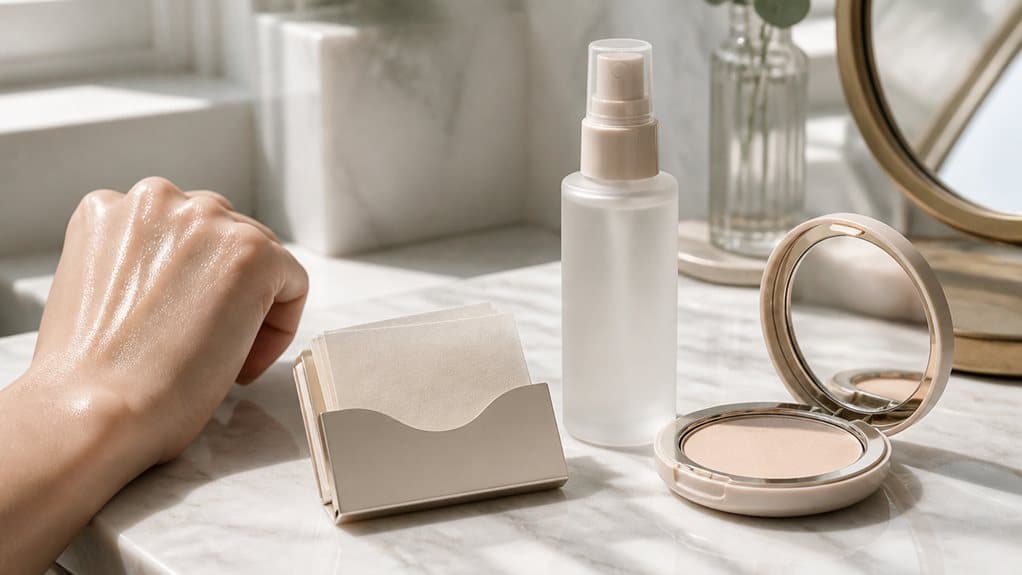
Once you’ve narrowed down the tools for your touch-up kit, Amazon’s Best Sellers page for makeup blotting paper is a practical starting point, since strong sales usually reflect products that are portable, affordable, and easy to reorder.
Strong sales usually point to blotting papers that are portable, affordable, and effortless to reorder.
Use it to compare formats before you add anything to cart:
- For pure oil removal, choose makeup-safe sheets; a bamboo charcoal set with 300 sheets, mirror, puff, and refills suits frequent touch-ups.
- For longer wear, pick a pressed or loose powder labeled oil-absorbing, mattifying, and non-cakey, then apply lightly with a compact brush.
- Treat face mist as secondary: only choose one marketed as mattifying or oil-controlling, and check finish claims so it doesn’t add unwanted glow on camera during long afternoon video calls indoors.
Frequently asked questions
How do you know which product to reach for when shine shows up right before a video call or a selfie? Match the product to your goal: if you want to remove shine fast without smudging your foundation or drying your skin, blotting papers are your safest pick.
Can a face mist replace a mattifier? No. A mist works as a routine refresh, adding light hydration, but it won’t absorb visible oil quickly.
When should you choose powder? Pick a mattifying pressed or loose powder when you need to set makeup and hold a matte finish for hours. If your skin’s oily, choose lightweight, non-occlusive formulas so you don’t add shine.
Can over-cleansing backfire? Yes. Harsh astringents can dry skin and trigger rebound oil.
Conclusion
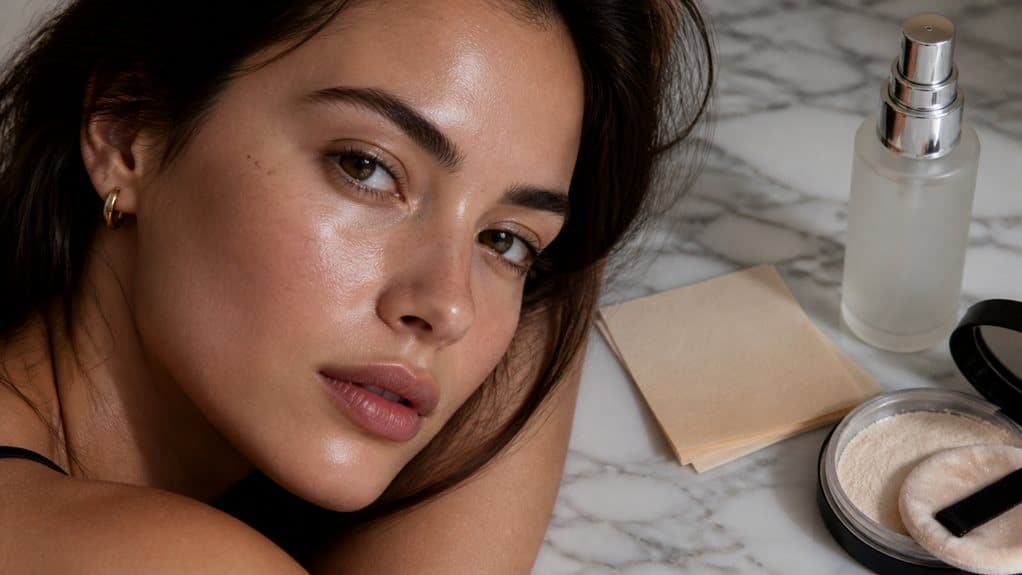
When shine shows up in your selfies or on video calls, the fix doesn’t have to be complicated. Match the product to the job, not the hype.
- Blot initially: papers are your best quick fix; press gently for a few seconds, don’t rub, and you’ll lift oil without adding buildup.
- Mist for comfort: a hydrating spray can refresh skin or soften makeup, but it won’t remove sebum and may make shine look more reflective.
- Powder with restraint: choose a matte pressed or loose powder when you need extra coverage, then use a light hand and a compact brush to avoid a cakey finish.
For oily skin, keep cleansing gentle, pick oil-free noncomedogenic makeup, and blot as needed during long photo days.
Frequently Asked Questions
Can Blotting Paper Remove or Smudge My Sunscreen?
Yes, blotting paper can remove or smudge your sunscreen. One study found SPF dropped about one-third after blotting. Press gently instead of rubbing, and reapply sunscreen afterward so you don’t lose protection during the day.
Will Frequent Blotting Make My Skin Produce More Oil?
No, blotting won’t make your skin produce more oil. Sebum levels depend on hormones, stress, and genetics—not absorbent sheets. Just don’t rub; press gently, since friction can irritate your skin and worsen your shine.
Can I Use a Clean Tissue Instead of Blotting Paper?
You can use a clean tissue in a pinch, but you’ll get better results with blotting paper because it’s made to absorb oil quickly while disturbing your makeup less. Press gently on shiny areas instead of rubbing, so your foundation stays smoother and your face looks fresher.
Is It Safe to Reapply Powder Several Times a Day?
Yes, you can safely reapply powder several times daily if you’re using a lightweight, oil-free, non-comedogenic formula. Blot oil initially, then press powder onto your T-zone. Overdoing it can look cakey or irritate sensitive skin.
Can I Pack Face Mist in My Carry-On When Flying?
Yes—you can pack face mist in your carry-on if it’s 100 ml or less. Put it with your other liquids in one clear, resealable one-liter bag. Bigger bottles usually can’t pass security, even half-empty.
Summary and Conclusion
The right choice depends on your skin and your day. If you’re oily and wear makeup, blotting papers lift shine without disturbing foundation, and they’re inexpensive. If you’re dry or need a midday refresh, a hydrating mist adds moisture but won’t absorb oil.
For long events or video calls, a light dusting of setting powder lasts longest. Pairing papers with powder covers most touch-ups. Start with one affordable option, then adjust based on how your skin behaves.
 English
  Español
  Français
  Deutsch
  Italiano
Leave A Comment