
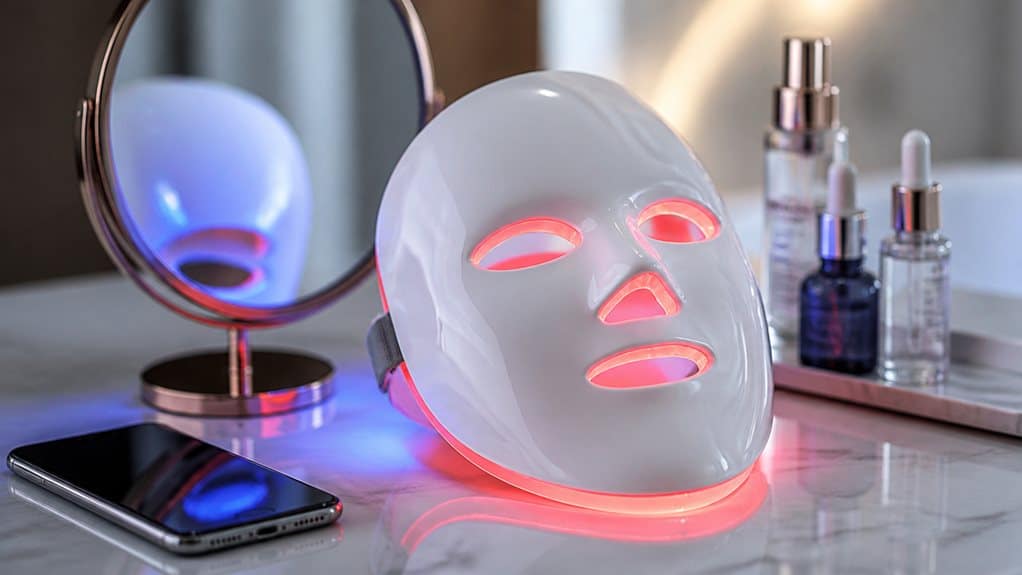
When you’re choosing an LED face mask, check for clearly listed wavelengths, like 630nm red for anti-aging or 415nm blue for acne, plus irradiance around 30-50 mW/cm². You’ll want eye protection, especially for near-infrared, since it’s invisible and won’t trigger blinking. A built-in timer with auto shutoff matters too. Fit and FDA clearance count for more than flashy marketing. There’s more to weigh before you buy one.
At a Glance
- Choose masks with clearly disclosed wavelengths (e.g., 630nm red, 850nm NIR, 415nm blue) rather than vague “LED technology” claims.
- Verify irradiance (mW/cm²) and session time to estimate dose (J/cm²); target 30–50 mW/cm² for optimal results.
- Ensure proper eye protection—opaque shielding for blue light, OD 3+ rated goggles for invisible near-infrared light.
- Confirm FDA clearance for at-home use and check for built-in timers with automatic shutoff features.
- Prioritize fit and comfort: flexible silicone, nose groove, and secure straps ensure even light exposure across skin.
Introduction
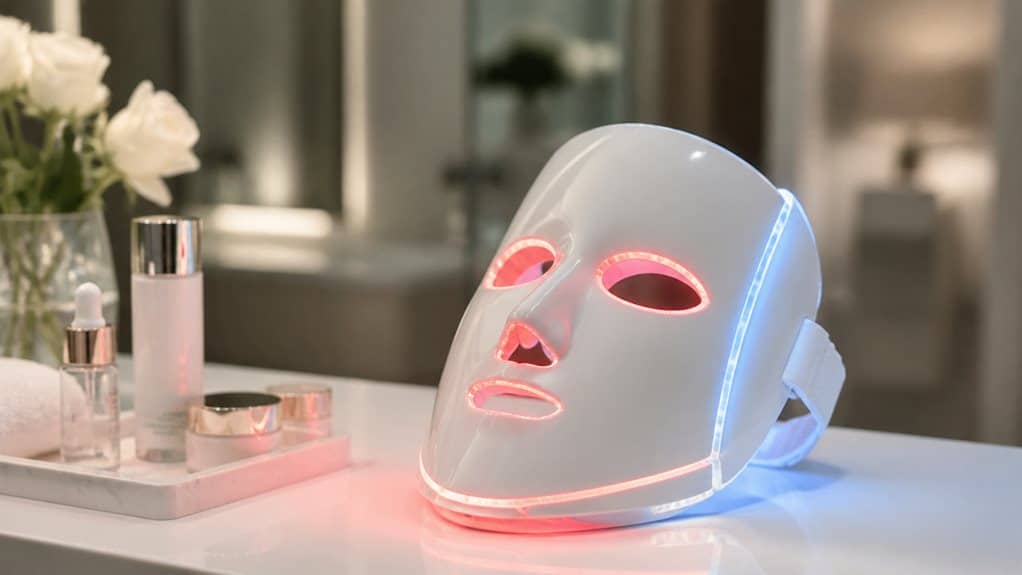
Slip on an LED face mask and you’re stepping into an at-home light therapy routine, not a quick fix for your skin. This led face mask buying guide focuses on what actually matters: wavelength, safety, and build quality, rather than how many colors a mask claims to offer.
A red light face mask, for example, is typically used for fine lines and inflammation, while blue light targets acne-causing bacteria. Results usually take weeks of consistent use, not days.
Because these devices vary widely, led mask safety deserves early attention. Look for clear specifications, eye protection, and honest instructions on time and frequency. A well-chosen mask should also be FDA-cleared for home use. Matching the mask to your skin goal, then checking safety details, is the smartest way to start comparing products.
What an LED face mask is
Before comparing features and prices, it helps to know what you’re actually putting on your face. An LED face mask is a light therapy mask that fits over your face and uses dozens or even hundreds of small LEDs to deliver specific wavelengths to your skin. This process is called photobiomodulation, a term that simply means light influencing how skin cells behave. Most masks are made from plastic or silicone and are worn during short sessions, usually with clean skin.
An LED face mask uses dozens of tiny lights to trigger photobiomodulation—light quietly changing how your skin cells behave.
Here’s what typically defines these devices:
- Multiple LED arrays across the mask surface
- Different colors, including a blue light face mask setting for certain concerns
- Direct or close contact with facial skin
- Sessions lasting roughly 10 to 30 minutes
- Designed for repeated use rather than one treatment, with most routines recommending 3 to 5 sessions per week for visible results
Common light colors explained
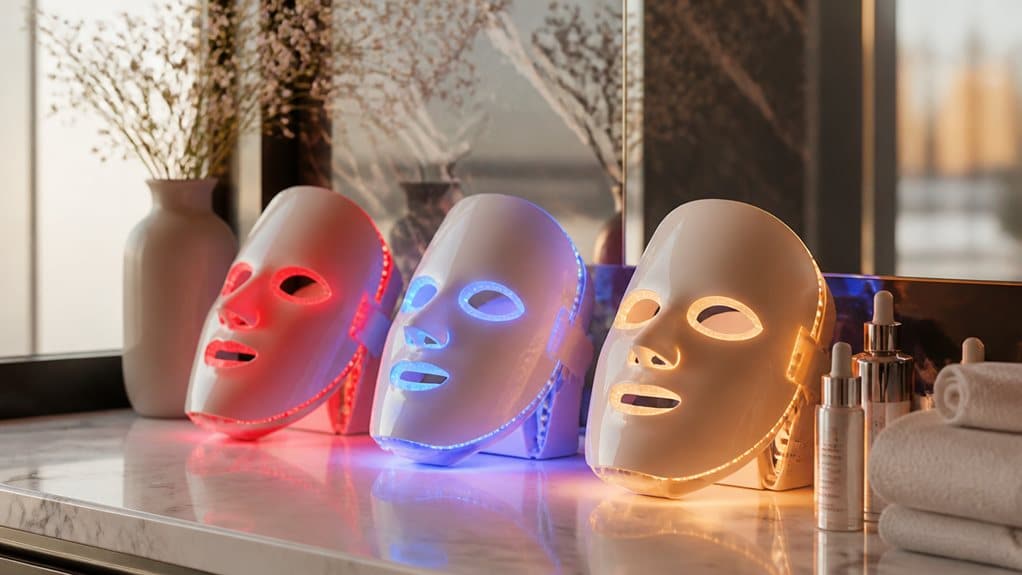
Once you start comparing LED face masks, you’ll notice they don’t all use the same light, and each color targets your skin in a different way.
Red light works on deeper skin layers and is often linked to concerns like fine lines and redness, while blue light focuses on the surface and is mainly discussed for acne. Red light is thought to work by stimulating mitochondria to boost cellular energy, which supports repair and rejuvenation.
Near-infrared light goes even deeper than red, which is why many masks combine it with red for a broader effect.
Red light
Warmth aside, red light is really about wavelength, not color for its own sake. Most red-light face masks use wavelengths in the 630–700 nanometer range, sometimes called photobiomodulation. This is the light most linked to skin rejuvenation, since it reaches deeper layers than blue light does.
Here’s what red light is commonly used for:
- Fine lines and wrinkles
- Uneven texture and dullness
- Redness and mild scarring
- Maturity spots
- General skin rejuvenation goals
Evidence supports some of these uses, though research is still developing, according to sources like Cleveland Clinic and Stanford Medicine. Studies show that at-home red-light devices have received FDA clearance for treating signs of skin aging. When shopping, look for masks that clearly list wavelength and treatment area, since vague marketing terms tell you very little about actual performance.
Near-infrared light
Since near-infrared (NIR) light sits just past what your eyes can detect, you won’t see it glowing on your skin the way you see red light, even though many masks emit both at once. NIR has a longer wavelength, so it reaches deeper than red light, which mainly works at the surface. That’s why NIR often gets paired with red in masks aimed at broader coverage.
| NIR Fact | What It Means for You |
|---|---|
| Range: roughly 750–1400 nm | Invisible, so you won’t see it working |
| Deeper penetration | May reach beyond just the top skin layer |
| No blink reflex trigger | Eye protection matters more |
| Needs clear specs | Check wavelength and safety instructions |
Because NIR won’t make you blink, always confirm the mask includes proper eye shielding. This falls within the broader near infrared region of the electromagnetic spectrum, commonly defined between about 0.7 and 1.0 micrometers.
Blue light
Clarity is really the whole point of blue light, which sits around 415–470 nm and works on a different problem than red or NIR light.
Instead of targeting collagen or deeper repair, blue light focuses on the skin’s surface, where it interacts with bacteria linked to breakouts. Devices like the CurrentBody mask use the specific 415 nm wavelength shown in clinical studies to target these bacteria.
Here’s what blue light generally does:
- Absorbed by porphyrins in acne-causing bacteria
- Triggers reactive oxygen species that damage those bacteria
- May reduce bacterial load tied to inflammatory breakouts
- Can help limit excess sebum, which feeds new pimples
- May calm redness and support clearer-looking skin over time
It’s gentler than harsh topical acids, but it isn’t a wrinkle solution.
If anti-aging is your priority, lean on red light instead, and treat blue light as your acne-support option.
What to check before buying
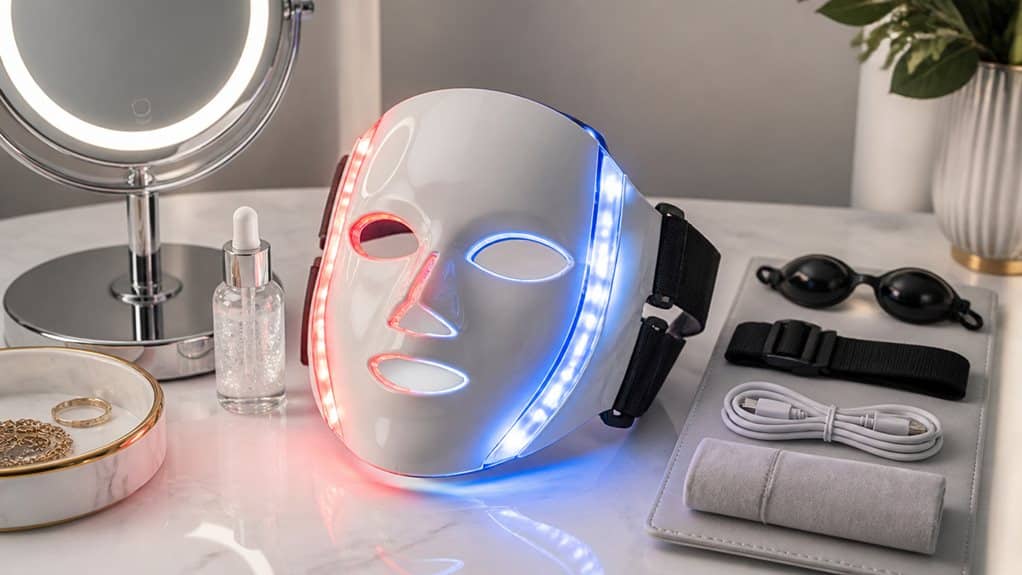
Before you add an LED face mask to your cart, you’ll want to check a handful of details that separate a solid device from a disappointing one. Look closely at listed wavelengths, treatment time recommendations, eye protection features, overall fit, and whether the mask has a timer with automatic shutoff.
Each of these factors affects both safety and how well the mask fits into your daily routine. Since different wavelengths target different concerns, with amber light supporting collagen and elasticity while red light addresses inflammation and circulation, it’s worth confirming that a mask’s amber and red light settings match your specific skin goals.
Clearly stated wavelengths
When you’re comparing LED face masks, the specs page should tell you exactly which wavelengths, in nanometers, each light emits. Vague terms like “red light therapy” or “LED technology” don’t tell you much, since the actual number determines what the light can do for your skin.
A trustworthy listing usually looks like this:
- Red light: 630–660 nm, the range most linked to skincare use
- Blue light: 400–500 nm, with 405–420 nm often cited for acne-prone skin
- Near-infrared: 800–1200 nm or 800–1400 nm, for deeper penetration
- Combination masks: red and near-infrared listed separately, not merged
- Any wavelength gaps or unclear ranges: a sign to ask more questions
Clinically studied wavelengths like 630 nm and 850 nm have over 30 years of research backing their effectiveness, which is why specific numbers matter more than generic marketing terms.
If a brand won’t share these numbers, treat that as a caution flag.
Irradiance and treatment time
Once you’ve confirmed a mask’s wavelengths, the next number worth checking is irradiance, which measures how much light power actually reaches your skin, usually listed in mW/cm².
A practical target for home use falls around 20-60 mW/cm², with 30-50 mW/cm² often cited as the sweet spot for reliable results. But irradiance alone doesn’t tell you much without treatment time.
The real measure that matters is dose, expressed in J/cm², which combines irradiance and session length. Masks around 30-50 mW/cm² may only need about 10 minutes, while higher-output devices claim shorter sessions, sometimes just 3 minutes. For example, 50 mW/cm² sustained over 10 minutes works out to roughly 30 J/cm² delivered to the skin.
Before buying, check that the spec sheet pairs irradiance with a recommended time, so you can estimate the actual dose you’ll receive.
Eye protection
Numbers on a spec sheet only tell part of the story. Eye protection matters just as much as wavelength or timer settings, and it’s easy to overlook when you’re focused on results. Blue light deserves the most caution, since it calls for opaque shielding rather than casual sunglasses. Red light is generally considered gentler on the eyes, but the mask’s instructions should still confirm whether protection is needed. Many at-home devices, such as the CurrentBody LED Face Mask, are clinically tested for use without goggles, operating in a specific nanometer range.
Before buying, check these details:
- Whether eye shields are built into the frame or sold separately
- If the manual states goggles are required
- Wavelength range, especially blue or near-infrared light
- Whether goggles carry an OD 3+ rating for the relevant wavelengths
- Any visible light leakage around the eye area
FDA clearance is a useful screening point, but always confirm protection design matches the light type.
Fit and comfort
Fit often gets overlooked until you’re ten minutes into a session with a mask sliding down your nose. A good mask should sit flush against your face, without gaps that reduce light contact. Loose spots mean uneven exposure, and constant readjusting defeats the purpose of a relaxing routine.
Material matters too. Medical-grade silicone flexes with your face and feels gentler than rigid plastic, especially around the nose bridge.
| Feature | Why It Matters |
|---|---|
| Flexible edges | Adapts to cheeks and forehead |
| Nose groove | Reduces pressure on high bridges |
| Double straps | Keeps mask aligned |
| Lightweight build | Comfortable for full sessions |
Check that straps stay secure but not tight, so a short 10-minute session feels easy rather than annoying.
Timer and automatic shutoff
Getting the mask to sit right on your face is only part of the equation. Timing matters just as much, since most routines call for regular, repeatable sessions rather than one-off use. Before buying, check how the timer works and whether it shuts off on its own.
- Confirm the default session length, often 5 minutes
- Check if the timer adjusts in increments, like 5-minute steps
- Verify automatic shutoff at the end of countdown, not manual stop
- Match the timer to recommended use, such as 10 minutes daily or 5 minutes per mode
- Make sure instructions cover stopping early if skin feels hot or uncomfortable
A reliable timer keeps sessions consistent across the week, which supports the steady schedule most masks recommend, typically three to five uses weekly.
Who should seek professional advice first?
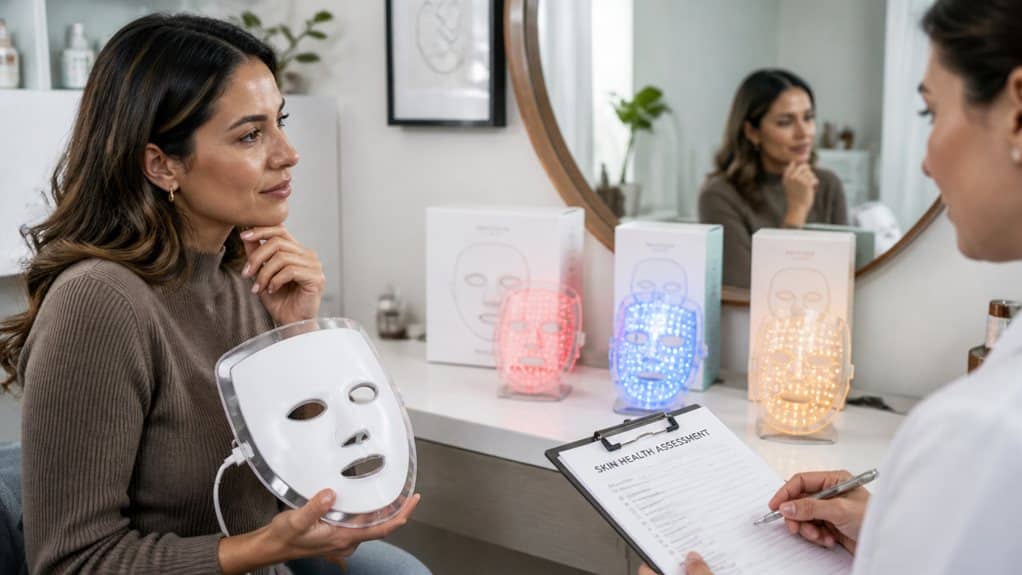
Before you add an LED face mask to your routine, it’s worth pausing if certain health factors apply to you. If you have photosensitivity, a seizure disorder triggered by flashing light, or an eye condition like retinal disease, talk to a doctor beforehand. Skin cancer history or active skin cancer also calls for physician guidance before treatment.
Pregnant users should check with a healthcare professional, since long-term safety data are limited. The same goes if you take photosensitizing medications, such as tetracycline, doxycycline, lithium, or certain antipsychotics.
Active infections, open wounds, burns, unusual skin lesions, or recent dermal fillers on your face also warrant medical advice before use. When in doubt about suitability, a quick conversation with a professional is safer than guessing.
How to use an LED mask responsibly
Once you’ve cleared any medical concerns, the next step is building good habits around the mask itself. Responsible use starts before you even turn the device on, and it continues with how you treat your skin and eyes during each session.
Keep these habits in mind:
- Cleanse thoroughly and dry your skin before every session, skipping makeup, sunscreen, and active ingredients like retinoids
- Follow the manufacturer’s timing, typically 10–20 minutes for red light and 5–10 minutes for blue light
- Use built-in eye shields or opaque goggles, and keep your eyes closed throughout treatment
- Stop immediately if you notice burning, heat, or discomfort
- Wipe the mask clean after each use to remove oils and buildup
Consistency matters more than intensity, so stick to a realistic schedule rather than overdoing sessions.
Amazon buying recommendations by feature set
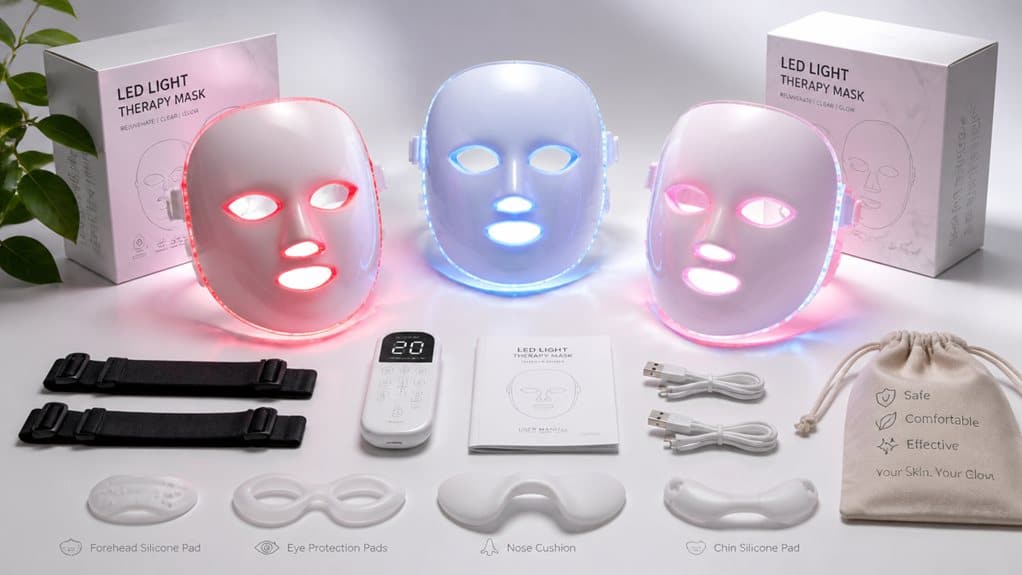
Since no two LED masks are built the same way, it helps to compare them by feature set rather than by price tag alone.
For best-value picks, look for red and blue modes, clear authorization claims, and enough LEDs for even coverage across your whole face.
For premium options, prioritize stronger coverage, higher diode counts (like 800 versus 650), and broader wavelength options rather than fancy styling.
Budget listings can be tempting, but they often score poorly on coverage and output, so a low price shouldn’t be your main deciding factor.
If your goal is both anti-aging and acne support, a multi-wavelength mask offers more flexibility than a single-color device—just check the exact wavelengths listed before buying.
Frequently asked questions
What questions come up most often once you start comparing LED masks? Most buyers want quick, clear answers before spending money, so here’s what to know:
- How often should you use it? Most home masks call for 3 to 5 sessions weekly, each lasting 10 to 20 minutes.
- When will you see results? Consistent use over 6 to 8 weeks is typical, with some sources citing 8 to 12 weeks.
- Do you need clean skin first? Yes, remove sunscreen, moisturizer, and makeup so light can penetrate properly.
- Is eye protection necessary? Yes, look for built-in shields or separate goggles.
- Does FDA clearance matter? It’s a strong signal the device was reviewed for safety and efficacy.
Conclusion
Choosing an LED face mask comes down to matching real specifications with your actual skin goals, not chasing the flashiest packaging. Before you buy, check that the mask lists exact wavelengths, irradiance, and a clear session protocol.
| Priority | Look For | Why It Matters |
|---|---|---|
| Anti-aging | 630–660 nm red, 820–850 nm NIR | Tied to published rejuvenation research |
| Acne concerns | 415 nm blue light | Standard acne-related wavelength |
| Safety | Eye protection, timer | Supports proper, consistent use |
| Value | Disclosed irradiance (30–50 mW/cm²) | Confirms dose without overspending |
A budget mask with correct wavelengths can work just too well in addition to a premium one, as long as it discloses specifications and you stay consistent for 8–12 weeks.
Frequently Asked Questions
Can I Wear Makeup Underneath an LED Face Mask?
You shouldn’t wear makeup underneath your LED mask. It blocks light penetration, reduces effectiveness, and can transfer onto the mask’s interior. Cleanse your skin initially, do your session bare-faced, then apply makeup afterward for best results.
How Often Should I Replace an LED Face Mask?
You don’t replace your LED face mask on a fixed schedule—swap it out when it won’t hold a charge, lights dim unevenly, the shell cracks, or straps become worn and unhygienic.
Can LED Masks Interfere With Skincare Product Absorption?
No, they generally don’t block absorption. You’ll get the best results using your mask on clean, bare skin initially, then applying serums or moisturizer afterward for optimal hydration and comfort.
Is It Safe to Use an LED Mask Every Day?
Not necessarily. You’re usually better off starting with 3–5 sessions weekly rather than daily use. If your skin tolerates it well, you can gradually increase frequency, but always follow your device’s specific manufacturer guidelines.
Do LED Face Masks Work Through Thin Fabric or Hair?
No, thin fabric and hair block or weaken the light before it reaches your skin. You’ll get better results if you clear away hair and treat clean, bare skin directly.
Summary and Conclusion
Choosing an LED face mask comes down to matching features to your goals. If you want basic glow upkeep, a simple red light option with a built-in timer may be enough. If you’re targeting deeper concerns like fine lines or acne, look for red, near-infrared, and blue combinations with proper eye protection and FDA clearance. Always check wavelength specifications, session length, and safety certifications before buying, and consult a dermatologist if you have underlying skin conditions.
 English
 Español
 Français
 Deutsch
 Italiano
Leave A Comment