
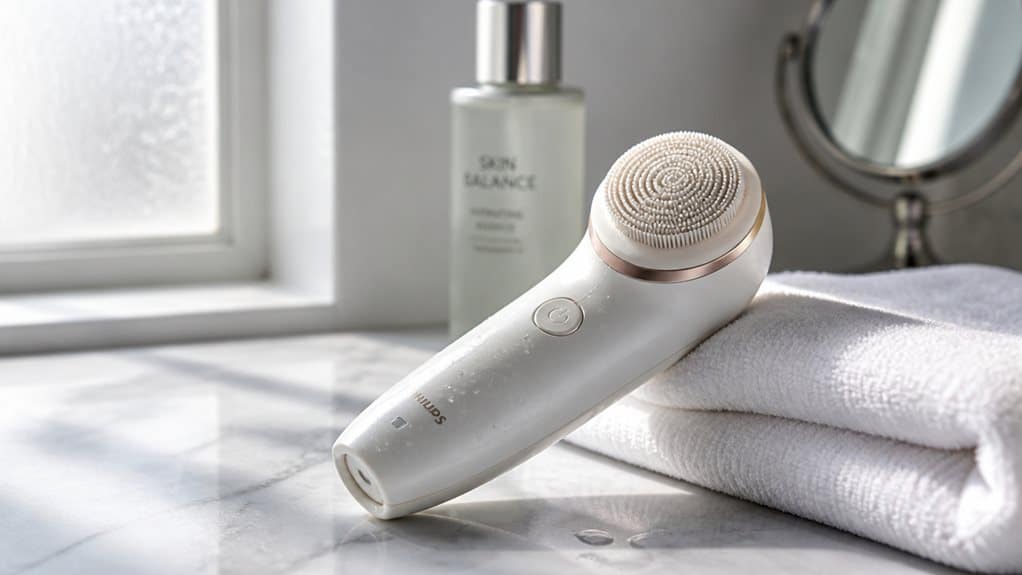
An electric facial cleansing brush can be useful, but you don’t need one. Sonic and silicone brushes suit sensitive or dry skin, while rotating heads offer deeper cleaning for oily or combination skin, though they may irritate active acne. Used properly, one to three times weekly at gentle pressure, it can lift dirt, oil, and residual makeup better than hands alone. Overuse causes dryness or redness, so frequency and skin type matter. Here’s what determines whether one’s worth it for you.
At a Glance
- Electric brushes lift dirt, oil, and residual makeup more thoroughly than hands, offering deeper cleansing and mild exfoliation.
- Brush type matters: silicone sonic suits sensitive skin, while rotating heads deliver stronger cleansing for oily skin.
- They aren’t standalone makeup removers—use micellar water or remover first, then brush to clear remaining residue.
- Overuse or stiff bristles risk irritation, microabrasions, and barrier damage, so limit sessions to 1–3 times weekly.
- Higher upfront cost, replacement heads, and required maintenance make them a bigger commitment than manual cleansing.
Introduction
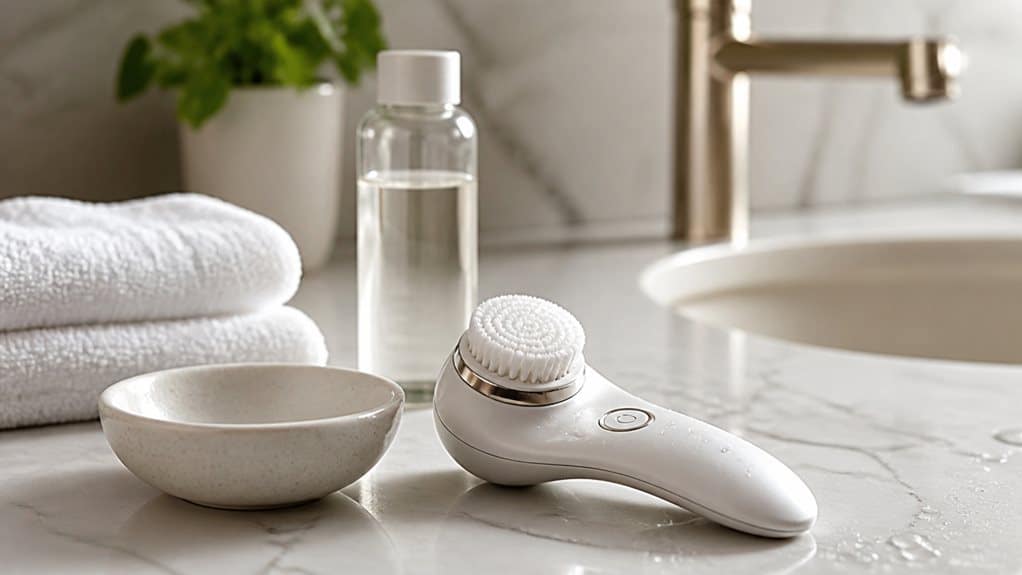
Since your camera can pick up every bit of texture and shine on your skin, it makes sense that cleansing has become part of the selfie prep conversation.
An electric facial cleansing brush uses oscillating, rotating, or vibrating movement to clean your face more thoroughly than your hands alone. These devices are designed to lift dirt, oil, and leftover makeup from your skin’s surface, often in about a minute.
You’ll find plenty of options if you look at any facial cleansing brush review guide, from simple battery-powered models to a sonic facial cleanser with multiple speed settings. Each type works a little differently, but the goal is the same: a cleaner surface for photos and skincare products to work on. Dermatologists often recommend silicone brushes because they’re gentler on skin and harbor less bacteria than nylon bristles.
This guide breaks down what these brushes actually do, and whether you need one.
How electric facial cleansing brushes work
At its core, an electric facial cleansing brush relies on a small motor to move a brush head across your skin, whether that’s spinning bristles, vibrating silicone nubs, or pulsing at high speed.
A tiny motor does all the work—spinning, vibrating, or pulsing—so your skin gets more than a surface-level scrub.
Most devices are rechargeable or battery-powered, and you’ll typically pair them with a gentle cleanser while moving the head in small circles over your face.
Design varies quite a bit between models:
- Oscillating brushes move back and forth for a buffing effect
- Rotating heads spin continuously to lift dirt and dead skin
- Sonic devices, often built as a silicone face brush, use rapid vibrations instead of scrubbing
Whichever type you choose, the goal of any face cleansing device is the same: reach deeper into pores than washing with your hands alone. This deeper cleansing action also supports gentle exfoliation, helping to promote skin turnover and reveal a brighter complexion over time.
Potential advantages
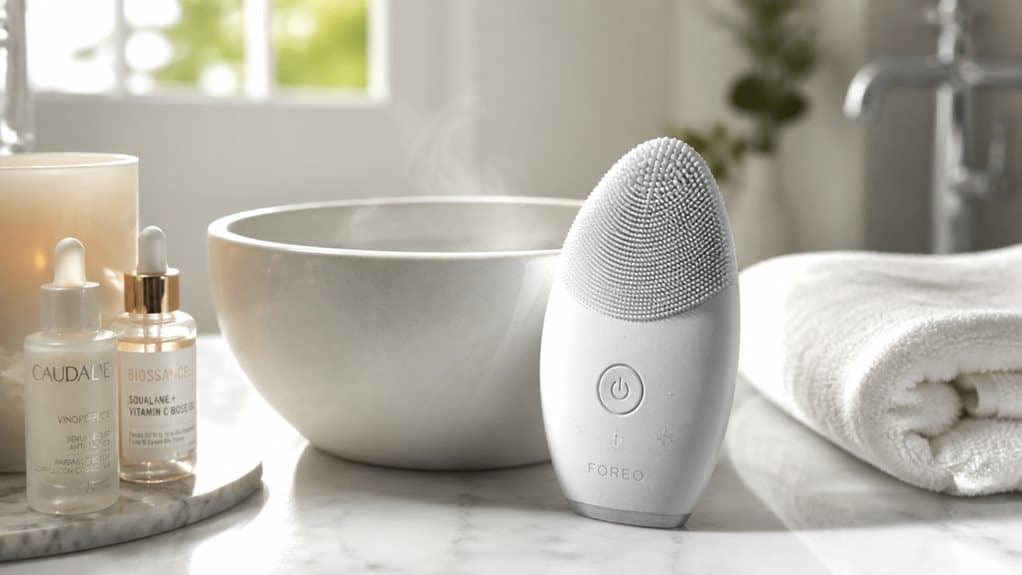
Electric facial cleansing brushes offer a few practical benefits worth considering before you buy one.
You get a consistent cleansing motion that doesn’t rely on how tired or rushed you feel during your routine, which can make daily cleansing more reliable.
Many designs also help with makeup removal, and reusable silicone versions add an easy-to-clean, low-maintenance option for those who want simplicity alongside effectiveness. The gentle mechanical action can also serve as an exfoliator, lifting away dull, dead skin cells to reveal a smoother complexion.
Consistent cleansing motion
Because a brush moves in a repeating pattern, whether that’s a rotating spin or a rapid sonic vibration, it treats every part of your face the same way instead of relying on how your hand happens to move that day.
This steady rhythm makes it easier to reach spots you might otherwise rush past, like the sides of your nose or along your hairline. This even, repeated motion also helps loosen dirt and oil more thoroughly than fingers alone, contributing to deeper cleansing of the skin.
- Even contact pressure across the skin, so you’re less likely to miss patches near the jawline or nose creases
- Repeatable motion that doesn’t depend on your technique or how tired your hands feel
- More predictable results from one cleansing session to the next
This consistency is one reason brushes are often described as more reliable than hand washing alone.
Convenient makeup removal support
That same steady motion also comes in handy when you’re trying to remove a full face of makeup, especially long-wearing foundation, sunscreen, or waterproof products that tend to cling to the skin. Instead of wiping repeatedly with cotton pads, you can pair an oil-based remover with a brief brush session to lift residue in one pass. This works well as the second step in a double-cleansing routine, especially around the T-zone and facial folds where makeup tends to settle.
Many devices include preset timers, so you’re not guessing how long to cleanse. Multiple speed settings let you adjust intensity depending on how much makeup you’re wearing. For everyday use, this added structure can make removal feel less rushed and more consistent than cleansing by hand. Still, to avoid over-exfoliation, most experts recommend limiting use to 1–2 times weekly.
Reusable silicone designs
Most reusable cleansing brush heads on the market today are made from silicone rather than nylon bristles, and that material choice matters more than it might seem. Silicone is non-porous, which means it doesn’t trap moisture or bacteria the way dense bristles can, making it easier to keep clean between uses. It also tends to feel softer against your skin, so there’s less friction and irritation, especially useful if you have sensitive skin. To clean these brush heads properly, simply rinse with warm water, scrub with a mild soap, and let them (air dry(air dry)) to prevent residue or bacterial buildup.
- Hygiene: Non-porous, waterproof silicone resists odor and bacterial buildup.
- Comfort: Soft nodes cleanse gently without harsh scrubbing.
- Efficiency: Smooth surfaces rinse clean quickly, supporting daily use.
If you want a low-maintenance tool that’s simple to sanitize, silicone designs are usually the practical choice.
Possible disadvantages
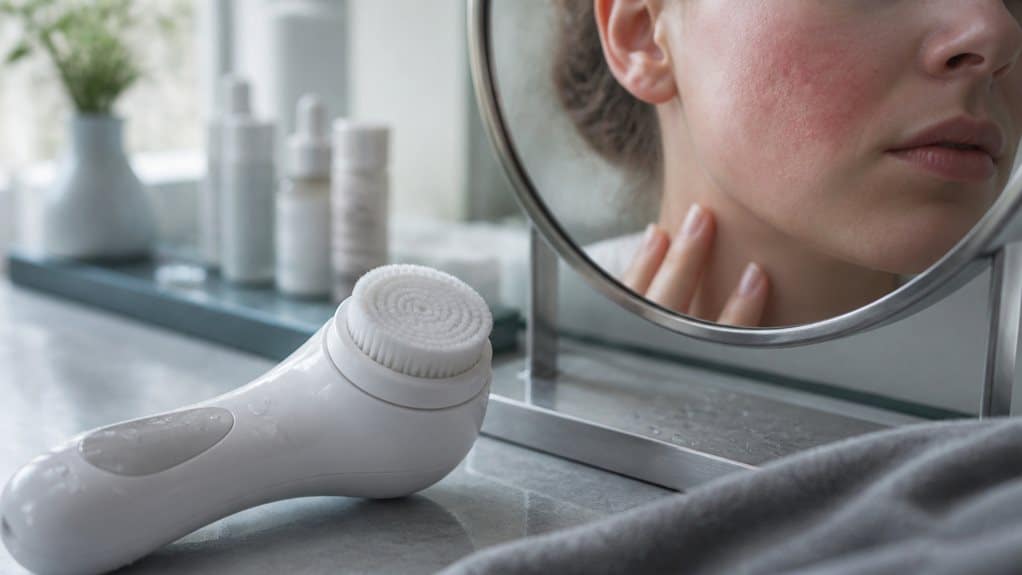
Electric facial brushes come with real downsides you should weigh before buying one.
Pressing too hard or using stiff bristles can irritate your skin, and daily use may strip away more oil than your face needs, leaving it dry or reactive.
You’ll also want to factor in ongoing costs, since brush heads need replacing every few months and the device itself needs regular cleaning to avoid becoming a breeding ground for bacteria. These devices also carry a higher upfront cost compared with manual cleansing tools, which is worth considering before you commit to one.
Over-cleansing
Occasionally, a good thing can go too far, and facial cleansing brushes are no exception.
Using one every day, or pressing too hard, can strip away natural oils your skin needs for protection. Over time, this weakens the skin barrier, the thin outer layer that keeps moisture in and irritants out.
When that barrier is compromised, your skin may feel dry, look red, or react to products it once tolerated well. Traditional brushes are generally best used once a day or a few times a week, while devices with ultra-soft silicone bristles can be gentler on skin even with daily use.
Watch for these signs of over-cleansing:
- Tightness or dryness right after washing
- Increased redness or sensitivity throughout the day
- New breakouts appearing despite regular cleansing
If you notice any of these, cut back to a few sessions per week, use lighter pressure, and give your skin time to recover.
Irritation from harsh bristles
Because not all cleansing brushes are made with skin comfort in mind, the bristle quality can make or break your experience. Stiff or scratchy bristles can create microabrasions, which are tiny surface scrapes you can’t always see but can definitely feel.
On thin or sensitive skin, this friction is often worse than simply cleansing with your hands. Overuse of these devices can cause irritation, redness, and potential breakouts, even on skin that normally tolerates cleansing well.
Watch for redness that lingers after you rinse. That’s a sign the bristles are too firm, or that you’re pressing too hard. Repeated pressure can lead to small tears in the skin’s outer layer over time.
If your skin feels raw or stingy afterward, switch to softer silicone bristles or reduce pressure. Choosing a gentler brush head often solves the problem without giving up the tool entirely.
Hygiene and replacement costs
Since a cleansing brush sits in a damp bathroom and touches your face daily, it’s a tool that needs real upkeep, not just an occasional rinse. Bristle clusters trap water, cleanser residue, sebum, and dead skin, and that damp environment can support bacterial or mold growth if you skip proper drying. The device itself doesn’t sanitize on its own, so the responsibility falls on you. Some brands now offer silicone brush heads as an alternative to bristles, designed specifically to improve hygiene between cleanings.
Keep these habits in mind:
- Rinse the head immediately after each use, clearing residue from bristles and the base
- Let the brush air-dry fully in a ventilated spot before storing it
- Replace the head on the manufacturer’s schedule, even if bristles look fine
That last point matters most for your wallet. Replacement heads add a recurring cost that manual cleansing pads simply don’t have.
Which brush type suits which skin type?
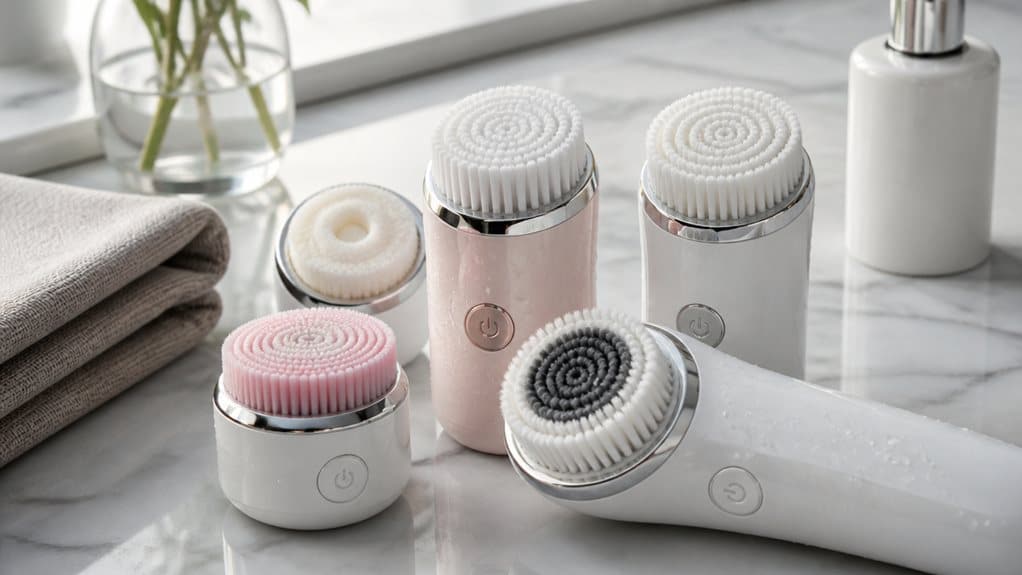
Not every brush works for every face, so your skin type should guide the choice. A silicone sonic brush uses gentle vibration rather than friction, making it a safer pick for sensitive or dry skin, while a rotating brush head offers a stronger, more mechanical clean that suits tougher, less reactive skin.
If you’d rather skip electronics altogether, a manual silicone pad gives you control over pressure and works well for mixed skin or anyone easing into facial cleansing tools.
Silicone sonic brush
Silicone sonic brushes tend to win out when sensitive skin is part of the equation.
The soft material feels gentle against your face, and it doesn’t create the friction that bristle heads can. Silicone is also easier to keep clean, which matters because bacteria and mold have a harder time settling into a smooth surface than into fabric-like bristles.
For dry or compromised skin, this gentler approach helps you avoid stripping away natural oils your barrier needs. Keep sessions brief and infrequent.
- Best for: sensitive, dry, or reactive skin types
- Trade-off: milder cleansing than vibrating bristle brushes
- Care tip: rinse and air-dry after each use to prevent buildup
If you notice stinging or redness, cut back on frequency right away.
Rotating brush head
Rotating brush heads take a different approach, spinning to lift dirt and oil rather than vibrating against the skin. This rotation gives a deeper clean, making it a solid choice if you have oily or combination skin that needs extra help clearing residue.
Normal skin usually tolerates rotation well, especially with a gentle cleanser and light pressure. Dry or sensitive skin, though, often reacts poorly to this motion, since it can feel too exfoliating and increase irritation.
If you have acne-prone skin, be cautious. Rotating brushes can aggravate active breakouts, particularly if acne is moderate to severe. Mild acne may tolerate careful, infrequent use, but a gentler mode is often the safer bet when your skin feels reactive or inflamed.
Manual silicone pad
Regarding sensitive, dry, or acne-prone skin, manual silicone pads tend to be the gentlest option on this list. The silicone surface is softer than nylon bristles, and it’s easier to rinse clean and dry fully, which limits bacteria buildup between uses. If your skin reacts easily to friction, this lower-tech option often works better than a motorized brush.
- Sensitive or dry skin: use once or twice weekly with light pressure, then follow with a moisturizer to prevent tightness or flaking.
- Acne-prone skin: cleanse gently rather than scrubbing, and stop if you notice stinging or new breakouts.
- Oily skin: focus on the T-zone, where oil builds up fastest, and rinse the pad thoroughly after each use.
For combination skin, you can simply adjust pressure and frequency by zone.
How often should you use one?
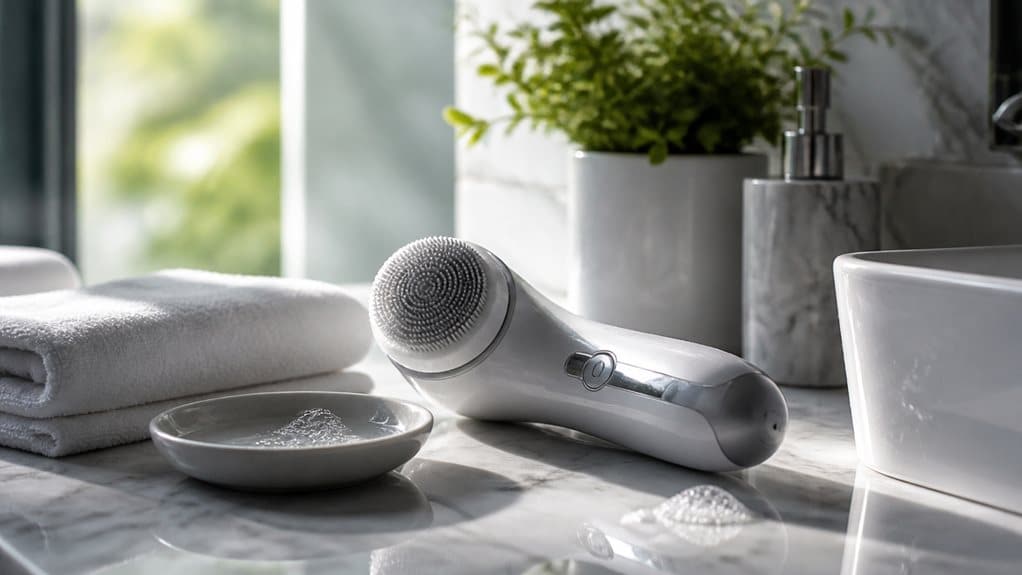
Frequency matters more than most people recognize regarding facial cleansing brushes.
How often you use a facial cleansing brush matters just as much as how you use it.
Most guidance points to two or three sessions per week for average skin, though some people with normal, non-sensitive skin manage daily use without trouble.
Your skin type should guide your starting point.
Oily skin often tolerates more frequent use, sometimes daily, while dry or sensitive skin does better with once or twice a week.
If you’re new to these brushes, start low and build up slowly rather than jumping to daily use.
Watch for redness, tightness, dryness, or stinging after cleansing. These are signs you’re overdoing it, and cutting back is the right response.
Keep each session to about a minute, and adjust frequency with the seasons, since drier weather usually calls for less use.
Cleaning and maintenance
Keeping your brush clean matters just as much as how often you use it. A quick rinse after each session removes cleanser, oil, and skin debris before it dries into the bristles. Use warm running water and shake off excess moisture instead of squeezing the head.
- Weekly deep clean: wash bristles with warm water and mild soap, using a cotton swab for hard-to-reach spots
- Sanitize periodically: try a 70% isopropyl alcohol spray or a diluted vinegar soak every one to two weeks, then rinse thoroughly
- Dry and store properly: air-dry in a ventilated spot, never in a closed drawer or humid shower
Skip harsh scrubbing, and only clean the brush head, not the handle or charging base.
Amazon buying recommendations
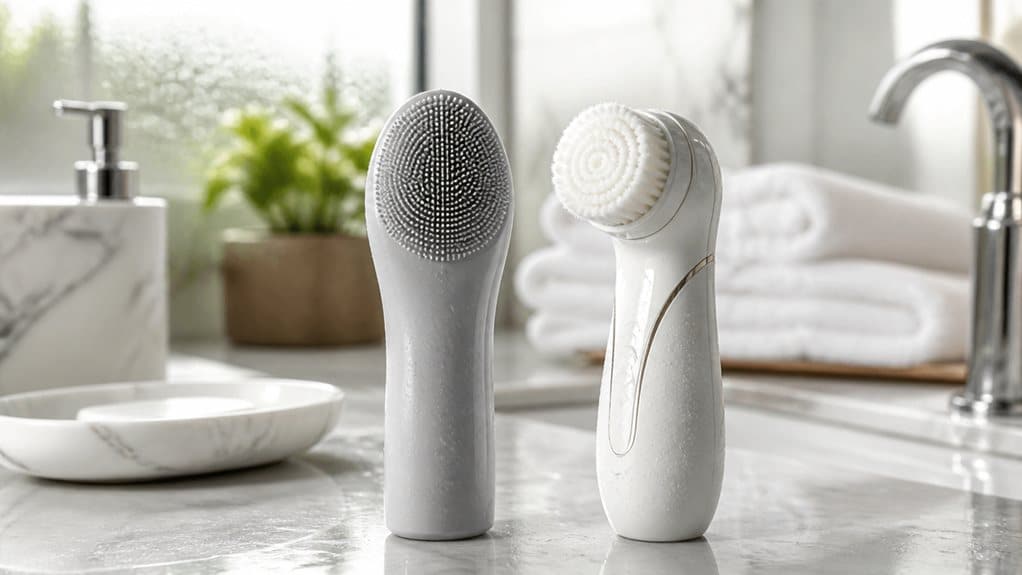
A handful of features separate a genuinely useful cleansing brush from one that just looks good in photos.
If you have sensitive skin, look for soft silicone bristles with multiple speed settings, so you can lower intensity around the cheeks or eyes. Sonic silicone models tend to be gentler than rotating brush heads, which some reviewers describe as more abrasive.
Sensitive skin does best with soft silicone bristles and adjustable speeds—sonic models offer a gentler touch than rotating heads.
Waterproof designs are worth prioritizing if you plan to use the brush in the shower. For basic needs, a manual silicone cleansing pad may be enough, since it avoids motors entirely and costs less over time.
If you already own a device, replacement heads are a practical purchase rather than buying a new brush. Compare interchangeable heads for cleansing versus massage functions before choosing.
Frequently asked questions
Since cleansing brushes are a small inclusion to an established routine, it’s natural to have a few practical questions before adding one to your counter.
- How often should you use it? Most guidance suggests once daily at most, though sensitive skin often does better with just 2 to 3 sessions a week to avoid over-exfoliation.
- Does it remove makeup? Not effectively on its own. Remove makeup initially with a micellar water or remover, then use the brush to clear remaining dirt and oil.
- Is it safe for sensitive skin? Yes, if you choose soft bristles, low vibration settings, and short 30-second sessions. Stop if you notice redness or tightness, since that signals the skin barrier needs a break.
Conclusion
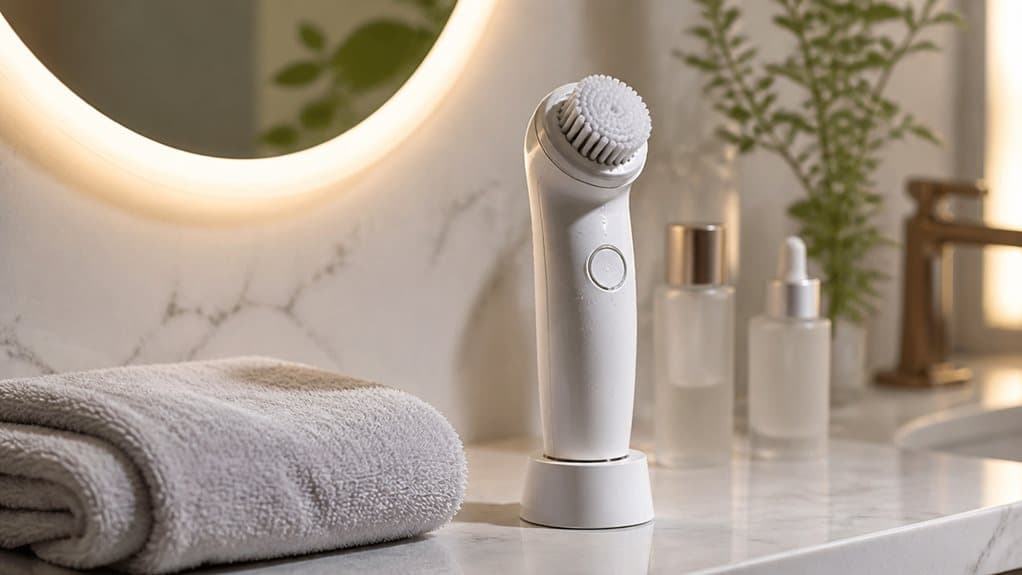
With those daily-use questions answered, it helps to step back and look at the bigger picture. An electric facial cleansing brush isn’t a must-have step in your routine, but it can be a smart plus if your skin tolerates exfoliation well.
Here’s a quick summary to guide your decision:
| Your situation | Best choice |
|---|---|
| Normal, tolerant skin wanting a deeper clean | Sonic or rotating brush |
| Sensitive or acne-prone skin | Gentle silicone pad, or skip the brush |
| Budget-conscious buyer | Manual silicone cleansing pad |
| Heavy makeup wearer | Sonic brush with soft head |
| Minimalist routine | Clean hands and a gentle cleanser |
Choose based on your skin’s needs, not trends. The right tool is the one you’ll use consistently, safely, and correctly.
Frequently Asked Questions
Can I Use a Facial Cleansing Brush Over Makeup Before Removing It?
No, you shouldn’t use a facial cleansing brush over makeup. Remove it initially with micellar water or a makeup remover, then use the brush on bare skin for deeper, more effective cleansing.
Are Electric Cleansing Brushes Safe to Use During Pregnancy?
Yes, basic sonic or manual cleansing brushes are usually fine during pregnancy—they’re simply mechanical. Skip microcurrent, RF, or EMS features, use gentle settings, and stop if you notice any irritation or sensitivity.
Can These Brushes Be Shared With Other Family Members Hygienically?
You can share a brush, but it’s not ideal—give each person their own head, rinse thoroughly after every use, and let it air-dry completely. Silicone heads clean easier than nylon bristles for family sharing.
Do Cleansing Brushes Work Well With Beard or Facial Hair?
Yes, but with limits—you’ll find they’re better at distributing cleanser under your beard than deep-cleaning it. Use gentle circular motions once or twice weekly, avoiding excess pressure that could irritate skin beneath your facial hair.
Can I Travel With a Sonic Cleansing Brush on Flights?
Yes, you can bring your sonic cleansing brush on flights. Just power it off, pack it securely, and keep lithium-ion batteries in your carry-on rather than checked luggage for smoother security screening.
Summary and Conclusion
An electric facial cleansing brush can genuinely improve how your skin looks on camera, but it’s not indispensable for everyone. If you wear heavy makeup or SPF daily, a sonic brush can help you get a more thorough clean than your hands alone. If your skin is sensitive or you already exfoliate regularly, a gentler silicone option, or simply your fingertips, may be enough. Match the tool to your skin’s actual needs, not the marketing.
 English
 Español
 Français
 Deutsch
 Italiano
Leave A Comment